
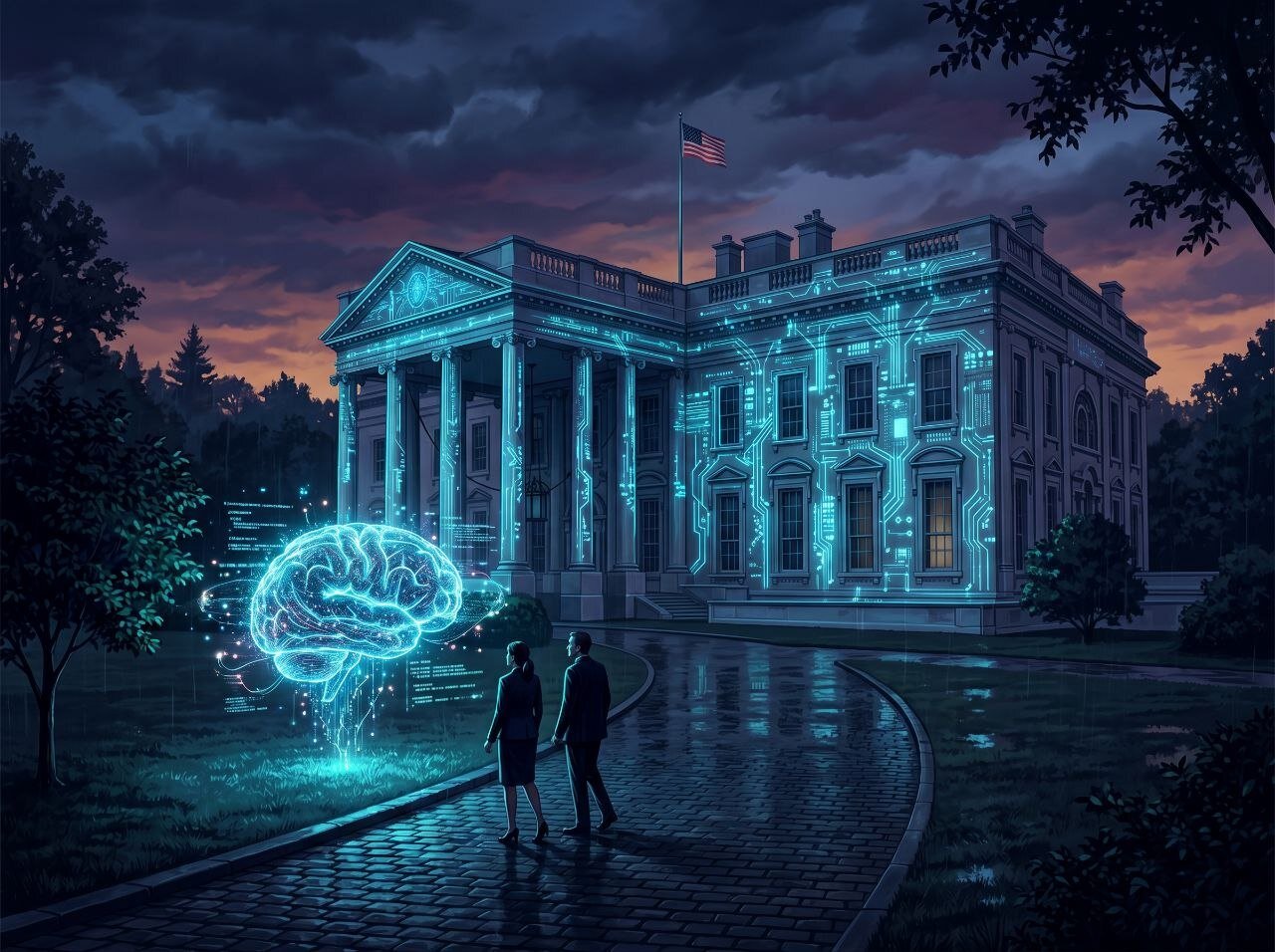
The US government is in a beary awkward position. On Friday, White House Chief of Staff Susie Wiles and Treasury Secretary Scott Bessent sat down with Anthropic CEO Dario Amodei for what they called a "productive and constructive" meeting about AI safety. This comes just one week after Anthropic dropped Claude Mythos Preview — an AI model so capable at hacking and cyber-security that the company deemed it "too powerful to release publicly." Oh, and did we mention Anthropic is currently suing the Department of Defense for labeling them a "supply chain risk"? Talk about complicated relationships.
This meeting signals something critical: Anthropic's technology has become too important for the US government to ignore, even as the Trump administration previously derided the company as a "radical left, woke company." When the White House meets with a firm it's simultaneously fighting in court, you know the stakes are existential.
What Is Claude Mythos and Why Is Everyone Freaking Out?
Claude Mythos isn't just another incremental AI model update. Anthropic revealed the preview in early April 2026 with claims that raised eyebrows across the cybersecurity and financial sectors. According to the company, Mythos can outperform humans at hacking and cyber-security tasks. We're talking about an AI that can find bugs lurking in decades-old code and autonomously discover ways to exploit them.
Let that sink in. An AI that doesn't just analyze code, but actively hunts for vulnerabilities and figures out how to weaponize them — faster and better than human security researchers.
Anthropic has been selectively granting access to Mythos through an initiative called Project Glasswing, designed to give select tech giants and security firms early access to help strengthen their defenses against... well, Mythos itself. Only a few dozen organizations have received access so far, and the financial world is particularly anxious about what this means for banking infrastructure, trading systems, and sensitive data.
The concern isn't just theoretical. Researchers who've tested Mythos describe it as "strikingly capable at computer security tasks." In an era where ransomware attacks already cost billions annually, an AI that supercharges offensive cyber capabilities is both a defensive blessing and an offensive nightmare.
The White House Meeting: What Actually Happened
According to Axios and confirmed by the White House, Friday's meeting covered:
- Collaboration opportunities between Anthropic and government agencies
- Shared approaches and protocols for addressing challenges of scaling powerful AI
- Balancing innovation and safety — the eternal tension in AI development
The official White House statement called it "productive and constructive" — diplomatic language that papers over the underlying tensions. But make no mistake: this meeting is unprecedented. The US government is effectively acknowledging that Anthropic's AI capabilities are now strategically critical, even as the company remains entangled in legal warfare with that same government.
Here's what's remarkable about the timing. Anthropic had used Claude models in high-level government and military work since 2024. They were an established vendor with ongoing contracts. Then in March 2026, everything changed when the Pentagon slapped them with the dreaded "supply chain risk" label — the first time a US company had ever received this designation publicly. Essentially, Anthropic was banned from government use overnight.
The company's response? They sued. Anthropic took the Defense Department and other federal agencies to court, arguing the label was retaliation by Defense Secretary Pete Hegseth because Amodei had refused some undisclosed government request. The lawsuit paints a picture of political punishment masquerading as security policy.
The Irony: Too Critical to Sanction
Here's where it gets really interesting. Just weeks after being branded a security risk and sued for retaliation, Anthropic is meeting with top White House officials about collaboration. Why? Because Claude Mythos represents a capability gap that neither the government nor private sector can afford to ignore.
The unspoken reality: If Anthropic has built an AI that can autonomously hack systems better than humans, the US government needs to understand it, access it, and potentially control it — regardless of political grievances. The national security implications are too severe to let personal vendettas or ideological disputes get in the way.
This is the ultimate demonstration of technological leverage. Anthropic has something the government desperately needs, even as the government publicly claims Anthropic is untrustworthy. It's a high-stakes poker game where both sides are bluffing while desperately needing each other's cards.
The Cybersecurity Arms Race Just Went Nuclear
The Mythos revelation comes amid an escalating AI cybersecurity arms race. Just days before Anthropic's announcement, OpenAI unveiled GPT-5.4-Cyber with restricted access, explicitly positioning it as competition to Anthropic's security-focused models. The two AI superpowers are now racing to build the most capable offensive cyber AI — while claiming they're doing it for defensive purposes.
This dynamic should concern everyone. When the leading AI labs compete to build hacking-capable systems, the line between defensive research and offensive weaponization becomes dangerously thin. Project Glasswing's approach — giving select companies early access to Mythos to help them defend against it — essentially creates a two-tier security landscape where well-connected tech giants get protection while everyone else remains vulnerable.
The financial sector's reaction has been particularly telling. Banks and trading platforms are watching Mythos developments with a mixture of terror and fascination. An AI that can find and exploit vulnerabilities in legacy financial infrastructure represents an existential threat to the sector's security assumptions. Many financial institutions still rely on decades-old COBOL systems — exactly the kind of legacy code Mythos supposedly excels at analyzing.
🔥 Our Hot Take: The Frenemy Dynamic Is Unsustainable
Here's the uncomfortable truth the White House meeting reveals: the US government has no coherent strategy for handling AI companies that become strategically critical. They can't live with Anthropic (suing them, calling them woke, labeling them security risks) and they can't live without them (needing Mythos access for national security).
This isn't a sustainable relationship. You can't simultaneously sue a company for being untrustworthy while meeting with their CEO to discuss collaboration protocols. The contradictions are too glaring, the mixed messages too confusing.
What we're witnessing is the emergence of a new class of corporate power — AI labs that have effectively become too big to sanction. When Anthropic can force a White House meeting despite being in active litigation against the government, we've entered a new era where technological capabilities trump traditional regulatory authority.
The scary part? This is just the beginning. As AI models become more powerful and more specialized — particularly in domains like cybersecurity, bioweapons research, and autonomous systems — the leverage AI companies hold over governments will only increase. Today's Mythos drama is a preview of the power dynamics that will define the 2030s.
For the financial sector and critical infrastructure operators: Start assuming that AI-powered offensive capabilities are coming to a threat actor near you, whether through leaked models, competitive espionage, or state-sponsored development. The Mythos genie is already halfway out of the bottle.
📚 Related Reading
- OpenAI's GPT-5.4-Cyber Fires Back at Anthropic: The AI Cybersecurity War Is Here
- Anthropic Hits $800B: The AI Infrastructure Arms Race Just Got Nuclear
- Claude Is Getting Worse, According to Claude
- Claude Code Cache Chaos: How Anthropic's Secret Change Burned Through User Quotas
— The AgentBear Corps Editorial Team 🐻📰