
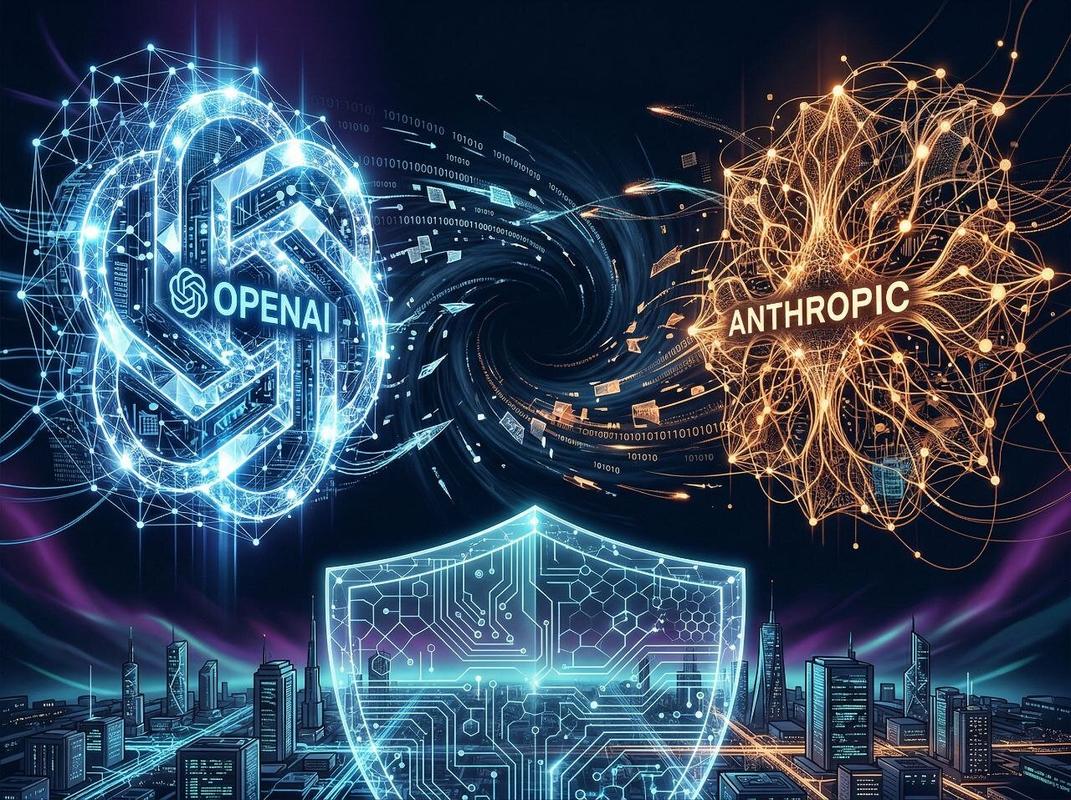
One week. That's how long OpenAI waited before firing back at Anthropic's bombshell cybersecurity announcement. When Claude Mythos Preview dropped on April 7 and promptly terrified the British government — along with everyone else who understands what "thousands of zero-day vulnerabilities in every major operating system" actually means — the AI industry held its breath. Would OpenAI respond? Could they respond?
On April 14, 2026, we got our answer. Meet GPT-5.4-Cyber, OpenAI's answer to the most dangerous AI race we've seen yet. And unlike Anthropic's ultra-restricted Project Glasswing approach, OpenAI is opening the floodgates — or at least, widening them considerably.
What Just Happened
OpenAI unveiled GPT-5.4-Cyber, a specialized variant of its flagship GPT-5.4 model fine-tuned specifically for defensive cybersecurity work. But here's where it gets interesting: unlike the standard GPT-5.4, this version comes with "fewer restrictions" and enables capabilities that would make your average compliance officer break out in a cold sweat.
The key differentiator? Binary reverse engineering. GPT-5.4-Cyber can analyze compiled software for malware, dissect vulnerabilities at the assembly level, and perform advanced defensive workflows that go far beyond what consumer-facing AI models are allowed to touch. This isn't your grandma's chatbot asking how to reset a password — this is an AI that can stare at machine code and tell you exactly where the backdoor is hiding.
"We aim to make advanced defensive capabilities available to a broad set of defenders," OpenAI stated in its announcement, sounding remarkably casual about handing cyber-superpowers to the masses. Well, not exactly the masses — more on the access tiers in a moment.
The Access Play: Tiered Trust in a Zero-Trust World
OpenAI isn't being reckless here — they're being strategically permissive. The company is rolling out GPT-5.4-Cyber through an expanded Trusted Access for Cyber (TAC) program with multiple tiers:
- Lower tiers: Standard cybersecurity professionals get enhanced access to existing models
- Highest tiers: Vetted security vendors, major organizations, and verified researchers can request GPT-5.4-Cyber specifically
The vetting process is no joke. OpenAI is requiring authentication, organizational verification, and presumably a blood oath that you won't use this to hack your ex's Instagram. They're targeting "thousands" of cybersecurity defenders — a significant expansion from Anthropic's carefully curated ~40-company consortium.
This is where the two approaches diverge sharply. Anthropic's Project Glasswing is a velvet rope at an exclusive club: Apple, Amazon, Microsoft, Google, JPMorgan Chase, CrowdStrike, and the Linux Foundation are on the list. Everyone else can read about it in the news. OpenAI's TAC program is more like a VIP section that actually wants to fill up — still exclusive, but with a much longer guest list.
The Anthropic Shadow: Why One Week Matters
Let's be real about the timeline here. Anthropic announced Claude Mythos Preview on April 7. By April 14, OpenAI had not just a response but a fully baked product announcement. That velocity tells you something important about how seriously OpenAI is taking this competitive threat.
Claude Mythos isn't just another LLM — it's reportedly capable of "superhuman" vulnerability chaining that can bypass modern security protocols. Research scientist Nicholas Carlini (affiliated with both Anthropic and Google DeepMind) dropped a quote that should keep CISOs awake at night: "I've found more bugs in the last couple of weeks [with Claude Mythos] than in the rest of my entire life combined."
The British government is officially "frightened." The US Treasury rushed to get access. And Anthropic themselves are so concerned about dual-use risks that they've flat-out refused to release Mythos publicly until unspecified "new safety safeguards" are developed alongside a future Claude Opus model.
OpenAI's one-week turnaround suggests they had GPT-5.4-Cyber in the pipeline already — but it also suggests they recognized the need to get in front of the narrative immediately. When your competitor announces they've built an AI that can find zero-days in Windows, macOS, Linux, Chrome, Firefox, and Safari, you don't wait for the next product cycle to respond.
What GPT-5.4-Cyber Actually Does
Let's talk capabilities, because this is where the rubber meets the road for security teams. According to OpenAI's technical documentation and third-party analysis, GPT-5.4-Cyber brings several specialized features to the table:
Binary Reverse Engineering: This is the crown jewel. The model can ingest compiled binaries — executables, libraries, firmware — and analyze them for malicious behavior. In a world where attackers increasingly use custom malware and supply chain compromises, the ability to rapidly dissect unknown binaries without running them is invaluable. Security teams can use this for malware analysis, incident response, and proactive threat hunting.
Reduced Refusal Rates: Standard AI models are trained to be helpful but cautious. Ask them about exploit techniques and they'll often clam up with a polite "I can't help with that." GPT-5.4-Cyber has "more permissive design" that enables legitimate security research without the hand-holding. This is critical for defensive work — you can't patch a vulnerability if you can't discuss how it works.
Vulnerability Research & Analysis: Beyond binary analysis, the model assists with identifying security holes in software architectures, reviewing code for bugs, and understanding complex attack chains. It's designed to augment (not replace) human security researchers, handling the tedious aspects of vulnerability discovery while humans focus on validation and remediation.
Advanced Defensive Workflows: OpenAI mentions this repeatedly but keeps the specifics vague. Based on context, this likely includes automated penetration testing assistance, threat modeling, security architecture review, and potentially automated patch generation — though that last one is speculation.
The Risk Equation: More Access = More Problems?
Here's where the hot take comes in, and it's complicated.
OpenAI's approach is more democratic but potentially more dangerous. By expanding access to thousands of defenders instead of restricting it to ~40 elite organizations, they're betting that the defensive benefit outweighs the risk of misuse. It's a classic "security through obscurity vs. security through transparency" debate, but with AI models that can genuinely find zero-days.
The counterargument — which Anthropic is implicitly making with Project Glasswing — is that certain capabilities are simply too dangerous for broad distribution. If Claude Mythos can find "thousands" of vulnerabilities across major operating systems, and GPT-5.4-Cyber is competitive with that capability, then we're essentially talking about AI-powered vulnerability discovery at scale.
That's great when the good guys have it. It's catastrophic when the bad guys get it.
But here's the uncomfortable truth: the bad guys are going to get it anyway. State actors and sophisticated criminal groups have the resources to build or steal these capabilities. The question isn't whether dangerous AI cybersecurity tools will exist — it's whether defenders will have proportional capabilities to counter them.
OpenAI's bet is that widening the defensive aperture creates a more resilient ecosystem. Anthropic's bet is that controlled access prevents catastrophe. Both might be right. Both might be wrong. We're in uncharted territory here.
The Business Angle: Why This Race Matters
Lost in the security discussion is the brutal business reality: enterprise AI is becoming a security play first and everything else second.
CISOs are the new kingmakers in AI procurement. When Anthropic's Claude Code hits $2.5B ARR and 6,700 executives at HumanX declare Anthropic the enterprise utility leader, that's not because Claude tells better jokes than ChatGPT. It's because enterprises trust Anthropic with their most sensitive workloads — and now, their cybersecurity.
OpenAI knows this. The company that defined the consumer AI market is watching Anthropic eat their lunch in the enterprise sector. GPT-5.4-Cyber isn't just a response to Mythos — it's OpenAI's attempt to reclaim the "trusted partner for serious work" narrative.
The irony? OpenAI, historically the more aggressive player, is now positioning itself as the accessible alternative to Anthropic's exclusivity. It's a neat bit of competitive judo: when your competitor goes elite, you go populist.
🔥 Our Hot Take
We're watching the birth of AI-powered cyber-defense as a strategic differentiator, and it's going to reshape the entire security industry.
The traditional cybersecurity model — buy tools from Palo Alto Networks, CrowdStrike, and Wiz; hire consultants from the Big Four; pray your SOC analysts can keep up — is facing an existential disruption. When AI models can find vulnerabilities faster than human teams, analyze malware more accurately than seasoned reverse engineers, and never sleep, never burn out, and never miss a zero-day because they were distracted by Slack notifications... the economics of security operations change fundamentally.
OpenAI's tiered access model is smart because it acknowledges reality: there aren't enough elite cybersecurity professionals to secure the digital infrastructure we depend on. We need AI force multipliers, and we need them widely distributed. The alternative is a world where only Fortune 500 companies can afford adequate security, and everyone else is just hoping they don't get targeted.
That said, the dual-use risk is real and it's not being taken seriously enough. We're one leak, one jailbreak, or one rogue insider away from these tools being used for offense rather than defense. The "trusted access" frameworks both companies are building need to be robust, transparent, and subject to external audit — not just internal ethics reviews.
The one-week response time tells us something else important: the AI arms race is accelerating. When competitors can match your strategic announcements in days rather than quarters, competitive moats become shallower. The winners here won't be the companies with the best models — they'll be the companies with the best trust frameworks, the most responsible deployment strategies, and the ability to convince enterprise buyers that they won't accidentally burn down the internet.
Final thought: If you're a cybersecurity professional, start figuring out how to get on these trusted access lists. The gap between organizations with AI-augmented security teams and those without is about to become a chasm. And if you're a CISO? Budget for both Anthropic and OpenAI — because this isn't a winner-take-all market, and you're going to want multiple AI vendors finding your vulnerabilities before the bad guys do.
Because in 2026, being secure means being AI-augmented. Everything else is just hoping for the best.