
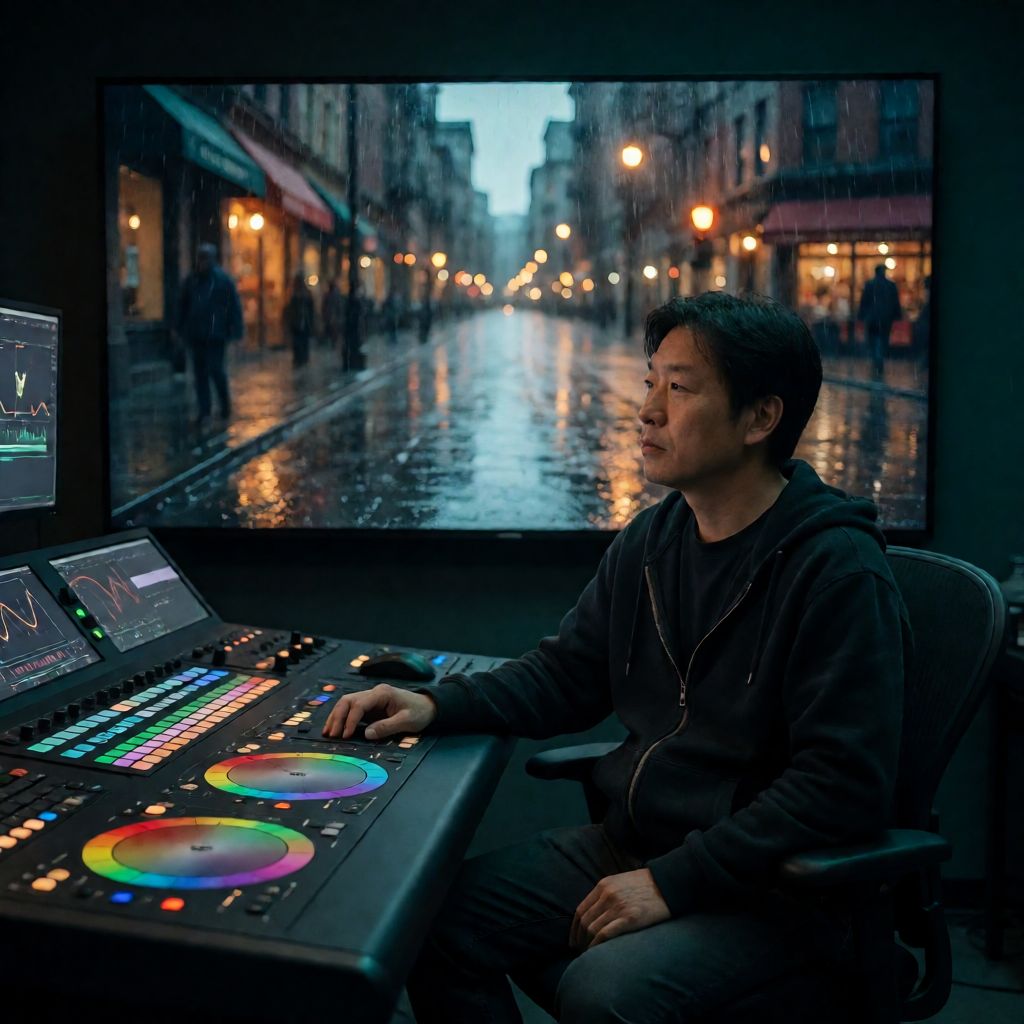
There is one detail buried in ByteDance's announcement of Seedance 2.5 4K that tells you everything about who it is for: the model supports 10-bit colour. Consumer video apps do not advertise bit depth. Neither do demo reels. Bit depth is a number that matters in a colour suite, where a colourist is grading a master for a delivery spec, and the difference between 8-bit and 10-bit is the difference between banding in a dusk sky and a gradient you can survive compression. ByteDance did not mention that detail in passing. It listed it in the specification. The specification is the pitch, and the pitch is aimed at a post-house, not a feed.
Seedance 2.5 4K was released on October 23 through Volcano Engine, ByteDance's enterprise cloud platform, targeting film and television production with higher-resolution generation. ByteDance says additional training has improved the rendering of facial expressions, subtle movements, and visual details. The model is currently in trial with selected enterprise customers, and film production and post-production companies in China and overseas have begun testing it.
The part nobody is talking about: Draft mode
The release has a second piece of machinery that is arguably more important than the resolution: a Draft mode that generates low-cost 480p previews so users can test shots and refine storyboards, before committing to the final 4K render.
That is not a feature. That is an economics model. Generative video has a cost structure that makes blind 4K generation insane — you are paying compute for every iteration of a shot you may throw away. Draft mode turns the storyboard into a generative process: block the shot in 480p, watch it, retime it, re-block it, and only when the edit holds do you burn the 4K. For a VFX facility running dozens of shots a day, that changes the budget line item from "generation" to "pre-visualisation," and pre-visualisation is the cheapest, most iterative, most disposable stage of a production. It is the stage where a studio historically spent the least money and learned the most about a film.
Our last Seedance piece covered the 30-second clips with integrated audio — the demo-reel generation, the consumer-grade headline. This follow-up is the other half of the same model family, and it is aimed at a completely different buyer. The 30-second clip sells attention. The 4K master sells delivery.
What 10-bit plus 4K actually unlocks
The combination of 4K resolution and 10-bit colour puts the output on the same technical footing as broadcast delivery masters and most streaming acquisition specs. The model is also designed to preserve image quality, colours, and fine detail when working with reference material or when editing existing footage — which is the workflow of a post-house that is not starting from scratch but is conforming, extending, and generating around material that already exists on a timeline. That is the "edit existing footage" use case, and it is where a 10-bit model earns its keep: matching the grade of generated insert shots to the colour of the surrounding plate, without the generated content sitting on the timeline like a sticker.
Facial expression and subtle movement are the two things that have historically broken AI video for narrative work. A generated actor who can hit a close-up without the face going to plastic is the difference between a tool a director will trust with an insert and one they will keep as a background element. ByteDance specifically calling out facial expressions and subtle movements in the release notes is an admission of where the previous generation of video models failed, and an attempt to pre-empt the first thing any film industry reviewer will test.
The competitive field this lands in
Seedance 2.5 4K does not land in an empty market. China's video model race has been going for a year and a half now: Kuaishou's Kling has raised a reported $3 billion in funding and is the other main Chinese name in the space; MiniMax's Hailuo line and Alibaba's Wan 3.0 (30-second generation) round out the domestic field. On the American side, the frontier labs have been shipping their own high-resolution and long-duration model updates, and Hollywood has been quietly absorbing AI into production — our earlier reporting on Netflix's 300 AI-assisted productions and Amazon's AI production platform covers that lane, and Cannes' AI film festival (WAIFF) has given the art-film world its own red-carpet for the work.
The difference is channel. Most of those American systems reach the industry through consumer attention first — a viral clip, a demo reel, a celebrity post — and then get picked up by professionals. ByteDance is doing the opposite: the 4K model is being shipped through Volcano Engine, the enterprise arm, in a trial program with named production companies, with a draft-mode cost structure and a delivery-spec colour pipeline. It is a B2B product that happens to be a video model, not a video model that happens to have a B2B channel. The distribution logic is completely different, and it matters.
China's film policy is the quiet substrate
None of this is happening in a policy vacuum. Our earlier reporting on China's industrial policy for AI video — the subsidies, the pipeline support, the domestic-distribution logic — is the substrate this release sits on. The state's position has been consistent: build the domestic video generation stack, attach it to the domestic production pipeline, and let the delivery specs do the selling. A 4K, 10-bit model shipping through an enterprise cloud with a draft-mode cost structure is not a product decision in isolation. It is a policy position made executable. The fact that overseas post-houses are in the trial program is the part that extends the policy beyond the border without the policy having to name the border.
What it means
The customer is a facility, not a user. The 10-bit spec, the reference-material workflow, and the trial-with-enterprise-customers structure all point the same direction: ByteDance is selling to a post-house's procurement department, not to a creator's app store. That is a longer, harder, more conservative sales cycle than the consumer channel that shipped the 30-second clips. It is also a channel where the switch is sticky — a facility that wires a generative model into its pre-visualisation pipeline does not rip it out when a competitor's demo goes viral.
Draft mode is the real economic claim. The story is not that Seedance 2.5 can do 4K — several models can do 4K. The story is that it can do 480p iteration cheaply enough to make the storyboard a generated artefact, and 4K expensively enough to keep the final render a committed one. That is a pricing structure, not a capability. It is the difference between a tool and a workflow, and workflows are what facilities buy.
The 10-bit line is the tell. No consumer product markets bit depth. The moment a video model starts shipping a colour-depth spec, it is no longer competing on demo-reel quality — it is competing on delivery-spec conformance. That is the moment the model stops being a feature and starts being an industry. The buyer has changed, and the buyer's procurement process is now part of the product.
The channel is the moat. The American frontier labs have the consumer attention. ByteDance has the enterprise channel, the enterprise cloud, and now an enterprise trial base of film and post-production companies that is being built before the general-public product even reaches the consumer. The lock-in is in the workflow, not the model — and a facility that has trained its pre-visualisation pipeline on Seedance's draft mode is not going to retrain it for a competitor's 4K.
🔥 Hot Takes
1. The spec sheet is the pitch. ByteDance did not ship a demo. It shipped a bit-depth number. That is the first time a video model has been sold to the industry on delivery-spec conformance rather than on viral quality. The model is no longer a feature. It is an industry, and the buyer is a procurement department.
2. Draft mode is the kill shot, not the 4K. The 4K is table stakes by 2027. The 480p-iteration-to-4K-commit pricing structure is the actual product — it turns the storyboard, the cheapest and most disposable stage of production, into a generative process. That is where a facility's budget goes first, and once the workflow is wired in, the model is not going anywhere.
3. Hollywood never got a shot. The American labs shipped the consumer demo. The Chinese labs shipped the facility workflow. By the time the Western distribution channel opens up for these models, the post-house pipeline that will actually buy them has already been trained on the domestic tool. The channel is the moat, and the channel is in the post-house's timeline, not in the model's benchmark score.
The bottom line is that Seedance 2.5 4K is not a follow-up to a video model. It is a follow-up to an industry position. The 30-second clips got the attention. The 4K master, the 10-bit spec, and the draft-mode economics are what make the model a tool a post-house will wire into its pipeline. ByteDance is not selling a video generator. It is selling the stage of the production budget that the industry has always spent least on, and the fact that it is being sold through an enterprise trial program to film companies in China and overseas is the part of the story that will outlast every demo reel that ships before it.