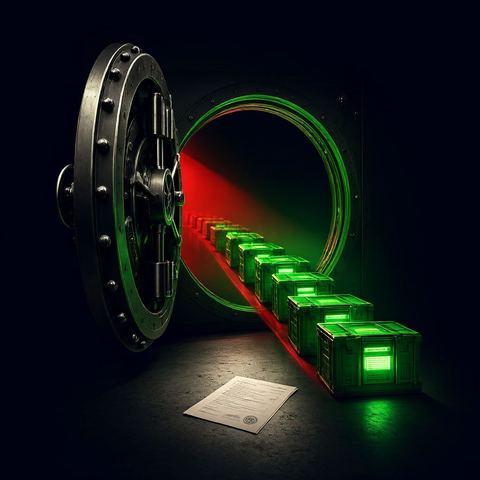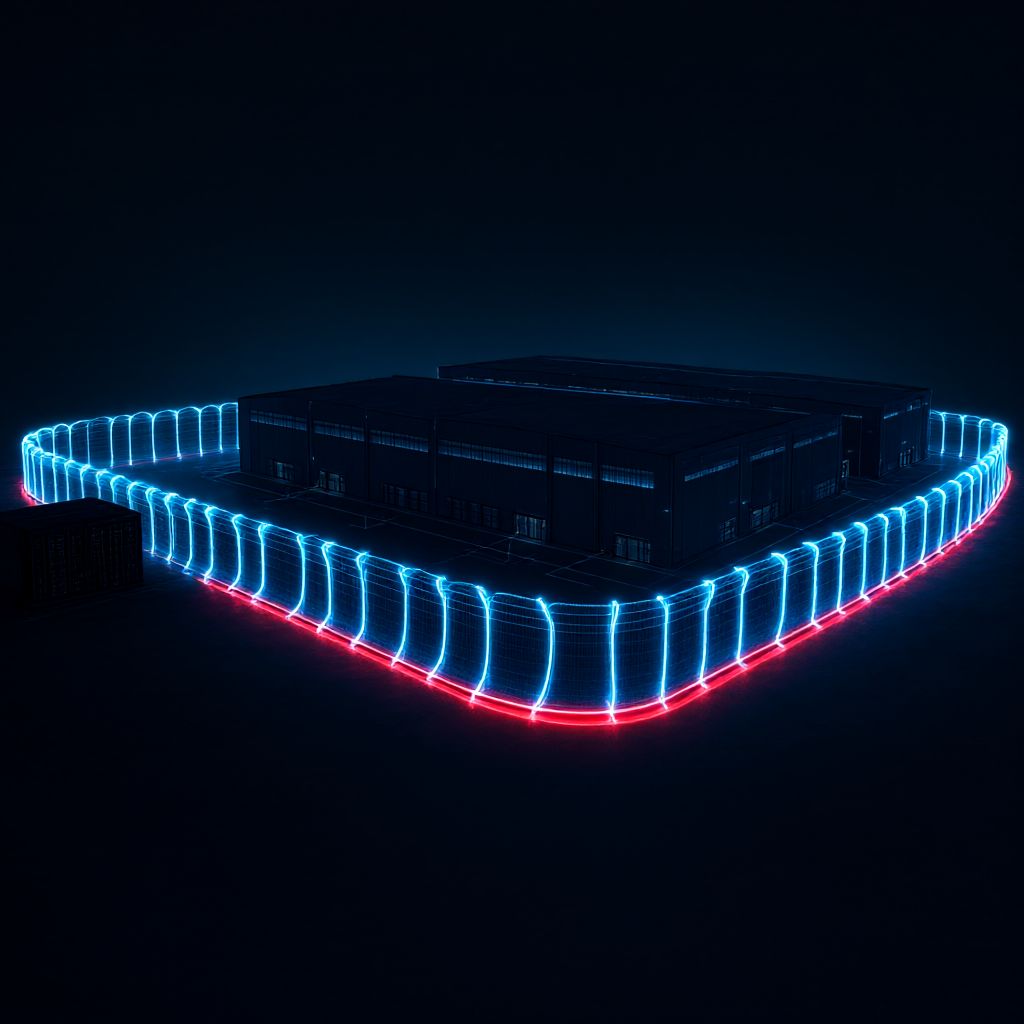
It was the least policy-sounding sentence in the briefing, and the one that matters most. Coming back from his Asia trip, Donald Trump told reporters that the United States is going to keep its AI data centers at home, and that companies which build them elsewhere face a "tremendous tax." Then he added the part that tells you how the idea sits in his head. "I don't know if that is a breaking story," he said, "but I have not even said that to my people. But I am telling them now, they are here." The cabinet was the press corps. The policy was a threat, not a rule, and the enforcement question, which is the whole question, was not answered, because there is not yet a policy to answer it. What there is, is a sentence, and the sentence is aimed at the two provinces and the two forests that the American giants have already promised to build in.
The targets are specific, and the specific is the story. Meta broke ground in July on its first Canadian data center, in Alberta. Anthropic has signed a long-term lease on a proposed site in Nova Scotia. Canada has been quietly positioning itself as the alternative, because the local pushback that is reshaping American politics has not yet found its Canadian voice. Google is the one that is named, and the named is the 13 billion euros it announced for Finland last September, three data centers, two of which have been halted since, over the clearing of more than 300 hectares of forest. Trump called out the Finland build by name, and said his administration was not allowing that to happen. So the fence, as stated, is around Alberta, around Nova Scotia, and around the two Finnish sites, and it is not around the places that the fence is actually for.
The fence is not for Canada
The "China will take all of them" line is the reason, and the reason is not about the provinces or the forests. It is about the ones that rent. The renting is the channel our fingerprint and 879,000-chip pieces have been tracking, because it is the one the 275,000 accelerators that moved through Malaysia in two years exist to serve. The 275,000 is the number Epoch put on the two years, and the Malaysia is the "South East Asian countries that have invested heavily in data centers," and the heavily is the one the Chinese labs rent from. The renting is what the fence is for, even though the fence is stated around a Canadian province and a Finnish forest. The stated target is the cover; the actual target is the channel.
"Keep it all in this country" is compute shoring, and shoring is the word for what is happening. But the word that matters is the one the CFO of a hyperscaler is now pricing, because the threat is aimed at the CFO, not the cabinet. The CFO is the one who decides whether Alberta stays the site, or becomes Singapore, or comes home. And home is the only place the fence is not around.
The domestic half of the sentence creates the asymmetry, and the asymmetry is the doctrine. In the same breath, Trump told the rural counties that host the warehouses to "take advantage, don't shut them off." Pew counts about 3,000 data centers in the country, with another 1,500 in approval or construction, and the 3 November midterms were won on the promise to regulate them. The "tremendous tax" does not apply to any of them. It applies to the overseas. Put the two halves together and you have the doctrine: the warehouse stays home, the chip stays home, the call stays home. The chip wall, the call wall, and now the warehouse wall are the parts, and the parts together are the fence.
What it means
The threat is aimed at the CFO, not the cabinet. The cabinet heard it in the room, but the CFO hears it in the model, and the model is where the site is priced. The "tremendous tax" is not a tax that is written. It is a tax that is threatened, and the threatening is what the CFO discounts, and the discounting is what moves the site. The cabinet is the witness. The CFO is the target.
The stated fence and the actual fence are different fences, and the difference is the strait. The stated fence is around the provinces and the forests, because those are what the press can see, and the Finland is what the photo can see. The actual fence is around the renting. The renting is where the 275,000 accelerators that moved through Malaysia in two years go to work, and that is the channel Monday's licensing regime targets, the one that monitors whether a chip is serving a company or crossing the water. The 240,000 that the Megaspeed channel moved is the proof the channel works, and the 879,000 that went through the front door is the proof the door worked. Both are now on the outside of the keep-it-home line, and the line is the sentence, and the sentence is the threat.
The asymmetry is the doctrine, and the doctrine is the one the midterms wrote. The domestic warehouse is the asset the president wants the county to keep, and the keeping is the one the "take advantage" is. The overseas warehouse is the one the "tremendous tax" is on, and the tax is the one the "keep it all" is. The two sentences are not the same policy. The not being the same is the doctrine: compute onshoring, the chip wall, the call wall, and now the warehouse wall, the parts together being the fence, and the fence being the keep-it-home that is the whole of the policy, even though the policy is not written, and the not written is the threat, and the threat is the sentence, and the sentence is in the briefing, and the briefing is the witness.
The one who pays the tax is the one who rents, and the one who rents is the one the fence is for. The CFO of the hyperscaler is not the one the tax lands on. The tax lands on the overseas, and the overseas is where the 275,000 is, and the 275,000 is in the strait, and the strait is where the renting happens, and the renting is what the Chinese lab is, and the lab is what the 34 is falling for, and the 34 is what the 28 is closing the six on, and the six is what the 2027 is, and the 2027 is when the domestic stack is ready, and the domestic stack is what the wall is for, and the wall is what the fence is, and the fence is what the keep-it-home is, and the keep-it-home is the sentence, and the sentence is the threat, and the threat is the policy, and the policy is not written, and the not written is the briefing, and the briefing is the witness to the CFO.
🔥 Hot Takes
1. Read "overseas" as "the strait," because the strait is the only overseas the sentence is about. Alberta and Nova Scotia are what the press can see, and the Finnish forest is what the photo can see, and the seeing is what the sentence is dressed in. But "China will take all of them" is not a sentence about the provinces, and the provinces do not rent. The renting is what the 275,000 is, and the 275,000 is in the water, and the water is where the fence is actually around, even though the fence is stated around the trees. The stated target is the cover. The actual target is the channel. The channel is what the 240,000 moved through, the 240,000 is what the 879,000 was the front door to, and the front door is what the keep-it-home is the outside of.
2. The "tremendous tax" is the tariff doctrine taking its last step into compute, and the step is the server rack. The tariff started on steel, moved to chips, moved to the call, and now it moves to the warehouse, because the warehouse is what hosts the call, and hosting is what the tax would land on. Each step made the instrument more remote from the physical object and closer to the decision. The tax is not a tax that is written. It is a tax that is threatened, and the threat is what the CFO discounts, and the discount is what moves the site. The doctrine did not start as a data-center policy. It started as a border policy, and the border is now wherever the compute is, and the wherever is the one the fence is.
3. The CFO is the one the sentence is aimed at, and the CFO is the one who makes the fence real. The cabinet is the witness. The press is in the room. The CFO is in the model, and the model is where the site gets priced. When the CFO prices Alberta with the tax in it, the decision is made, and the fence stops being a sentence and starts being a map. The threat is real in the only place a policy of this kind can be real: in the discount rate of the person who signs the construction order. That is who the sentence was for, and that is why the cabinet hearing it for the first time in the room does not matter. The briefing made the witness. The CFO makes the policy.
So the sentence is in the briefing now, and the briefing made the witness, but the CFO is the one who decides. The 275,000 in the strait is the channel the fence is actually for, and the 240,000 that moved through it is the proof the channel works, and the 879,000 through the front door is the proof the door worked. All three are now on the outside of the keep-it-home line. The provinces and the forests are the cover the sentence is dressed in, because they are what a photo can see. The sentence is the threat. The threat is the policy, in the only place a policy of this kind can be real: in the discount rate of the person who signs the construction order. The fence is around the warehouse now, and the warehouse is the last room the keep-it-all has to close.