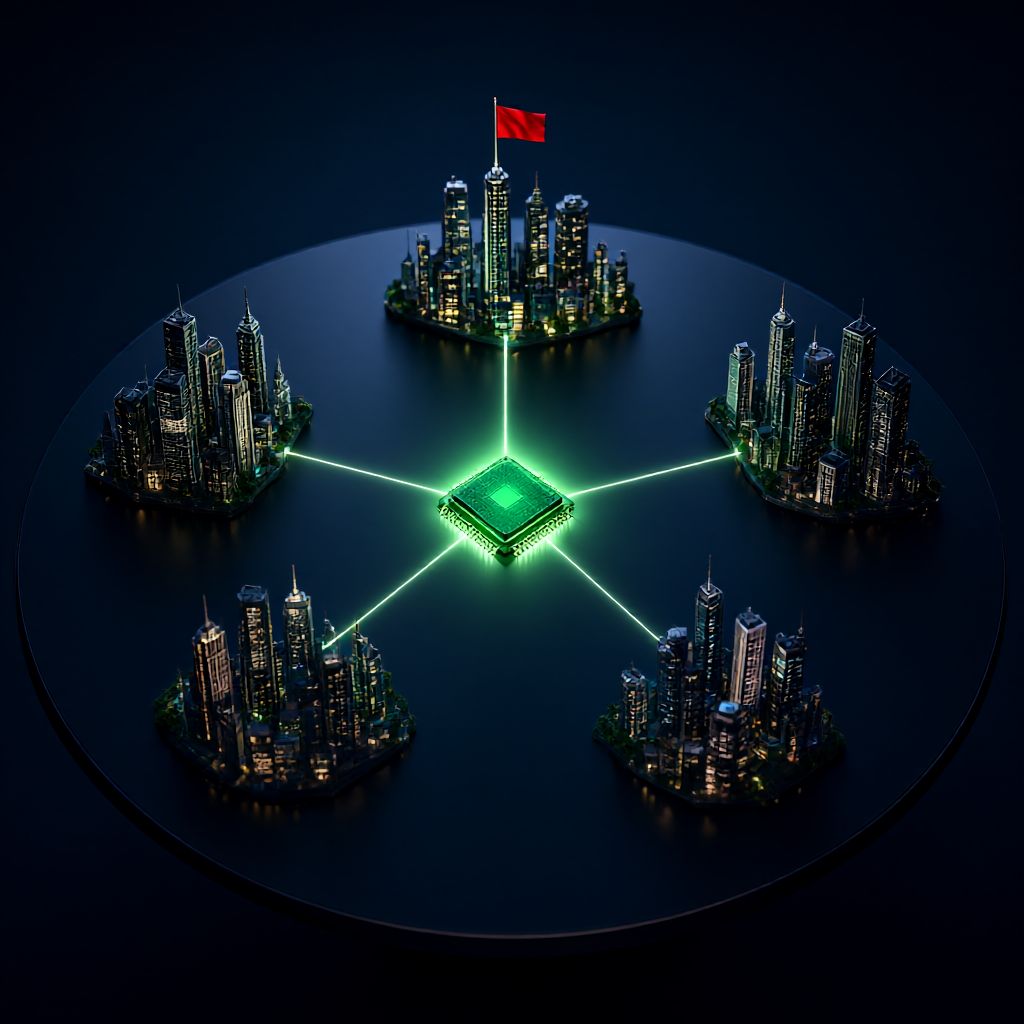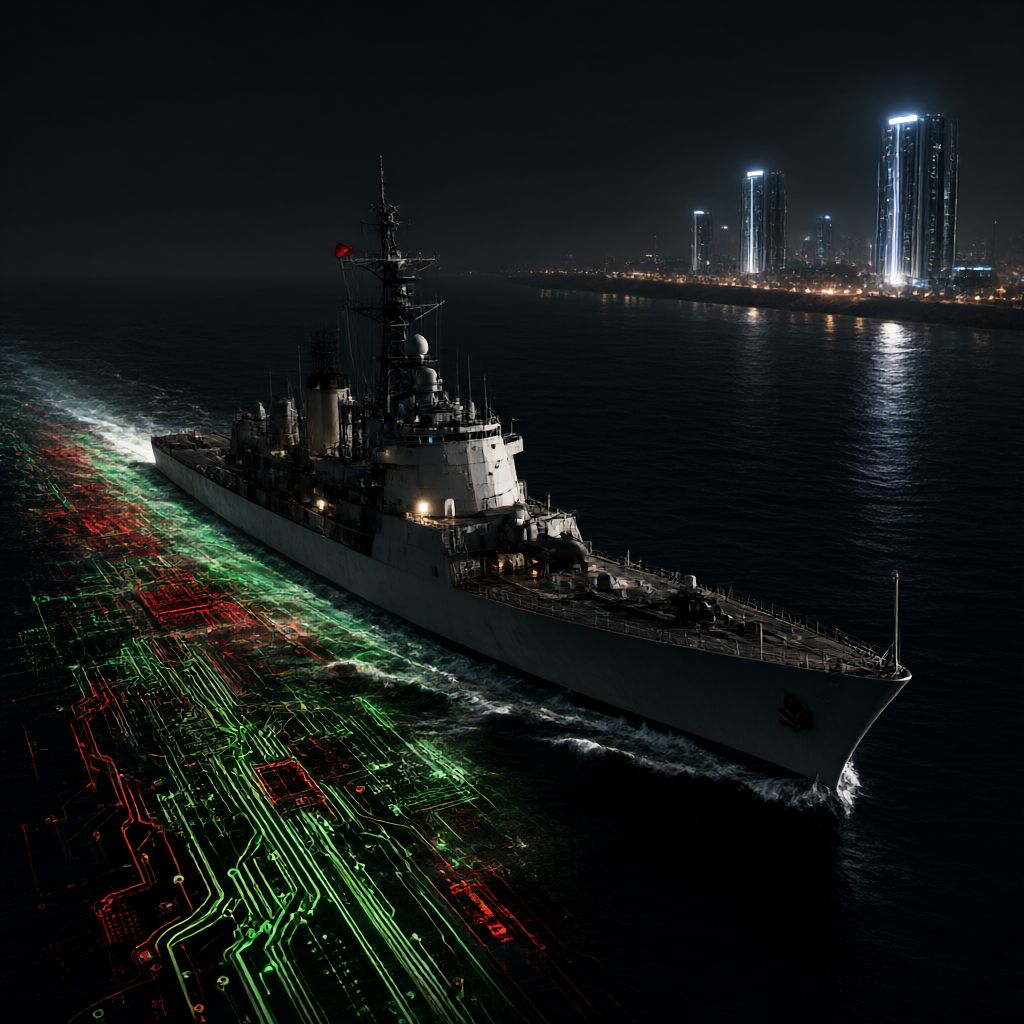
Le Monde's new feature uses a naval word for a company. Huawei, the French broadsheet argues, has become the "flagship" of the Chinese chip war, and, more pointedly, the conductor of the national effort toward "scientific and technological self-sufficiency." The number that anchors the piece is the one you would expect from a national lab and not a company: 208,000 employees worldwide, of which 114,000 are in research and development. That is roughly fifty-five percent of the entire workforce. No American firm of comparable revenue spends its headcount that way. The word "conductor" is doing the work that the feature is too polite to say outright: this is no longer a company the state tolerates. It is a program the state is conducting.
The feature arrived on November 14, two days after Jensen Huang signed his resignation as chief executive of Nvidia, and the sequencing is the point of this piece. The man who spent a year personally keeping a crack in the door, lobbied into the H200 license, argued for the revenue-share structure that lets controlled silicon cross into China with a cut to Washington, is no longer in the room. And the same week, the Western press, in Le Monde's case, is telling you that the thing to watch on the other side of that door has a name now, and that name is Huawei. The eye is shifting. We think the shift is real, and we think it is the most important story of the chip war, and it is not the one the markets are pricing.
What the flagship actually is, in numbers
Strip the feature's naval language away and you get a roadmap with dates, and the dates are the story. Huawei's September roadmap splits its next generation, the Ascend 950, into two parts built on a shared die. The 950PR, targeting the prefill, the reading-half of inference, pairs with a first-generation in-house memory the company calls HiBL 1.0, planned for early 2026. The 950DT, targeting decode and training, pairs with a higher-bandwidth in-house memory, HiZQ 2.0, rated at 144 gigabytes and four terabytes per second, planned for the fourth quarter of 2026. The in-house memory matters more than the die, because the memory is where the last two years of the war have actually been lost and won. Huawei is no longer renting its memory from a friendly supplier. It is building the rail the train runs on.
Against that, the honest number is from Epoch AI, which updated its Huawei estimate in September and found that the 950, the most powerful chip in the lineup, delivers roughly half the performance of an Nvidia H100, a chip that has been shipping since 2022. Huawei is set to produce less than four percent of Nvidia's compute output this year. Four percent. That is the gap, and it is the whole war in one number. The production target that makes the four percent a trend rather than a footnote is the 2026 plan for the 910C, roughly 600,000 units, about double the expected output of the year before it. The binding constraint on all of it, as SCMP reported this week, is a queue at SMIC's single leading-edge line, and that queue, by one estimate, runs to 2028.
The smartphone side of the house is carrying the same news in a smaller font. The Kirin 9050, Huawei's phone chip, is the first to use the company's LogicFolding architecture, a path around the process-node wall that the state's foundry can actually make. It is manufactured, as far as anyone will confirm in public, by SMIC, which is to say the same queue as the data center. And this week, the on-device story arrived: a 30-billion-parameter model, running on the phone, in the country, on the chip, without the cloud. That is the feature Le Monde's naval language is describing from the other side: the flagship is not a product. It is a stack, and every layer of the stack is now domestic.
Why the resignation moved the eye
Here is the mechanism, and it is not about Nvidia's stock, which has already moved 1.4 trillion dollars and found a floor. The market will not leave Nvidia. Nvidia is still the cash engine of the AI economy, and Kress, the interim chief financial officer, is not going to stop shipping Blackwell because the man with the leather jackets walked out. The eye that moves is the narrative eye, the one that decides which story the next three years of policy, funding, and state money are written around.
That narrative eye has been pointed at the door for a year, because the door was the story. The H200 license, the revenue-share structure, the H20 reversal, the 600,000-chip stockpile waiting in a Hong Kong warehouse for a green light, all of it was about whether the Americans would let the chips through, and the answer was a moving target that only one person in the room could really push, because he was the only one the other side's customers would take calls from. He is gone. Without him, the license's political cost goes up, because the four bills now waiting in Congress, the open Department of Justice question, and the unstable position of the commerce secretary all point the same direction. The default position of a closed door is that it stays closed. And the default position of a closed door is that the other side's domestic champion becomes the story, because there is no longer a foreign alternative to argue against.
What it means
The resignation is a gift to Huawei, and Huawei will accept it, quietly, in the numbers. Every week the H200 door stays closed, or closes another inch, the gap narrows without the American side's help, and the 950DT's fourth-quarter arrival lands against a benchmark that is no longer moving. The H100 half that Epoch measures is a 2022 chip, and a 2022 chip is a 2027 chip by the time the 960 shows up. The clock is not the spec. The clock is the production. Six hundred thousand units against a door that is closing is a very different story than six hundred thousand units against a door that is open.
Le Monde's "conductor" is the word that matters, because it is the word the state chose, not the word the company chose. A hundred and fourteen thousand researchers in a single corporate structure is a national lab wearing a suit, and the feature's real claim is that Beijing has stopped pretending the distinction exists. The flagships of the 1990s were banks. The flagship of the 2020s is a chip program with a consumer brand on top. When the conductor is named, the orchestra is no longer optional, and the funding, the queue at SMIC, the in-house memory, and the 30-billion-parameter phone are all sections of the same score, written by the same hand.
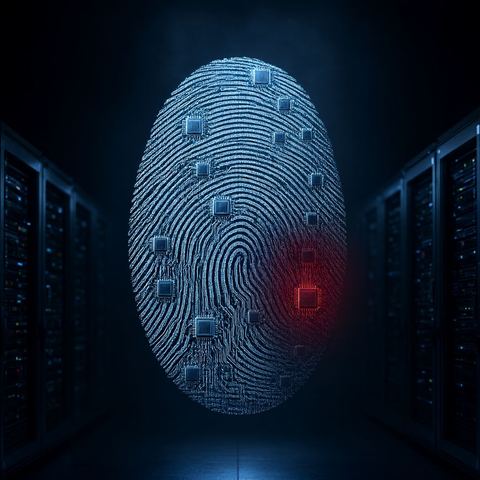
The fingerprints prove the ban is leaking. The flagship is what happens after it stops leaking. Our Blackwell-fingerprints piece this week showed that the controls are already failing at the margin, that the chips are in the building whether or not the paperwork says so. But the fingerprints are a margin story. The flagship is the center-of-gravity story. The margin will keep leaking, because the margin is where the money is. The center of gravity is where the policy is going, and the policy is going to a place where the chips, the memory, the compiler, and the model are all, in Le Monde's word, one ship, under one flag, in one harbor, with the door behind it closed.
The non-American read is the whole point, and it is a read the American press is not writing. In Hangzhou and in Shenzhen, the story is not "will the Americans open the door." The story is "we no longer need the door, and the conductor has been named." The American press is writing about the resignation, the bills, and the stockpile. The Chinese press is writing about the 950DT, the HiZQ memory, and the phone. Two stories, one war, and the second story is the one that compounds.
🔥 Hot Takes
1. Jensen Huang's resignation is the single best piece of news Huawei could have bought, and it arrived free. The man who lobbied for the H200 license was the only friction that kept the door in a state of being open. Friction does not survive a boardroom. The CFO in the chair is not calling Beijing, is not calling the buyers, and is not calling the White House. The door's default is now its closed position, and every closed quarter is a quarter Huawei's six hundred thousand units get to close the four percent gap without a gift from the other side. The resignation is not a setback for the American position. It is the moment the American position stopped being the story.
2. The word "flagship" is a policy document, not a metaphor. Le Monde is not dressing up a company as a ship for color. The state has named a conductor, and a conductor is a word you use for something that is not allowed to fail on its own timetable. One hundred and fourteen thousand researchers, an in-house memory, a queue at a national foundry, and a 30-billion-parameter model on a phone, all under one corporate flag, is the shape of a program with a deadline. The deadline is the 2028 end of the SMIC queue. After that, the ship either has enough water in the harbor, or it does not, and the four percent becomes either a floor or a ceiling.
3. The fingerprints are the margin, and the flagship is the center of gravity, and the margin will keep leaking until the center of gravity stops moving. The Blackwell signatures in six Chinese models prove the controls have never actually held, and they will not hold, because the money is on the leaking side. But the leaking side is not where the policy is going. The policy is going to the flagship, because the flagship is the only side that is getting bigger every quarter while the other side gets a new bill and a new probe and a new interim CFO. The leak is a feature of the present. The flagship is the fact of the next three years. Read the ship, not the water.
So the eye shifts, and the shift is the story. Not the stock, which has already moved and found its floor. Not the bills, which are the sound the door makes as it closes. The story is the flagship, because the flagship is the only thing in this war that is compounding, and it is the only thing that does not need the door. Jensen Huang left the room on a Wednesday. The conductor was already named, and the orchestra, in a hundred and fourteen thousand seats, was already learning the score. The eye will follow the ship. The water will keep leaking. And the harbor, by 2028, will have to be big enough for both.