
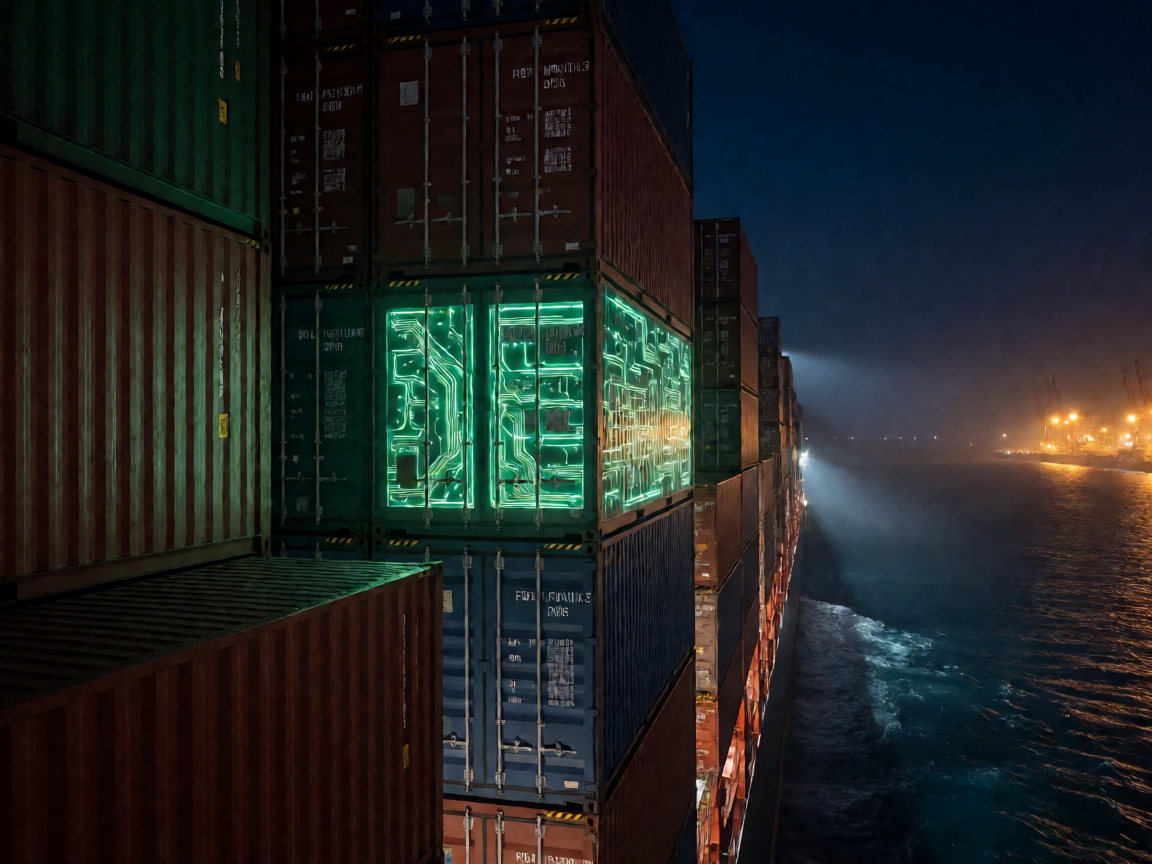
The most revealing sentence in a $300 million chip-smuggling indictment isn't the dollar figure. It's the one where the U.S. government describes what it's actually protecting: "American Super Intelligence technology." Greg Lui, a 38-year-old California business owner, was arrested Thursday and charged with allegedly smuggling roughly $300 million of Nvidia hardware to China without export licenses — servers stacked with A100, H100, PNY GE Force RTX 4090, and GeForce RTX 5090 GPUs, ordered through his company Earthmade Computer Inc, shipped to Malaysia and Singapore, and forwarded from there to China. The maximum penalty is 50 years. But the sentence that should be quoted in every AI policy class from here on is the one from the FBI's Counterintelligence and Espionage Division: the investigation "revealed that Lui allegedly sold the Chinese government hundreds of millions of dollars' worth of American Super Intelligence technology, in clear violation of US export control laws."
Read that again. The rebrand from "artificial intelligence" to "super intelligence" that started as a U.N. General Assembly soundbite three weeks ago is now doing formal work in a federal indictment. The diplomatic rename just became a legal one. And the case itself — a textbook transshipment scheme run for nearly three years — is the clearest look yet at where the export-control wall actually leaks.
The Scheme, Step by Step
Per The Register's reporting on the court documents, the operation ran from around October 2023 until at least August 12, 2026, and it's more industrial than most people picture when they hear "smuggling":
- The ordering: Earthmade Computer Inc, Lui's company, ordered the Nvidia-loaded servers in the U.S. — A100s, H100s, RTX 4090 and 5090 systems, the exact class of hardware that AI labs and Chinese cloud providers have been racing to acquire.
- The transit: The shipments went to Malaysia and Singapore, two countries whose import rules do not require a U.S. Commerce Department license. Companies there then forwarded the hardware to China.
- The money: Prosecutors say Lui received more than $176 million in payments from two Malaysian transshipment companies, in exchange for broking the sales of almost $300 million of kit — he introduced the transshippers to U.S. suppliers and made the sales happen.
- The paper trail: The U.S. government has documents tying the export of 92 servers from San Francisco International Airport to Kuala Lumpur, ordered by Earthmade, with the consignee for the onward re-shipment from Malaysia to Hong Kong listed as a Chinese customer.
- The cover story: The indictment alleges Lui instructed a U.S. front company to fraudulently list the recipient of a shipment as "Jacky Lui," the supposed CEO of "Topmost," a California-registered company set up by the CTO of one of the Malaysian transshipment businesses. In 2021, Lui is also accused of illegally purchasing identity documents used in the scheme.
The charges: one count each under the Export Control Reform Act, the Export Administration Regulations, outbound smuggling, and money laundering. Maximum, 50 years. The register reached out to Earthmade and Nvidia for comment; neither had responded as of publication.
"Super Intelligence" Is Now a Courtroom Word
That's where this story lands in our own reporting, and why it's bigger than an enforcement case. Three weeks ago, out of the Xi-Trump summit, the two powers agreed to a "Super Intelligence (SI) Dialogue" and Beijing publicly valued Washington's new naming convention. Then, at a White House AI accord with the tech CEOs, the term was formally adopted into U.S. usage. And now, the same word shows up in a national-security indictment and in an FBI division head's public statement: "SI is the defining technology of the era," said Assistant Attorney General for National Security John A. Eisenberg. "The National Security Division will protect the American advantage in the chips that power this technology, a product of our unparalleled innovation and hard work, from illegal diversion by our economic and military adversaries."
That's not a metaphor. In export-control enforcement, naming a thing is an act of classification, and classification determines which laws apply and which sentences attach. The moment "super intelligence" appears in the charging documents, the chip is no longer "a computer component." It's a strategic asset with a national-security label, and the label is doing the actual work of justifying a 50-year maximum. The rebrand that began as soft-power signaling has become hard law. That's the quietest and most important detail in the whole case, and it's the one no chip-industry roundup will bother to point out.
The Leak the Domestic-Stack Story Can't Fix
Step back from the courtroom and the scheme is the map of where China's chip problem actually is. On the software side, the domestic push is real: Huawei's Ascend clusters, the open TileLang effort DeepSeek just shipped for the 128-chip supernode, the 160,000-chip DeepSeek deployment in Inner Mongolia. But on the hardware side, the country still wants the one thing the export regime is specifically built to withhold — the highest-end Nvidia silicon — and the want is now industrialized. A $300 million order book, a three-year operation, two transshipment firms with dedicated CTOs, a California front company, and $176 million in payments is not a hobbyist's contraband trade. It's a supply chain. And it runs through Kuala Lumpur and Singapore specifically because those are the jurisdictions where the license requirement ends — the seams in the wall, not the wall.
That's the structural insight: export controls are a licensing system, and licensing systems fail at their borders. Malaysia and Singapore aren't complicit in the diversion; they're just not the enforcement frontier. The scheme doesn't break the law where it's committed. It routes around the law where the law doesn't reach. Which means the only durable fixes are either transshipment-destination enforcement (making KL and SIN license points too) or demand-side suppression (making the domestic silicon good enough that the $300 million ask is a footnote). China is doing the second one — the Ascend/TileLang stack is literally that program. The U.S. is doing the first one, one arrest at a time. The question the next indictment will answer is which program is moving faster.
What It Means
1. The "SI" label is now a sentence multiplier. Export-control cases have always attached penalties to the value and intent. What's new here is the classification itself: by naming the hardware "Super Intelligence technology," the government is telling the court that this isn't electronics, it's strategic assets, and the strategic-asset framing is what makes a 50-year maximum defensible on a smuggling charge. Every future case that uses the term inherits the same elevated stakes. The rename started in a summit hall and now lives in a charging document. That's how policy becomes precedent.
2. The real moat is the transshipment seam, and it's wider than one arrest. A single $176-million broker caught mid-stream tells you the trade was larger than the prosecution. The two Malaysian firms, the Singapore legs, the 92 documented SFO-to-KL shipments — that's the floor of one actor's activity, not the ceiling of the channel. Until KL and SIN are treated as enforcement points the way SFO and HK already are, the scheme's architecture outlives every defendant. The next question isn't "will another Lui be charged" — it's "will the transit countries be made to care."
3. This is the hardware leg of the same war our software-leg reporting is already tracking. The domestic chip stack — Ascend, the TileLang open-source push, the 160,000-chip cluster — is the supply-side answer. This indictment is the demand-side confession: despite all of that, the highest-end foreign silicon is still what the industry reaches for first, and the smuggling trade is the gap between the two. The two stories are the same story measured from opposite ends. Watch the ratio: as domestic silicon captures more of the market, the smuggling trade's value per shipment falls. The day that number trends down is the day the export wall is actually working, not just the day another broker is arrested.
4. The 50-year maximum is the number that will change the economics of the whole trade. Before this, a broker's risk was a fine and a handful of years. Now, on a charge sheet that explicitly frames the goods as national-security strategic assets, the downside is half a century. That's not a deterrent for a one-off. It's a deterrent for the entire professional class of transshipment brokers — which is to say, it may be the single most effective export-control tool since the license regime itself. The enforcement message is now: the ceiling of the penalty is the floor of the caution. That's how you move a whole supply chain without a new statute.
🔥 Hot Takes
1. The "Super Intelligence" rename just won its first legal victory, and nobody on the policy team celebrated it. In three weeks, a summit soundbite became a courtroom term of art that multiplies the maximum sentence on a smuggling count. That's not marketing. That's the most efficient piece of AI-naming strategy of the year, executed entirely by accident. The renaming was supposed to be soft power. It turned out to be a sentencing tool. The next time a summit uses a new word, check the charging documents, not the press releases.
2. "Jacky Lui" at Topmost is the sentence that proves the scheme was a business, not a crime. The level of cover — a named front-company CEO, a registered entity, purchased identity documents, a multi-year payment trail of $176 million — is not what you see in a hobbyist's laptop-and-passport smuggling. This was a company with a CTO and a brand and an invoice system. That tells you the real market size of the diverted-silicon trade is an order of magnitude above what any single indictment can capture. The $300 million is the defendant, not the industry.
3. The demand-side confession is the number that will actually end the smuggling trade, and it's not a U.S. number. The day Ascend-and-TileLang silicon is "good enough" for the workloads that currently require an H100, the $300-million ask evaporates — not because of an arrest, but because of a benchmark. China's domestic-stack story and this indictment are the same war, and the only permanent solution is the one the smugglers can't buy: a chip that doesn't need to be smuggled. That's why the real race isn't between the FBI and Lui. It's between the FBI and a 128-chip supernode, and the supernode gets a compounding advantage every quarter the license regime stays unchanged.
The Bottom Line
Strip the prosecution's framing and this is a clean data point about the actual shape of the chip war: the wall is a licensing system, licensing systems leak at their borders, and the leaks now run on a $176-million-per-actor industrial scale through two enforcement-light transit countries. What makes this indictment different from the last dozen export-control cases is not the money or the years — it's the word. The hardware is now officially "Super Intelligence technology," and that word is what turns a smuggling statute into a strategic-asset statute. The rename that began in a summit hall is now doing the heavy lifting in a courtroom. The chips were never the wall. The label just became the mortar.