
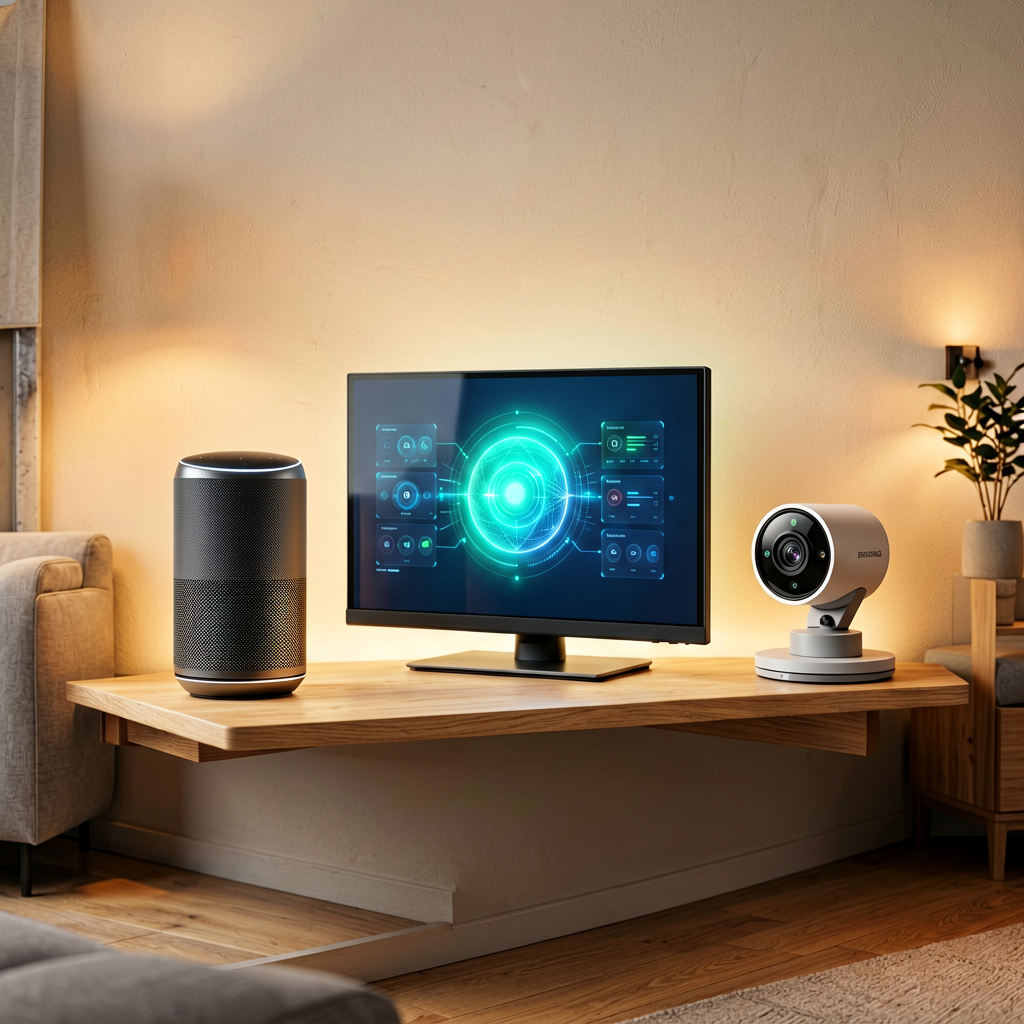
Baidu's smart-device division Xiaodu is set to unveil its latest hardware lineup tomorrow (September 8) at 2 p.m. Beijing time, marking the company's boldest push yet into AI-native consumer devices. The event will showcase smart displays, companion screens dubbed "Tiantian," smart speakers, and cameras — all running an upgraded version of Baidu's Chaoneng Xiaodu AI assistant.
The launch represents a strategic pivot for Baidu, which has historically been known as China's search engine powerhouse. By integrating its large language model capabilities directly into home hardware, Baidu is positioning Xiaodu as a competitor to Alibaba's Tmall Genie and Xiaomi's AIoT ecosystem — both of which have made significant inroads into China's smart home market.
The Product Lineup
According to event invitations sent to media and developers, tomorrow's launch will feature four main categories:
- Smart Displays: Larger screens with improved voice recognition, likely targeting living rooms and kitchens
- Tiantian Companion Screens: Specifically designed for families and elderly users, with health monitoring and video calling features
- Smart Cameras: Featuring a second-generation AI monitoring agent that can interpret scenes, detect anomalies, and respond autonomously
- Smart Speakers: The traditional Xiaodu form factor, now powered by upgraded Chaoneng capabilities
The Tiantian screens represent Baidu's attempt to capture the aging population market — a demographic opportunity in China where the elderly population is projected to reach 400 million by 2035. Health monitoring, medication reminders, and emergency response features could differentiate Xiaodu from competitors focused primarily on entertainment.
Chaoneng: The AI Brain
At the core of tomorrow's launch is the upgraded Chaoneng Xiaodu assistant, introduced last November. Baidu promised free upgrades for tens of millions of existing devices — a bold move that prioritized ecosystem expansion over immediate hardware sales.
Chaoneng leverages Baidu's Ernie Bot large language model, enabling multi-turn conversations, context awareness, and complex task execution. Unlike previous voice assistants that relied on predefined commands, Chaoneng can understand natural language queries and adapt responses based on user behavior patterns.
The second-generation AI monitoring agent for Xiaodu cameras represents a significant leap in autonomy. Rather than simply recording footage or sending alerts, the new agent can interpret scenes — distinguishing between a family member coming home and an unfamiliar person, recognizing potential safety hazards, and even initiating emergency protocols.
The Competitive Landscape
China's smart speaker market is fiercely contested. Alibaba's Tmall Genie and Xiaomi's AI speakers have established strong positions, leveraging their respective ecosystems — Alibaba's e-commerce platform and Xiaomi's affordable hardware strategy.
Baidu's advantage lies in its AI capabilities. The company has invested heavily in large language models and edge AI, positioning Xiaodu as a "brains-first" device rather than a "specifications-first" one. The argument is that superior AI interpretation matters more than screen resolution or speaker wattage.
However, Baidu faces structural challenges. Unlike Xiaomi, which manufactures its own hardware at competitive price points, Baidu relies on third-party manufacturers for many Xiaodu devices. This can limit margins and control over the user experience.
Privacy Concerns Loom
The autonomous camera capabilities raise obvious privacy questions. An AI agent that can interpret scenes and respond without human prompting requires continuous processing of video feeds — potentially raising concerns about data collection and surveillance.
China has implemented strict rules on facial recognition and data privacy through its Personal Information Protection Law (PIPL). Baidu has published safety guidelines for its AI systems and claims compliance with PIPL, but specifics about how camera data is processed and stored remain unclear.
Privacy advocates may scrutinize the Tiantian companion screens as well — devices placed in homes with elderly users could collect sensitive health data, raising questions about consent and data ownership.
What This Means
Baidu's Xiaodu launch reflects a broader industry trend: the integration of generative AI into everyday hardware. Amazon and Google have similarly upgraded their smart home assistants with AI capabilities, recognizing that voice interfaces alone are no longer sufficient to differentiate products.
For Baidu, Xiaodu represents more than just another hardware line — it's a distribution channel for the company's AI capabilities and a data source for improving its language models. Every interaction with a Xiaodu device generates training data that can enhance Chaoneng's capabilities across the entire ecosystem.
The success of tomorrow's launch will depend on three factors: pricing competitiveness, genuine AI utility beyond marketing claims, and user trust regarding privacy. Baidu has sold over 100 million Xiaodu devices since inception, but maintaining growth in an increasingly crowded market requires more than nostalgia for the brand's early successes.
As China's smart home market matures, the question is no longer whether AI assistants will be ubiquitous — it's which ecosystem will dominate and what data they'll collect along the way. Baidu's tomorrow event is a bet that superior AI can win the hardware wars.
🔥 Hot Takes
1. Baidu is playing catch-up in hardware but leading in AI — a dangerous combination for competitors. While Alibaba and Xiaomi have established smart home ecosystems, Baidu's Chaoneng represents a generation of AI that understands context, not just commands. The question isn't whether Xiaodu can match Tmall Genie's device count — it's whether AI-native interactions will make "dumb" smart speakers obsolete within two years.
2. The Tiantian companion screen for elderly users is either brilliant or deeply dystopian. Health monitoring, emergency response, and video calling for China's 400-million-strong elderly population? Noble. Continuous AI surveillance of vulnerable people who may not understand what's happening to their data? Terrifying. Baidu needs to be transparent about data handling or face the same privacy backlash that haunts every tech company.
3. Free AI upgrades for old devices is the Apple strategy — and it's genius. By upgrading tens of millions of existing Xiaodu devices with Chaoneng, Baidu is creating a installed base of AI-capable hardware without selling a single new unit. Tomorrow's launch isn't just about new products — it's about validating the ecosystem that free upgrades built. If the AI utility is compelling, users will upgrade hardware to match their software expectations.