
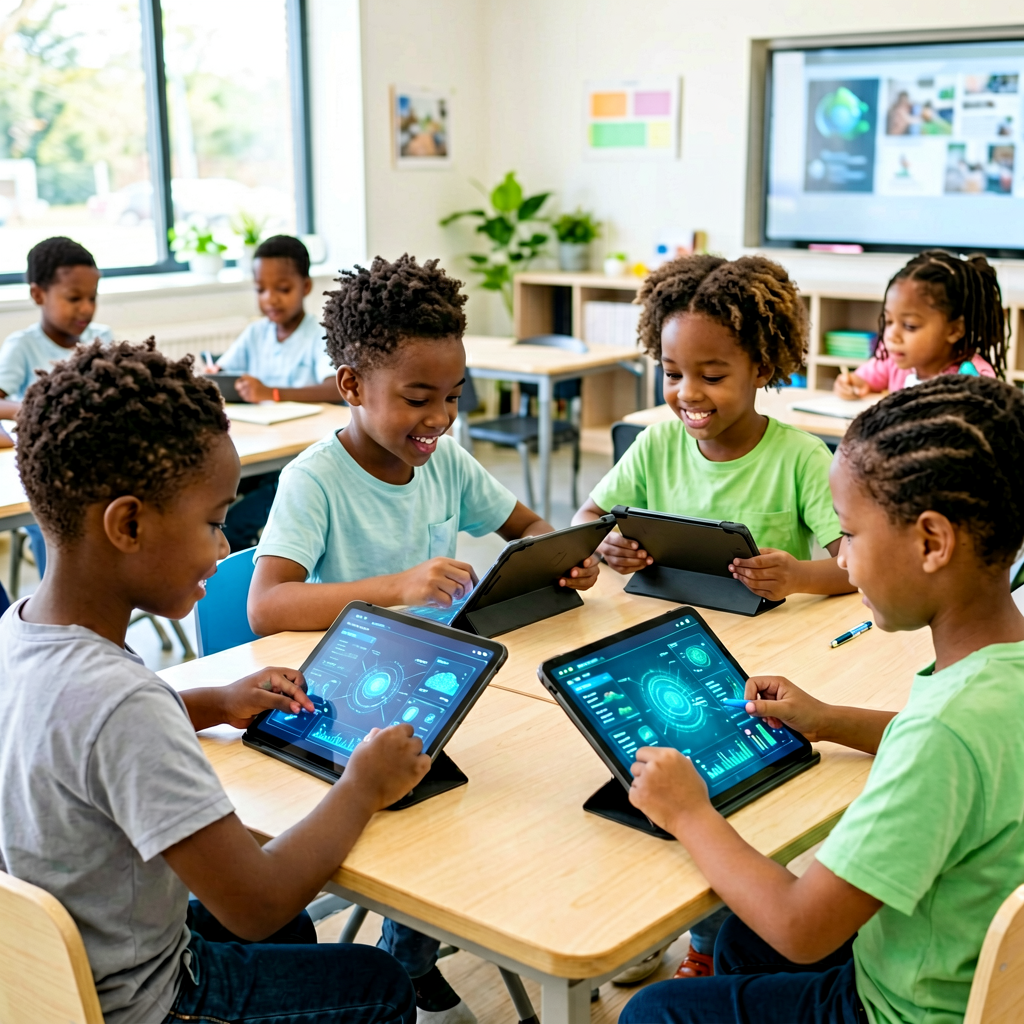
When chatbots deliver instant answers, they eliminate the "productive struggle" kids need to learn how to think. But in overcrowded African classrooms with severe teacher shortages, the alternative to an AI tutor is often no tutor at all. So, where should Africa draw the line?
In his episode of Delve Into AI, ADONIJAH NDEGE dives into why copying New York's ban would be a mistake, the dangerous trap of cognitive shortcuts, and why the future of AI in African education depends on one radical shift: letting the machine ask the questions while the student generates the answers.
The New York Ban
On September 3, New York City — home to the largest public school system in the United States — banned the use of artificial intelligence in classrooms through the eighth grade. The decision brought to mind a conversation with Kurt Gammelgaard Nielsen, chief executive of EdTech Denmark, over dinner in Copenhagen on August 25.
Nielsen's concern was not whether students should eventually learn to use AI — they almost certainly will have to — but whether introducing tools designed to simplify thinking too early could interfere with the difficult, and sometimes frustrating, process through which children actually learn to think.
"AI should augment human learning, not replace it," Nielsen told Ndegé. "Children should be empowered to think critically, explain deeply, and learn more effectively."
A School Is Not a Factory
This distinction may be the most critical element in the debate over AI in education. Many conversations focus on what AI can do for students, teachers, and schools. For Africa, where access to quality education in remote areas remains a persistent challenge, the primary question often centres on how technology can bridge the gap.
But the deeper question — one that America's largest school district is now forcing us to confront — is whether we're sacrificing something essential in the pursuit of efficiency.
The African Context
Africa faces a unique educational crisis. In many regions, teacher-student ratios exceed 1:100. Remote communities lack qualified instructors in STEM subjects. Girls are disproportionately kept out of school due to cultural barriers and safety concerns.
In this context, AI tutors aren't a luxury — they're a lifeline. A child in rural Kenya who never sees a science teacher can now ask an AI about photosynthesis. A girl in northern Nigeria who cannot travel to secondary school can still access personalized tutoring.
The question isn't whether AI belongs in African classrooms. It's how to deploy it without creating a generation that can't think without prompting.
The Productive Struggle
Cognitive scientists have long understood that learning requires struggle. When students grapple with a difficult problem, make mistakes, and work through confusion, they build durable neural pathways. The "desirable difficulties" of learning — spacing, interleaving, generation — all depend on effort.
AI-powered chatbots offer something seductive: instant, accurate answers. But in giving students what they want, we may be robbing them of what they need.
When a child asks "What is the capital of Ghana?" and receives the answer immediately, no memory trace is formed. When the child must retrieve the answer from their own mind — even if they get it wrong initially — the learning sticks.
The Radical Shift
Ndegé's argument isn't for banning AI in education. It's for a fundamental redesign of how we use it.
The current model — student asks, AI answers — flips the traditional pedagogical relationship. Instead, Ndegé proposes: let the machine ask the questions while the student generates the answers.
In this model, AI becomes a Socratic tutor rather than an answer machine. It probes understanding, identifies misconceptions, and guides students toward discovering knowledge themselves. The tool doesn't replace thinking — it structures the conditions for thinking to occur.
This is the difference between using AI as a crutch and using it as a training wheel. One creates dependency. The other builds capacity.
🔥 Hot Takes
1. New York's ban is privilege protecting itself. The wealthiest school district in America can afford to ban AI because they have resources, teachers, and infrastructure. Africa doesn't have that luxury. The real danger isn't AI in classrooms — it's keeping technology away from the kids who need it most.
2. We're outsourcing cognition before children master it. Every generation panics about new technology eroding thinking. The printing press, calculators, the internet — all were accused of making people stupid. But the real threat isn't technology itself; it's how we deploy it. If we give children answers without requiring them to earn understanding, we create a generation of intelligent fools — people who can access any information but can't think for themselves.
3. Africa gets to skip the mistakes. While America debates banning AI, African educators have an opportunity to design systems from scratch — not reacting to technology, but intentionally shaping it. The question isn't whether Africa should adopt AI in education. It's whether Africa can leapfrog the "addictive chatbot phase" and go straight to AI-as-tutor, bypassing the dependency trap entirely.
The Stakes
The implications extend beyond individual cognition. A generation that cannot think without AI assistance is a generation vulnerable to manipulation. If their thoughts are generated by algorithms owned by corporations in foreign countries, whose interests are being served?
For Africa — already contending with digital colonialism, data extraction, and platform dependency — the educational question is existential. Will AI empower African minds or become another vector for intellectual neocolonialism?
The answer depends on whether we design systems that augment human thinking or replace it. The difference between those two futures is the difference between liberation and dependency.
What's Next
New York's ban is just the beginning. Expect more Western school districts to follow, driven by parental anxiety and political expediency. Meanwhile, African innovators are already building AI education tools — some inspired by Western models, others designed specifically for local contexts.
The race isn't between AI and no-AI in education. It's between two visions: one where technology creates cognitive dependence, and another where it cultivates independent thought. Africa's choice today will shape not just its educational outcomes, but the cognitive sovereignty of a continent.
The machine can give us answers. But only we can teach children how to think.