
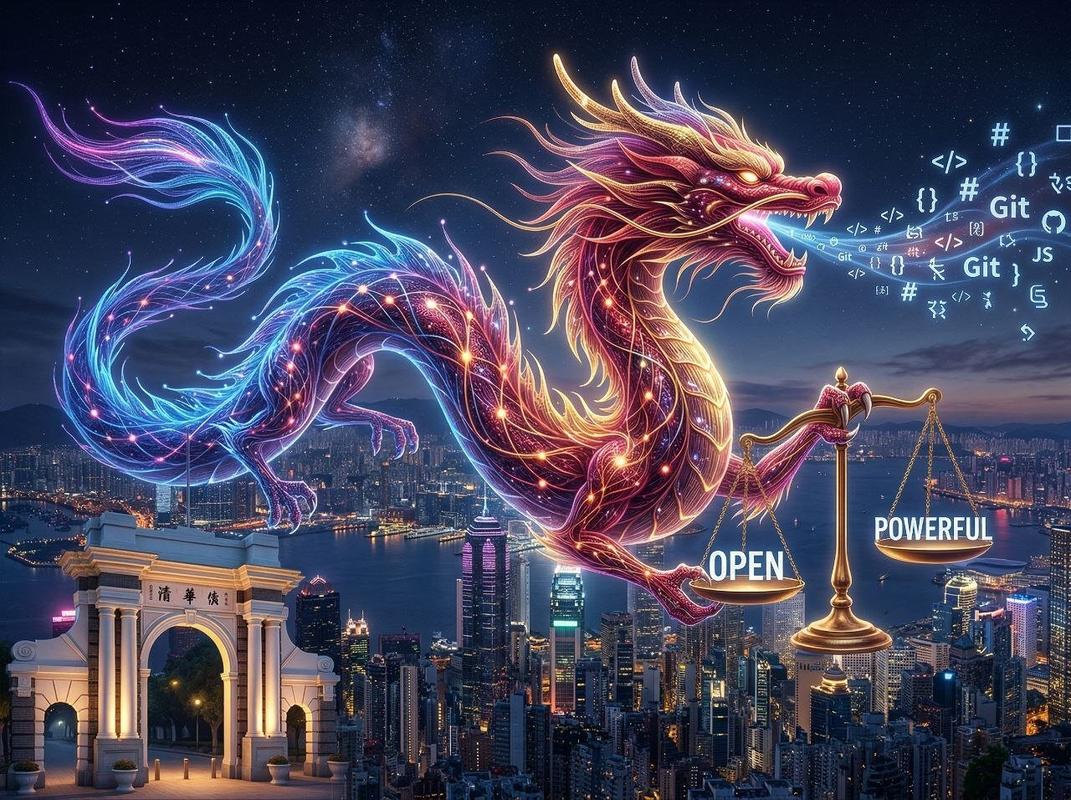
The hot take. Here's a hot take that'll ruffle some feathers in Silicon Valley: While American AI companies are busy building moats and jacking up prices, a Chinese startup founded by two Tsinghua University researchers is playing a completely different game — and they might just win it.
Yesterday, Zhipu AI (now operating as Z.ai) dropped GLM-5.1, their most capable model to date. But here's the kicker: they didn't just release another API product. They open-sourced the whole thing under MIT license, made it dirt cheap, and promptly got crowned the "strongest open-source model globally" by Artificial Analysis. Oh, and they did all this while sitting on a $6.7 billion valuation and a freshly completed IPO that raised $640 million.
If you're not paying attention to what's happening in Beijing right now, you're missing the plot.
What Happened
On April 7, 2026, Zhipu AI officially released GLM-5.1 — and this wasn't your typical incremental update. This is a flagship model that's designed to compete head-to-head with the best closed-source offerings from OpenAI and Anthropic, except with one crucial difference: anyone can download it, modify it, and deploy it however they want.
The MIT license choice is particularly interesting here. While some Chinese AI companies have been criticized for "open-washing" (releasing weights with restrictive commercial terms), Zhipu went all-in on true open source. That's a strategic move that signals confidence — they believe their advantage isn't in keeping secrets, but in execution speed, cost efficiency, and ecosystem building.
But the open-source release wasn't the only headline. Zhipu also announced their second price increase of 2026, with API costs rising 8-17% depending on usage tier. That might sound counterintuitive — aren't prices supposed to go down in AI? — but it's actually a smart play. It signals that demand is crushing their infrastructure, and they can afford to be selective while still undercutting Western competitors by miles.
Let's talk numbers, because they're absurd:
GLM-5.1: $1.40/million input tokens, $4.40/million output tokens
Claude Opus 4.6: $5.00/million input, $25.00/million output
Savings: 72% cheaper on input, 82% cheaper on output
That's not a typo. Zhipu's flagship model costs nearly 5x less than Anthropic's best offering. Even after their recent price hikes, they're operating on margins that would make Sam Altman sweat.
The Money Story: How Zhipu Built a War Chest
To understand why Zhipu can afford to play this game, you need to look at their funding history. Since founding in 2019 by Tsinghua University researchers Tang Jie and Li Juanzi, the company has raised a staggering $1.4-1.5 billion across 12 funding rounds.
Key Funding Milestones:
- May 2024: $400M round led by Saudi Prosperity7 — a massive vote of confidence from Middle Eastern capital
- Strategic Chinese investors: Alibaba, Tencent, Ant Group, Meituan, Xiaomi, and HongShan (formerly Sequoia China)
- International backing: Saudi Aramco joined the cap table alongside Prosperity7
- January 8, 2026: IPO on Hong Kong Stock Exchange raised ~$640M at a $6.7B valuation
This investor roster is fascinating for a couple of reasons. First, it's one of the rare Chinese AI companies that successfully attracted significant Middle Eastern capital — the Saudis aren't just buying oil anymore, they're buying into the AI future. Second, having both Alibaba and Tencent as investors is unusual (those two don't typically play nice together), which suggests Zhipu has managed to position itself as a neutral platform rather than a subsidiary of any single tech giant.
The January 2026 IPO was perfectly timed. Riding the wave of AI enthusiasm and with revenue multiples still generous in Hong Kong, Zhipu raised $640 million at a $6.7 billion valuation. That public market access gives them something most AI startups don't have: a currency for acquisitions, a benchmark for employee compensation, and the ability to raise debt against their equity if needed.
Why It Matters
The GLM-5.1 release matters for three big reasons that extend far beyond Zhipu's own business:
1. The Open-Source AI Movement Just Got Its Champion
For the past year, there's been a debate raging in AI circles: can open-source models ever truly compete with closed-source giants like GPT-4 and Claude? The conventional wisdom was that the best models would always be proprietary because only big companies could afford the compute costs and research talent.
Zhipu just proved that wrong. When Artificial Analysis — one of the most respected AI benchmarking organizations — ranks GLM-5.1 as the "strongest open-source model globally," that's a watershed moment. It means the gap between open and closed source has effectively closed, at least for this generation of models.
For developers, startups, and enterprises, this is a game-changer. You can now run a GPT-4 class model on your own infrastructure, with full control over data privacy, customization, and deployment. No API rate limits. No sudden price hikes. No sending your proprietary data to someone else's servers.
2. China's AI Ecosystem Is Maturing Fast
Zhipu's success isn't happening in a vacuum. It's a signal that China's AI ecosystem has evolved from copycat mode to genuine innovation leadership. The combination of top-tier academic talent (Tang Jie and Li Juanzi are both respected researchers from Tsinghua, China's MIT), patient capital from both domestic and Middle Eastern sources, and a willingness to compete aggressively on price is creating a new model for AI development.
The Z.ai rebrand is also telling. By simplifying their consumer-facing brand while keeping Zhipu AI for enterprise and research, they're following a playbook we've seen work before: Google/Alphabet, Facebook/Meta, etc. It's a sign they're thinking long-term about brand architecture as they expand globally.
3. The Pricing War Is About to Get Brutal
Even after raising prices, Zhipu is still dramatically undercutting Western competitors. That puts pressure on everyone. OpenAI and Anthropic now have to justify why their APIs cost 5x more. Other Chinese competitors (Baidu's Ernie, Alibaba's Tongyi, ByteDance's Doubao) have to explain why their models aren't as capable or as cheap.
The downstream effects will be fascinating to watch. If GLM-5.1 becomes the default open-source model for startups building AI applications, that's a massive shift in where value accrues in the AI stack. The model layer becomes commoditized, and the application layer becomes where the real money is made.
🔥 Our Hot Take
The AI game is being played on three levels right now, and most people are only watching two of them.
Level 1 is the American playbook: build the most capable model possible, keep it closed, charge premium prices, and use the revenue to fund the next generation. OpenAI and Anthropic are executing this brilliantly.
Level 2 is the open-source insurgency: release models freely, build an ecosystem, monetize through support/services/enterprise features. Meta's Llama strategy fits here, though they're a bit hamstrung by their license restrictions.
But Zhipu is playing Level 3: commoditize your complement. By making the best models free (open source) and the API access absurdly cheap, they're making it impossible for anyone else to compete on model quality or price. Their bet is that the real value isn't in the model — it's in the distribution, the brand, and the ability to capture the next platform shift.
Think about it: if you're a startup in Southeast Asia, Latin America, or the Middle East, why would you pay OpenAI prices when you can get comparable quality from Zhipu at 1/5th the cost? And once you're integrated with Zhipu's stack, you're in their ecosystem. That's how platforms are built.
The risk? Geopolitics. If US-China tensions escalate, we could see sanctions or restrictions that make it hard for Western companies to use Chinese AI models. But Zhipu's open-source strategy actually mitigates this — if the weights are public, you can run them anywhere, no API calls to Beijing required.
Bottom line: Zhipu just made the most aggressive move in AI this year. The next 12 months will determine if it pays off, but one thing's for sure — the era of American AI dominance is officially over. Welcome to the multipolar AI world.