
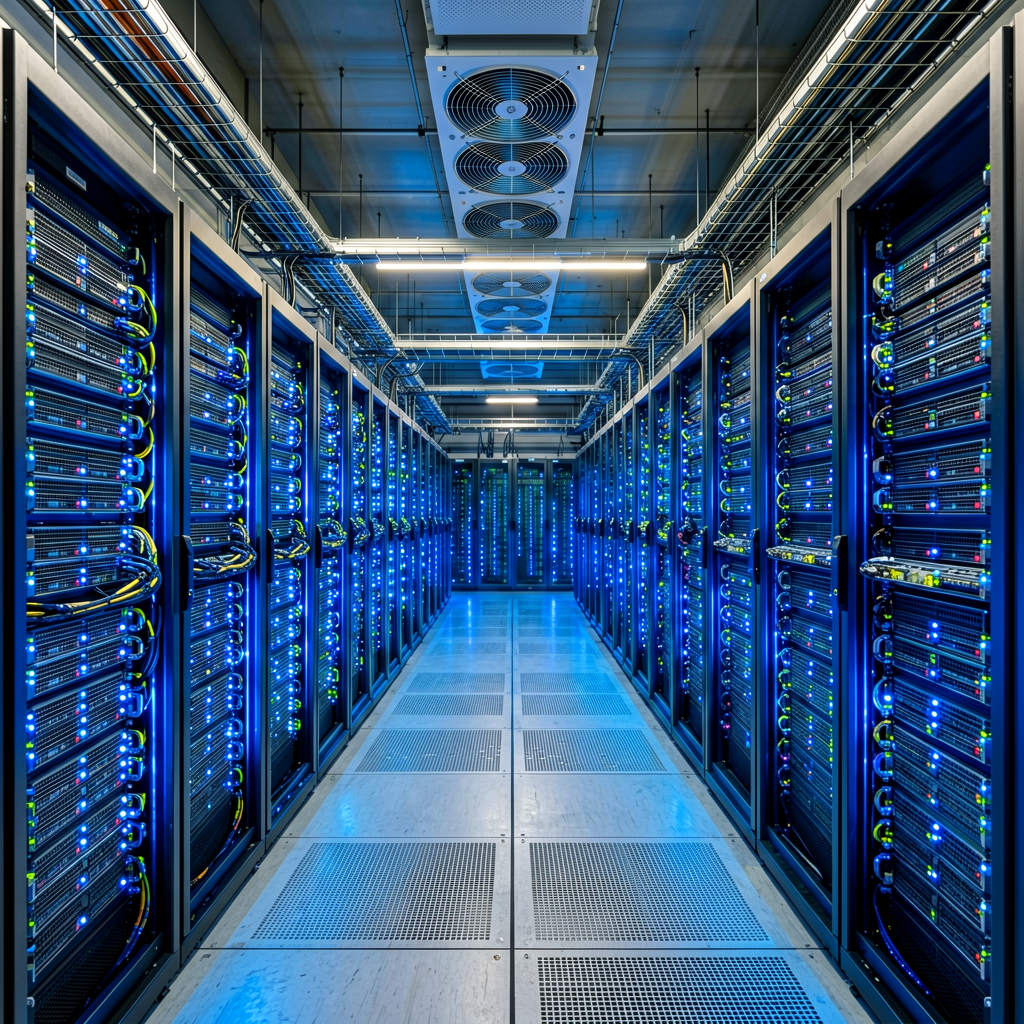
Google's planned 1-gigawatt data centre in Andhra Pradesh's Visakhapatnam district has hit an unexpected obstacle: basic physics. After sustained local protests over water usage, the tech giant reportedly agreed to use air-cooling technology instead of water-based systems. But as The Hindu's science desk explained this week, cooling a 1-GW facility with air alone is "considered impractical, both physically and economically" as of 2026.
The problem starts with transistors. A large data centre houses several million processors, each containing billions of transistors. Every time a transistor switches — manipulating electrical current to perform calculations — it generates heat. The resistance of the transistor's material opposes current flow, releasing energy as thermal energy. Across trillions of transistors operating simultaneously, the heat output is enormous.
Google's Visakhapatnam facility, if built to its full 1-GW capacity, would house approximately 400,000 to 500,000 high-performance AI accelerators. Each chip draws 700-1000 watts under load. That's 350-500 megawatts of pure heat — equivalent to the power consumption of a small city, all converted to thermal energy that must be removed continuously.
The Air-Cooling Impasse
Air-cooling works by passing ambient air over heated components, transferring thermal energy from the chips to the atmosphere. The physics is straightforward but the engineering is brutal. To remove 400 megawatts of heat using air, you'd need to move approximately 120,000 cubic meters of air per second — roughly 12,000 industrial fans running at full capacity, 24/7.
The problem compounds in India's climate. Visakhapatnam's average temperature ranges from 25°C to 35°C year-round, with humidity often exceeding 70%. Hot, humid air has less capacity to absorb heat than cold, dry air. The paradox is stark: the very climate that makes India attractive for data centres — warm enough to reduce heating costs in colder regions — becomes a liability for air-cooling efficiency.
Water-cooling, by contrast, can remove heat 1,000 times more efficiently than air. A single liter of water can absorb approximately 4.18 kilojoules per degree Celsius of temperature rise. Evaporative cooling systems can achieve even greater heat transfer through phase change. This is why hyperscalers like Google, Amazon, and Microsoft have overwhelmingly chosen liquid cooling for facilities above 100 MW.
The Local Resistance
Google's pivot to air-cooling came after months of local protest. Residents of Visakhapatnam's rural outskirts raised concerns about the facility's water footprint — estimates suggested a 1-GW data centre could consume 4-5 million liters of water daily for cooling. In a region where groundwater levels have been declining and agricultural needs compete with industrial demand, this sparked legitimate community opposition.
The protests weren't just about water. Data centres also require massive electrical infrastructure, road improvements, and can alter local microclimates through heat exhaust. Communities worried about losing agricultural land, facing traffic congestion, and experiencing temperature rises from thousands of industrial fans exhausting hot air into residential areas.
Google's apparent concession to air-cooling represents a diplomatic solution — acknowledging community concerns while presumably planning to implement the most efficient air-cooling technology available. But as The Hindu's analysis notes, the physics don't lie: air-cooling a 1-GW facility at scale remains impractical with current technology.
TCS Plays the Long Game
While Google wrestles with air-cooling physics, India's Tata Consultancy Services is taking a different approach. Just one day before The Hindu's air-cooling analysis published, TCS announced that its HyperVault subsidiary had secured 264 acres in Hyderabad for a 1-GW AI data centre campus.
HyperVault's plan is explicitly liquid-cooled. The company's press release emphasizes "liquid-cooled GPU infrastructure" designed to serve "frontier AI companies and hyperscalers." By choosing liquid cooling from the start, TCS avoids Google's Community-Physics Dilemma — satisfying both environmental concerns and engineering requirements.
The Hyderabad facility represents a $7.4 billion investment, positioning India as a competitor to traditional data centre hubs like Virginia's "Data Centre Alley" and Ireland's cloud campuses. HyperVault's 264-acre campus will feature multiple buildings, backup power systems, and direct fiber connections to global internet exchange points.
The Geopolitical Dimension
The contrast between Google's air-cooling struggles and TCS's liquid-cooled ambition reveals something deeper about India's AI infrastructure race. Foreign hyperscalers face community opposition and regulatory uncertainty, while Indian giants like TCS can build at scale with government support.
The Indian government has identified data centres as strategic infrastructure, offering relaxed environmental clearances and fast-tracked approvals for "priority sector" projects. TCS's HyperVault campus benefits from Telangana state's proactive data centre policy, which includes subsidized power and streamlined land acquisition.
Meanwhile, Google's Visakhapatnam project faces the classic challenges of Western tech expansion in India: community resistance, regulatory ambiguity, and the tension between global sustainability commitments and local environmental realities. The air-cooling pivot, while diplomatically necessary, may simply delay the inevitable conversation about how to cool massive AI infrastructure in a warming climate.
What This Means
The Google-TCS divergence illustrates a fundamental tension in India's AI boom: the physics of computation are universal, but the politics of infrastructure are local. A 1-GW data centre generates the same heat whether operated by Google or TCS. The challenge of removing that heat doesn't care about community protests or corporate PR — it only cares about thermodynamics.
As AI models grow larger and more computationally intensive, data centre power demands will continue climbing. The International Energy Agency estimates that data centres could account for 3-4% of global electricity consumption by 2028, up from 1-2% today. India, with its growing AI ambitions and climate vulnerabilities, sits at the intersection of these trends.
The air-cooling debate in Visakhapatnam is really a proxy war over India's AI future. Can the country build the infrastructure needed for frontier AI development while respecting community concerns and environmental limits? Or will the physics of computation force difficult choices about where, how, and whether to build?
Google's answer — air-cooling, whatever the practical cost — suggests the company is prioritizing market access over technical optimality. TCS's answer — liquid-cooled scale — shows what's possible when political will aligns with engineering reality. As India's AI infrastructure race intensifies, the physics will keep winning.
🔥 Hot Takes
1. Google's air-cooling pivot is corporate surrender to physics-denying PR. The company knew 1-GW air-cooling was impractical when it announced the Visakhapatnam project. The "concession" to local protesters wasn't about community concerns — it was about delaying construction while Google lobbies for exemptions or water usage rights. Meanwhile, TCS is already breaking ground on a liquid-cooled campus that will be operational in 2-3 years. While Google debates physics, India's homegrown champions are building.
2. The real story isn't Google vs TCS — it's thermodynamics vs ambition. You can protest, lobby, or rebrand your cooling system, but 400 megawatts of heat is 400 megawatts of heat. India's AI boom requires massive infrastructure, but the country also faces water scarcity, grid instability, and climate vulnerability. The question isn't whether India can build data centres — it's whether it can build them sustainably. Every facility that ignores thermodynamics will either fail physically or face renewed community opposition.
3. HyperVault's $7.4B Hyderabad campus is the quiet winner of India's AI infrastructure race. While Google fiddles with air-cooling feasibility studies, TCS's HyperVault is securing land, power, and fiber in one of India's most pro-business states. The 264-acre liquid-cooled campus positions India to serve not just domestic AI demand but global hyperscalers looking for alternative locations to Virginia and Ireland. The Google protest story makes headlines; the TCS expansion story makes money.