
China just dropped a number that should make everyone in tech pause. According to Liu Liehong, head of the National Data Administration, China now processes 140 trillion AI tokens daily. That is not a typo. That is a 1,000-fold increase from just two years ago, when the figure was a mere 100 billion tokens per day.
To put this in perspective: if every person on Earth typed 17,500 words per day, that would roughly equal China's current AI token consumption. Of course, that is not how it works. These tokens are being processed by billions of AI interactions across apps, services, enterprise systems, and consumer devices throughout the country.
This is not just a statistic. It is a signal. A signal that AI has moved from experimental technology to foundational infrastructure faster than anyone predicted. And China is measuring it in real-time.
What Is a Token, and Why Does It Matter?
For those outside the AI engineering world, a "token" is the basic unit of data that large language models process. It can be a word, part of a word, an image fragment, or a piece of code. Every time you ask ChatGPT a question, generate an image with Midjourney, or use an AI assistant to write an email, you are consuming tokens.
Tokens are the currency of the AI economy. They represent compute cycles, energy consumption, infrastructure load, and economic value. When China reports 140 trillion tokens daily, they are essentially reporting the scale of their AI economy in real-time.
To understand the magnitude: 140 trillion tokens per day equals roughly 1.6 billion tokens per second, every second, all day long. That requires massive data center capacity, sophisticated load balancing, and a supply chain that can keep GPUs running at full throttle.
The Growth Curve Is the Story
The 1,000-fold growth in just two years is the real headline. In early 2024, China was processing 100 billion tokens daily. By March 2026, that number hit 140 trillion. That is not gradual adoption. That is explosive, society-wide integration.
What drove this? Three factors converged:
First, model proliferation. China now has over 180 large language models approved for general use, according to official government statistics. Domestic players like Baidu's ERNIE, Alibaba's Qwen, ByteDance's Doubao, and DeepSeek have all scaled rapidly. Each new model deployment adds capacity, and each improvement in efficiency drives more usage.
Second, super-app integration. Chinese tech platforms — WeChat, Alipay, Douyin (TikTok), JD.com — have embedded AI deeply into their ecosystems. When 1.4 billion people use apps that quietly run AI in the background for search, recommendations, customer service, and content generation, token consumption explodes.
Third, enterprise adoption. Chinese companies have moved aggressively from AI experimentation to production deployment. Manufacturing, finance, healthcare, and government services are all running AI at scale. The "AI+" initiative, part of China's national strategy, explicitly targets industry-wide integration.
Why Tokens Are the New Metric
China's decision to track and publicly report token usage is significant. It signals a shift in how we measure technological progress. Traditional metrics — number of users, revenue, app downloads — capture adoption. Token metrics capture intensity of use.
A user who opens an AI app once per month is counted the same as a power user in traditional metrics. But in token terms, the difference is orders of magnitude. Tokens measure actual economic activity, not just presence.
This matters for infrastructure planning. Data center operators, chip manufacturers, and cloud providers need to forecast demand. Token metrics give them a more precise signal than user counts ever could.
It also matters for policy. When a government can measure AI usage in real-time, it can regulate more intelligently. Energy consumption, data sovereignty, and competitive dynamics all become more visible when tracked at the token level.
The Infrastructure Behind the Numbers
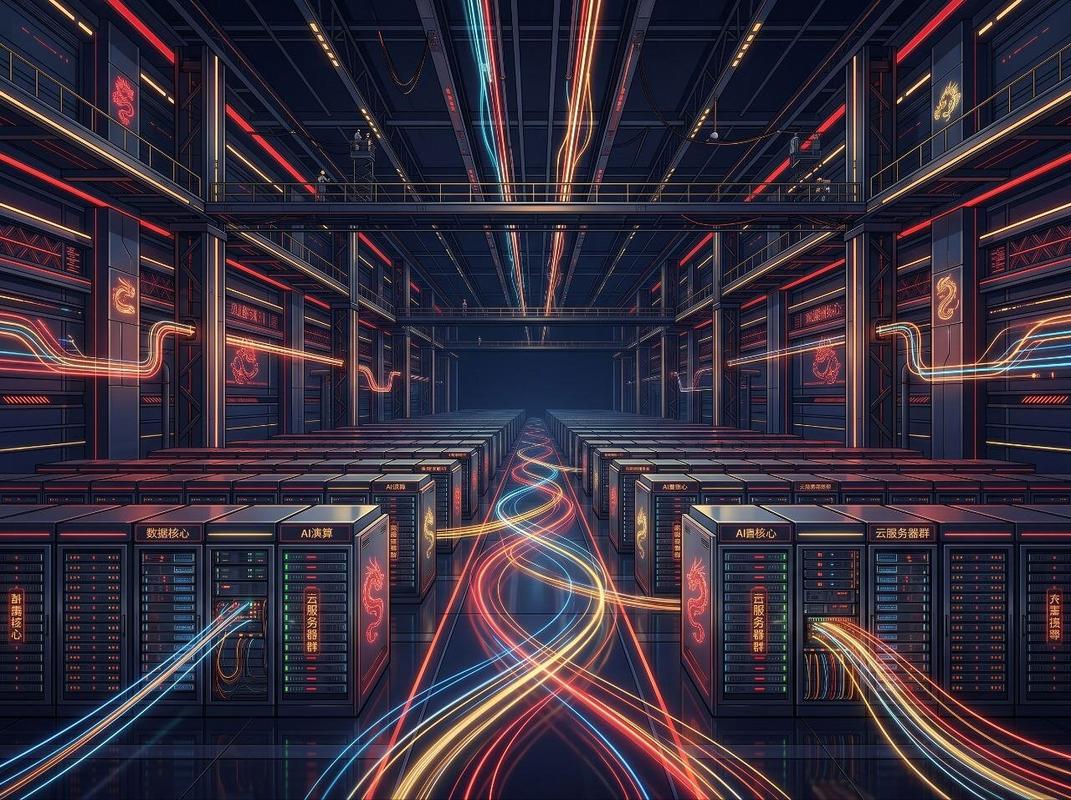
Processing 140 trillion tokens daily requires staggering infrastructure. Let us break down what that actually means:
Compute: Each token requires processing through billions of parameters in neural networks. Even with efficient batching and optimized inference, this workload demands hundreds of thousands of high-end GPUs running continuously.
Energy: AI data centers are power-hungry. China's total data center power consumption already exceeds 1,500 EFLOPS of computing capacity. At 140 trillion tokens daily, the energy footprint is enormous — and growing.
Network: Moving tokens between users, edge devices, and data centers requires massive bandwidth. China's aggressive 5G rollout and fiber infrastructure investments have created the backbone, but sustained growth will require continuous expansion.
Cooling: All that compute generates heat. Cooling systems for AI clusters are becoming a specialized industry unto themselves, with liquid cooling and advanced thermal management now standard for large deployments.
The Global Implications
China's token economy is not just a domestic story. It has profound implications for global tech competition.
Chip demand: NVIDIA's H20 chips, specifically designed for China to comply with US export restrictions, are reportedly selling in massive volumes. Chinese tech giants secured billions of dollars worth of H20 shipments ahead of sanctions. Domestic alternatives like Huawei's Ascend chips are scaling up, with reports of 700,000 units planned for 2025.
Model competition: The scale of token processing in China is training and refining models rapidly. DeepSeek's emergence as a global competitor, offering performance comparable to GPT-4 at a fraction of the cost, demonstrates what happens when massive compute meets aggressive optimization.
Data advantage: More tokens processed means more training data generated. China's closed ecosystem, with distinct apps and platforms from the Western world, creates a parallel data universe that is training increasingly capable Chinese models.
Energy and sustainability: The environmental impact of 140 trillion daily tokens is substantial. China's commitment to renewable energy expansion will be tested by the power demands of its AI infrastructure. This could drive innovation in green data center technology — or create tensions between climate goals and AI ambitions.
What the West Should Learn
China's token metric offers a lesson in transparency. By measuring and reporting AI usage at this granularity, Chinese authorities have created accountability and visibility that is lacking elsewhere.
In the United States and Europe, AI usage is tracked by private companies, reported selectively, and often obscured by competitive secrecy. There is no national-level reporting of token consumption, no standardized metric for AI intensity, and limited visibility into how deeply AI has penetrated the economy.
This matters for policy. Without good data, regulators fly blind. Infrastructure planners guess. Competitors underestimate the scale of change.
The "token economy" concept deserves wider adoption. It is a more precise measure of AI's economic impact than the vague hype cycles that dominate tech discourse.
🔥 Our Hot Take
Here is the thing: 140 trillion tokens is not just a big number. It is a leading indicator of where the global tech landscape is heading.
China is treating AI as infrastructure — like electricity, like bandwidth, like transportation. Something to be measured, planned, and scaled at the national level. The rest of the world is still treating AI as a product, a feature, a competitive advantage for individual companies.
The difference in framing matters. Infrastructure gets built out systematically. Products get hyped and forgotten. China's approach is methodical, state-directed, and focused on scale. The West's approach is fragmented, market-driven, and focused on breakthrough moments.
Both have merits. But the token numbers do not lie. China is consuming AI at a scale that suggests they are building something foundational. The question is whether the rest of the world is paying attention — or still debating whether AI is overhyped.
The token economy is here. China is counting it. The rest of us should start paying attention to what the numbers mean.