
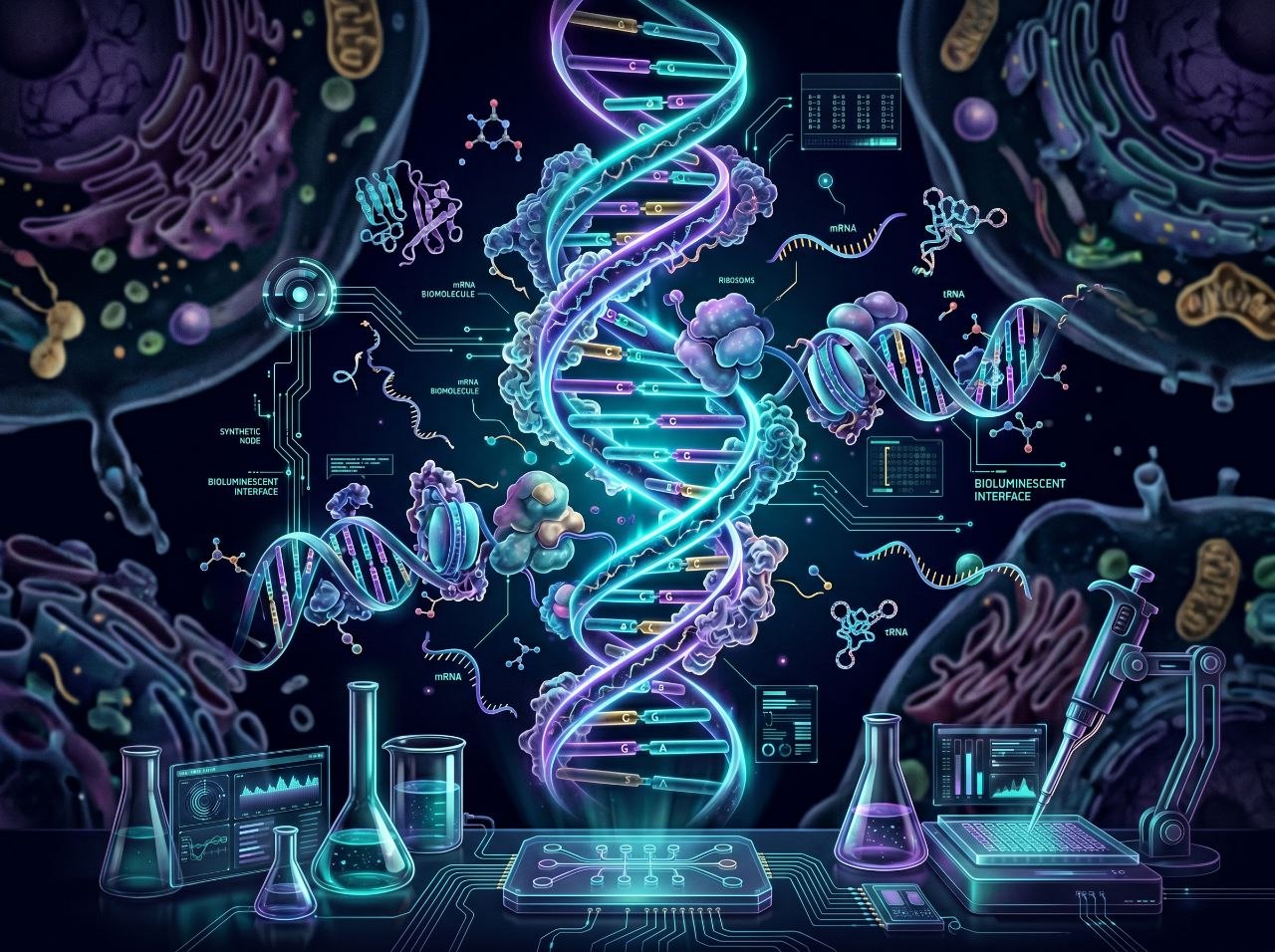
OpenAI just dropped something unexpected. While everyone's been obsessing over GPT-5 and agentic AI, the company quietly launched GPT-Rosalind — its first specialized model built specifically for life sciences research. Named after British chemist Rosalind Franklin (whose work was crucial to discovering DNA's structure), this isn't another general-purpose chatbot. It's a precision tool designed to help scientists navigate the brutal complexity of biological research.
The Problem With Drug Discovery
Let's put this in perspective. Drug discovery is one of the most expensive and time-consuming endeavors in human history. It takes roughly 10 to 15 years to go from target discovery to regulatory approval for a new drug in the United States. We're talking about a process that can cost billions of dollars, with countless dead ends, failed trials, and abandoned compounds along the way.
Most of that time isn't spent in breakthrough moments of inspiration. It's spent in painstaking analytical work — sifting through mountains of scientific literature, designing reagents, interpreting complex biological data, and running endless experiments that may or may not yield useful results. Scientists are drowning in data but starving for insights. Genomics alone generates petabytes of information, and protein databases grow exponentially every year. The bottleneck isn't data collection anymore — it's making sense of it all.
This is where GPT-Rosalind enters the picture. OpenAI believes artificial intelligence can help compress those timelines, and this model represents their most specialized attempt yet to prove it.
What Makes GPT-Rosalind Different
Most AI models are jacks of all trades. They can write poetry, debug code, summarize emails, and generate marketing copy — but they lack depth in any single domain. They're broad but shallow. GPT-Rosalind takes the opposite approach. It's fine-tuned specifically for biochemistry, genomics, and the messy, multi-step workflows that define real scientific discovery.
Here's what that actually means in practice: A researcher working on a new gene therapy might need to survey hundreds of recent papers to understand the current state of the field, identify patterns in protein structures that could indicate therapeutic potential, design cloning protocols to test their hypotheses, and predict how a particular RNA sequence will behave in cellular environments. Traditionally, each of these steps required different tools, different experts with specialized knowledge, and weeks or months of time.
GPT-Rosalind aims to compress that timeline dramatically by handling evidence synthesis, hypothesis generation, and experimental planning within a single, coherent interface. It can query specialized biological databases, parse recent scientific literature, interact with computational tools, and suggest new experimental pathways — all while maintaining the context of the broader research question.
OpenAI is also launching a Life Sciences research plugin for Codex that connects the model to over 50 scientific tools and data sources. Think of it as giving scientists a programmable research assistant that actually understands biological context, can access the right databases, and knows which computational pipelines to run.
The Benchmarks Don't Lie
Performance claims from AI companies always require scrutiny, and OpenAI has published specific numbers against established benchmarks. On BixBench — a rigorous benchmark designed around bioinformatics and data analysis — GPT-Rosalind achieved a 0.751 pass rate. For context, BixBench evaluates models on real-world tasks that actual bioinformaticians perform daily: processing sequencing data, running statistical analyses, interpreting genomic outputs, and making sense of complex biological datasets. A 0.751 pass rate indicates genuinely strong practical capability in this domain.
On LABBench2, the model outperformed GPT-5.4 on six out of eleven specialized tasks, with the most significant gains appearing in CloningQA — a demanding task requiring the end-to-end design of reagents for molecular cloning protocols. This is exactly the kind of tedious, detail-oriented work that consumes researchers' time but doesn't require genius-level insight — just deep domain knowledge and careful attention to technical details.
Perhaps the most striking evaluation came from a real-world research partnership with Dyno Therapeutics, a company working at the cutting edge of gene therapy. The model was tested on RNA sequence-to-function prediction using completely unpublished sequences — data that had never been part of any public training set, ruling out memorization as a confounding factor. When evaluated directly in the Codex environment, the model's best-of-ten submissions ranked above the 95th percentile of human experts on prediction tasks and reached the 84th percentile for sequence generation. For novel biological data that the model had never seen before, that's a remarkable result for any AI system.
Controlled Access, Real Partners
This isn't available to everyone yet, and that's by design. OpenAI is gating access through a trusted-access program for qualified enterprise customers in the United States. They've built in technical safeguards — systems to flag potentially dangerous activity and limits on how the model can be used. The company is being selective about who gets access and under what conditions.
Access is being reserved for organizations working on improving human health outcomes, conducting legitimate life sciences research, and maintaining strong security and governance controls. OpenAI is already working with an impressive roster of partners: Amgen (one of the world's largest biotech companies), Moderna (pioneers of mRNA vaccine technology), the Allen Institute (a major force in bioscience research), Thermo Fisher Scientific (a giant in scientific instrumentation), and even Los Alamos National Laboratory on AI-guided design of proteins and catalysts.
This isn't just a research toy — it's being put to work at some of the most serious scientific institutions on the planet.
Why Domain-Specific Models Are the Next Frontier
This launch reflects a broader architectural shift happening across the AI industry. Rather than relying solely on increasingly large general-purpose models, leading labs are now investing heavily in models optimized for specific scientific or professional domains. Domain-specific models might represent AI's next major phase, and life sciences — with its vast search spaces, high-dimensional data, enormous societal stakes, and clear commercial applications — is one of the clearest proving grounds.
Just as fine-tuning and reinforcement learning from human feedback allowed language models to specialize for code generation or instruction-following, OpenAI is now applying similar strategies to make models that can reason meaningfully about genomic sequences, chemical structures, experimental protocols, and the intricate causal relationships that govern biological systems.
The implications extend far beyond drug discovery. A model that truly understands biology could accelerate research into genetic diseases, help design more effective vaccines, optimize agricultural biotechnology, and even contribute to synthetic biology applications we're only beginning to imagine. The search space of possible proteins alone is larger than the number of atoms in the observable universe — having an intelligent assistant that can navigate that space efficiently is a genuine game-changer.
The Name Matters
The model is named after Rosalind Franklin, the British chemist whose X-ray diffraction images were crucial to revealing the double-helix structure of DNA. Her work laid the foundation for modern molecular biology, though her contributions were famously overshadowed in her lifetime. It's a fitting tribute for a model designed to carry that scientific legacy into a new computational era — and perhaps a subtle acknowledgment that breakthrough insights often come from unexpected places and unrecognized contributors.
Franklin's meticulous approach to data collection and analysis mirrors what GPT-Rosalind aims to provide: rigorous, detail-oriented assistance that helps scientists see patterns they might otherwise miss. The parallel is apt.
🔥 Our Hot Take
Here's the thing: Domain-specific models might be the real next frontier in AI. We've seen general models get bigger and bigger, consuming more data and more compute, but there's a ceiling to what breadth can achieve. At some point, you need depth. GPT-Rosalind represents a different philosophy — depth over breadth, specialization over generalization.
The life sciences are a perfect proving ground for this approach. The search spaces are vast, the data is high-dimensional and noisy, the causal relationships are complex and often non-obvious, and the stakes couldn't be higher. If AI can meaningfully accelerate drug discovery — where a single successful compound can be worth billions of dollars and save millions of lives — the impact is genuinely transformative. We're talking about potentially shortening the 10-15 year drug development timeline by years, getting life-saving treatments to patients faster.
But let's be real about what's happening here: This is also OpenAI hedging its bets in a smart way. While competitors chase the holy grail of artificial general intelligence, OpenAI is building specialized tools that solve real, expensive problems today. Drug discovery is a $200+ billion industry where even small efficiency gains translate to massive economic value. There's a clear business model here — enterprise customers with deep pockets and urgent problems.
The 95th percentile performance on novel RNA data is particularly interesting. It suggests this isn't just regurgitating training data — it's actually learning to reason about biological systems in ways that generalize to new problems. That's the holy grail for scientific AI.
What's next? If this works in life sciences, expect similar domain-specific models for materials science, climate modeling, financial analysis, legal research, and other fields where deep expertise matters. The era of one-size-fits-all AI might be giving way to an ecosystem of specialized tools, each optimized for particular types of reasoning.
The name is fitting, too. Rosalind Franklin's contributions to science were overshadowed in her lifetime, recognized only posthumously. Let's hope this model's impact is recognized a lot faster — and that it helps a new generation of scientists make breakthroughs that change the world.