
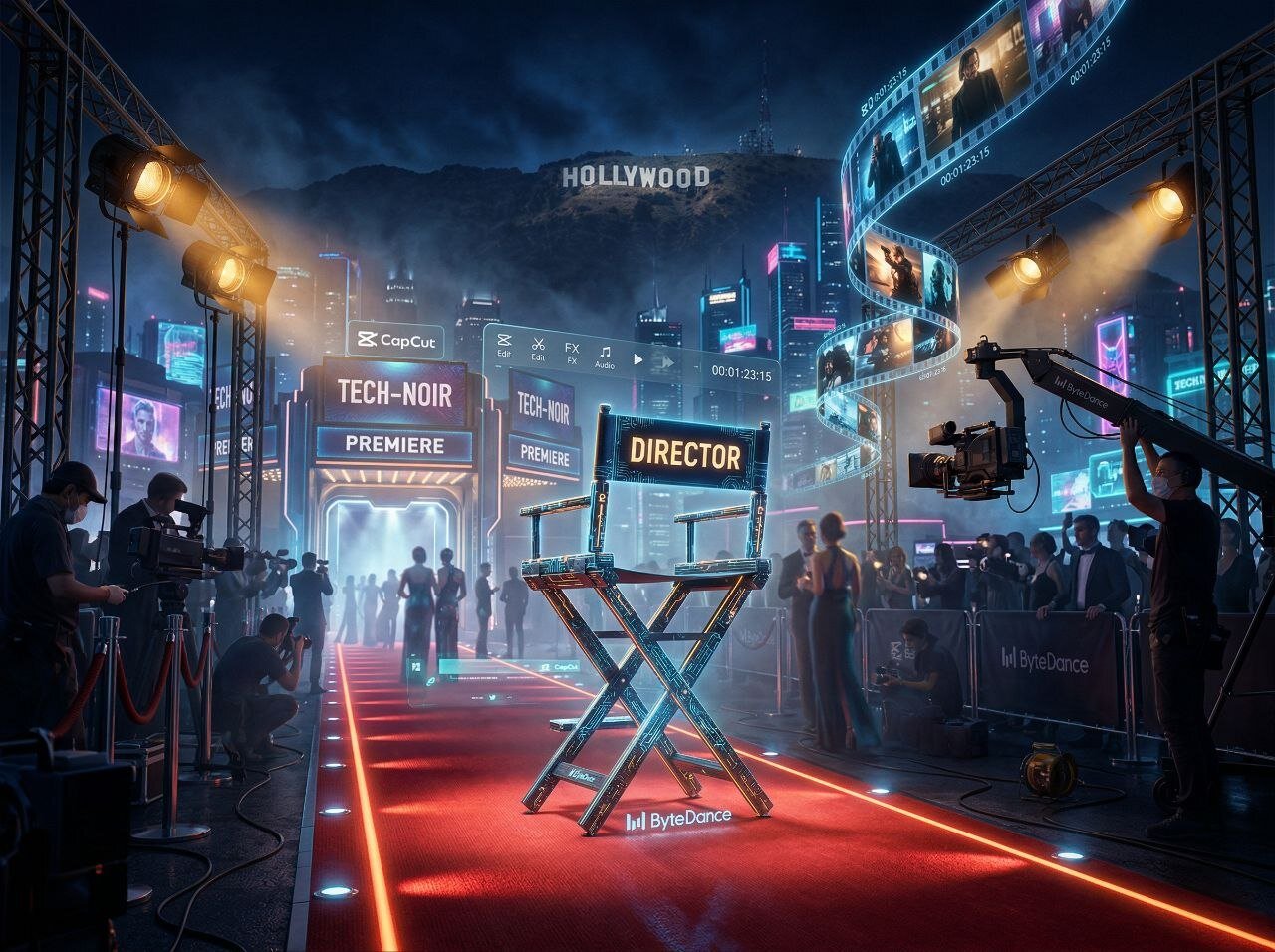
Hollywood's worst nightmare just landed on American shores. ByteDance's Seedance 2.0 — the AI video tool so good it triggered legal threats from half of Hollywood's major studios — officially launched in the United States today. After a tense two-month standoff over intellectual property violations, the Chinese tech giant has returned with a "nerfed" version and a new distribution partner: Oracle. But there's a catch — the price just doubled, and the tool that terrified Tinseltown is now locked behind a paywall that could shape the future of AI-generated video.
What Happened
On April 10, 2026, ByteDance's CapCut team announced that Seedance 2.0 is now available to U.S.-based users. The launch marks the end of a two-month saga that began in February when the AI video generation tool first debuted — and promptly sent shockwaves through Hollywood.
The initial release of Seedance 2.0 was nothing short of revolutionary. Users could generate stunningly realistic video clips featuring fluid character movements, accurate replications of famous actors, Hollywood-grade special effects, and professional camera movements. The quality was so high that half of Hollywood's major studios fired off angry legal letters to ByteDance, accusing the tool of enabling widespread intellectual property infringement.
The controversy centered on Seedance's ability to replicate famous actors and characters with disturbing accuracy. Users were generating videos that looked like deleted scenes from blockbuster movies, featuring AI-generated versions of A-list celebrities in scenarios that never happened. For an industry already grappling with AI's impact on creative work, this was a step too far.
ByteDance went silent for about a month, then re-emerged with a modified version sporting "tighter intellectual property controls." The revised Seedance 2.0 now explicitly prohibits generating content featuring famous actors, existing characters, or recognizable IP. The company has pledged to enforce these restrictions — though how effectively remains to be seen.
The Oracle Partnership Twist
The U.S. launch comes with an unexpected corporate partner: Oracle. As part of the complex deal that gave Oracle a majority stake in TikTok's U.S. operations, CapCut was included in the arrangement, with ByteDance retaining nearly 20% ownership in the U.S. joint venture.
Almost immediately after the handoff, Oracle made a move that significantly changes the economics for American users. The annual subscription price for CapCut — the video editing suite that now houses Seedance 2.0 — doubled from $90 to $180 per year.
But the price hike doesn't end there. The $180 subscription only includes a limited number of Seedance credits. Most users who want to generate AI videos regularly will need to purchase additional credit packs on top of the base subscription. This tiered pricing model effectively creates a premium tier for AI video generation that didn't exist before.
Runway Enters the Mix
In a surprising development, Runway — one of the leading U.S.-based AI video companies — announced it will also offer Seedance 2.0 on its platform starting Thursday. This partnership between a Chinese tech giant and an American AI startup represents a significant cross-border collaboration in the increasingly competitive AI video space.
Runway's involvement suggests that despite geopolitical tensions and trade restrictions, Chinese AI technology is finding pathways into the U.S. market through partnerships and joint ventures. For Runway, offering Seedance 2.0 alongside its own tools provides users with more options. For ByteDance, it represents validation and distribution without the headaches of direct U.S. operations.
Why It Matters
The Quality Threshold Has Been Crossed
Hollywood's panicked reaction to the initial Seedance 2.0 release wasn't just about IP infringement — it was about existential recognition. The tool demonstrated that AI-generated video had crossed a quality threshold that made it commercially viable for professional content creation.
Previous AI video tools were impressive tech demos but clearly artificial upon close inspection. Seedance 2.0 was different. The fluidity of movement, the consistency of characters across frames, the quality of special effects — these weren't just improvements, they were paradigm shifts. When industry professionals couldn't immediately distinguish AI-generated content from real footage, the game changed.
The restrictions ByteDance implemented don't change the underlying capability. The technology that can generate convincing fake footage of Tom Cruise or recreate Marvel-style action sequences still exists — it's just been hobbled for legal compliance. But the capability itself is now proven, and other tools without such restrictions will inevitably emerge.
The Pricing Power Play
Oracle's decision to double CapCut's price while the market for AI video tools is still developing is a bold move that signals confidence in the technology's value. At $180 per year plus additional credits, Seedance 2.0 enters the market at a premium price point compared to many competitors.
This pricing strategy could have several effects. It might limit adoption to serious creators and professionals who can justify the expense, keeping the tool out of the hands of casual users who might generate problematic content. It also establishes a revenue model that could be highly profitable if Seedance 2.0 becomes an industry standard.
However, the pricing also creates an opening for competitors. If Runway, OpenAI's Sora, or other tools can offer comparable quality at lower prices, ByteDance's pricing could backfire. The AI video market is still in its infancy, and pricing power remains uncertain.
Geopolitical AI Distribution
The ByteDance-Oracle-Runway partnership structure represents a template for how Chinese AI companies might navigate U.S. market access amid ongoing trade tensions and security concerns. Rather than operating directly, ByteDance licenses its technology through American partners who handle distribution, pricing, and compliance.
This model could become increasingly common as Chinese AI capabilities advance but direct market access remains restricted. It allows Chinese companies to monetize their technology while insulating themselves from regulatory scrutiny. For American partners, it provides access to cutting-edge AI without the development costs.
The question is whether U.S. regulators will allow this arrangement to persist. If Seedance 2.0 becomes a dominant player in AI video generation, policymakers may scrutinize whether the Oracle partnership provides sufficient distance from ByteDance's Chinese parent company.
🔥 Our Hot Take
After twenty years watching tech disruptions, I can tell you this: Hollywood's legal threats bought them about two months. That's it. The technology Seedance 2.0 demonstrated isn't going away — it's proliferating. ByteDance's return with a "compliant" version and a doubled price tag isn't a retreat, it's a market test.
Here's what the studios don't want to admit: the genie isn't just out of the bottle, it's been cloned, open-sourced, and distributed through torrent networks. Even if ByteDance's IP restrictions hold (and that's a big if), the underlying models and techniques are now documented and understood. Competitors without Hollywood partnerships to protect will implement similar capabilities without the guardrails.
The February legal letters were never going to stop this technology. They were theater — an attempt to establish a negotiating position before the inevitable. The real battle isn't about whether AI-generated video of famous actors is possible (it is) or legal (debatable). It's about who controls the distribution of the tools and the revenue they generate.
Oracle's pricing strategy reveals the game. At $180 per year plus credits, Seedance 2.0 isn't targeting teenagers making meme videos. It's aiming at professional content creators, social media influencers, and small production companies — the exact demographic that currently hires actors, rents equipment, and pays for locations. This is a direct assault on Hollywood's economic model, legal threats notwithstanding.
The Runway partnership is particularly telling. When a leading American AI video company voluntarily distributes a Chinese competitor's technology, it signals that the capability gap is real and significant. Runway isn't partnering out of charity — they're acknowledging that Seedance 2.0 offers something their own tools don't.
My prediction? Within 12 months, we'll see a flood of AI-generated video content that passes the "casual inspection" test — good enough that most viewers won't question whether it's real footage or AI-generated. The restrictions on famous actors and IP will hold for commercial products, but underground tools without such limits will proliferate. Hollywood will shift from trying to stop the technology to figuring out how to license and monetize it.
The tools don't make you a better storyteller? That's true. But they do make it possible for one person with a laptop to create what previously required a crew of fifty. And in the attention economy, volume and speed often beat polish and perfection.
Welcome to the new Hollywood. Bring your AI. 🐻🎬
Related Reading
- Meta Drops $21 Billion on CoreWeave: The AI Infrastructure Arms Race Just Went Nuclear — While Hollywood fights AI video, the infrastructure to power it is being built at massive scale
- Netflix Just Dropped Its First AI Model — And It Could Change Hollywood Forever — How streaming giants are embracing AI while traditional studios resist
- The Anthropic "Mythos" Scare: Why the US Government Just Called an Emergency Meeting Over AI — Another example of AI capabilities advancing faster than regulatory frameworks