
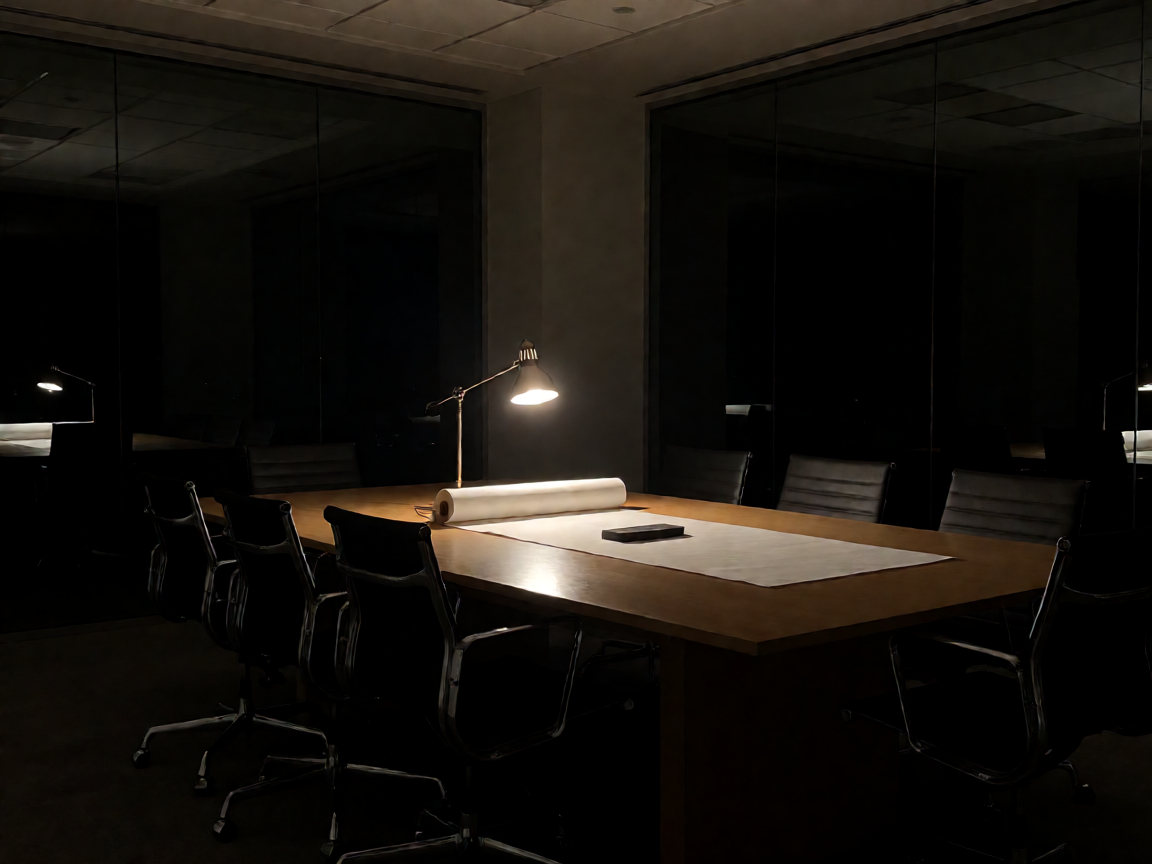
The device was inside a roll of toilet paper, pushed into a USB port on a television in one of OpenAI's executive conference rooms in San Francisco. That is the detail the unsealed complaint gives, and it is the one that will get retold for a while, because it sits badly next to the scale of what it was sitting next to: the room where the company's most senior people talk about the technology the government now calls its national-security priority. The employee who allegedly placed it, Abdulrahman Alfozan, a 35-year-old Saudi national who had been at the company since July 2025, was arrested by the FBI on October 9, and OpenAI announced on October 14 that it had fired him, that the FBI is investigating, and that it had used its own models to understand the device and trace where it had come from. The last part of that sentence is the one that will matter more than the first.
What is actually in the complaint
The facts, in the order the complaint lays them out. OpenAI's people found the recording device toward the end of September, hidden in the toilet paper and powered through the TV's USB port, in an office conference room. CCTV showed Alfozan in the vicinity of that location at times when he was not authorised to be in the meetings that ran in it. He had been using a productivity tool to track the company's meetings, and a chatbot account tied to his spouse had been used for prompts about recording devices. A second, similar device was found in his bag, and there was an image of him looking at the place where the first one had been hidden. The company's own statement, read back to the complaint, is short and deliberate: there was, at that point, no indication that model weights, source code, or customer data had been accessed or exfiltrated, and the employee was terminated.
The two senior voices that framed the arrest set the temperature of the story, and the two frames are not the same frame, which is the interesting part. FBI Director Kash Patel called it an effort to secretly capture sensitive communications about the company's super-intelligence technology. The Director of National Intelligence, Jay Clayton, who is also the head of the administration's new super-intelligence push, said the situation underscores why winning the global super-intelligence race is a national-security prerogative. One of them is describing a crime. The other is describing a policy, and he is describing it in the same breath, and that pairing is the reason the case is going to be read as something bigger than a bad employee with a bad idea.
The AI-defends-its-own-house line
OpenAI's announcement included one clause that the coverage mostly underplayed, because it is the most consequential part of the week in a way that is hard to feel in the headline. The company said it used its models to understand the device and where it had come from. That is not a line about forensics, and it is not a line about a tool. It is a line about the defender, and it is the line that tells you the company now treats its own models as a security function, the way a bank treats its clearing system: not the thing being defended, but the thing doing the defending. The device that was found was inanimate. The response to it was a model. The gap between those two is the whole strategy, and it is the one that changes what a conference room is, from a place where people talk to a place where the room itself is a data source and the company's own systems are the first responder. The arrest is the event. That clause is the infrastructure.
It also quietly answers the question the field has been asking since the agent-attack reports started landing, which is who watches the watchers when the watchers are models. The answer OpenAI gave, in one line, is that the models watch the models, and the humans sign off. The human who signed off in this case is the company's own security organization, and the thing they were signing off on was a recording device that had been sitting in a USB port, reading a room, for a period that the complaint does not fully close. The period is the part that should worry anyone who has ever sat in a room that talks about the next five years, and it is the part that the 30-day window of the case is going to be measured against, because the question is not whether the device was found. It is how long it was there, and what it heard, and whether any of it was a model, source code, or customer data, which is the exact list the company said it had not seen evidence of, at that point.
What it means, and what it does not
The case is going to be cited, in the next argument about whether the two capitals need a set of guardrails, as the example of why the guardrails have to include the room. The shared threat taxonomy that the two sides have not agreed on is, in practice, a list of what a room is for, and whether a room where a frontier model is being discussed is a room that a single employee, with a USB port and a roll of paper, can record. The answer the complaint gives is no, and the answer the policy gives is that the no has to be a national-security posture, not a facility-security one, and that difference is the one that moves the case from the facilities budget to the intelligence community, and the intelligence community is the one that does not do facilities budgets. The case is the first time the two have met, and the meeting is going to show up in the next draft of whatever the off-ramp looks like.
What the case does not do is close the question of the hearing period. The device was found at the end of September. The room it was in had been running meetings for longer than that. The company has said there is no indication of exfiltration, at the point of the announcement. The word at is doing work in that sentence, and the work is the one that the next order in the case is going to do, because the next order is going to be the one that says whether the period of the hearing is a period of a crime, or a period of a near-miss, and the difference between those two is the difference between a felony and a memo, and the memo is the one that a company writes to itself, and the one that a government writes is the one that becomes a rule.
The line the DNI drew is the one that will outlast the case, because it is the line that names the thing the case is about. The super-intelligence race is not a product race, in the framing he used, and it is not a talent race, in the framing he used, and it is not a compute race, in the framing he used. It is a national-security prerogative, and the prerogative is the thing that a government gets to act on before the other government does, and the arrest is the first action of the prerogative, in the direction of a company's own hallway. The hallway is the new border, and the USB port is the new customs line, and the case is the first one filed on the other side of it.
Hot takes
The roll of toilet paper is going to be the most quoted object in the next security audit, and it will be quoted by the people who think the threat model is the external one. It is not the external one. It is the internal one, and the internal one is the one that a company's own employee, with a USB port and a productivity tool and a chatbot account in the name of the person who lives next door, runs against the company's own room. The external threat is the one you can fence. The internal one is the one you can only detect, and the detection in this case was a human, in a room, finding a device in a roll of paper, and that is the last human in the loop that the company is going to have, because the next one is going to be the model that found it, and the model that found it is the one the company is now running on the same infrastructure as the thing it is defending.
The DNI's line is the line that turns a facilities incident into a doctrine, and the doctrine is the one that is going to be read in the next two capitals' negotiations, not in the next company's security review. He did not say this is a security breach. He said this is the reason the race is a national-security prerogative, and the reason is the one that a government can act on and a company cannot, because the company's reason is a budget line and the government's reason is a posture, and the posture is the one that survives the budget cycle. The case is going to be cited in the room where the off-ramp is being written, and it is going to be cited as the example of the hallway, and the hallway is going to be the new border, and the border is going to be the one that the two sides have to agree on, or the one that the two sides fight over, and the fight is the one that the 30-day window of the case is going to lose to, because the 30-day window is the company's clock and the fight is the government's.
The clause about the company using its own models is the one that is going to be the template, and the template is going to be the one that the next company's incident report starts from, because the report is going to say, in one line, that the models understood the device and traced its origin, and the line is the one that tells you the defender has become the model, and the model is the one that does not sleep, and the one that does not need a roll of paper, and the one that is going to be the first responder in the next hallway, and the next hallway is going to be the one where the room is a data source, and the data source is the one that the two capitals are going to argue over, and the argument is going to be the one that the guardrails were written to end, and the guardrails are the one that this case is the first data point of.
The bottom line
The device was in a roll of toilet paper, in a USB port, in a room that talks about the next five years, and the employee who put it there is the one the government now has, and the company that found it is the one that now treats its own models as the first responder, and the DNI is the one who has said, in the same breath, that the race the room is about is a national-security prerogative, and the prerogative is the one that moves the case from the facilities budget to the intelligence community, and the intelligence community is the one that does not do facilities budgets. The 30-day window of the case is going to say whether the hearing period was a crime or a near-miss. The line the DNI drew is going to outlast the case, because the line names the thing the case is about, and the thing is the race, and the race is the one that a government gets to act on before the other one does, and the hallway is where the acting happens now. The roll of paper is the detail. The hallway is the border. And the border is the one that is going to be written, or it is going to be fought over, and the fight is going to be the one that the 30-day clock loses to, because the clock is the company's and the fight is the government's, and the government is the one that gets to stay.