
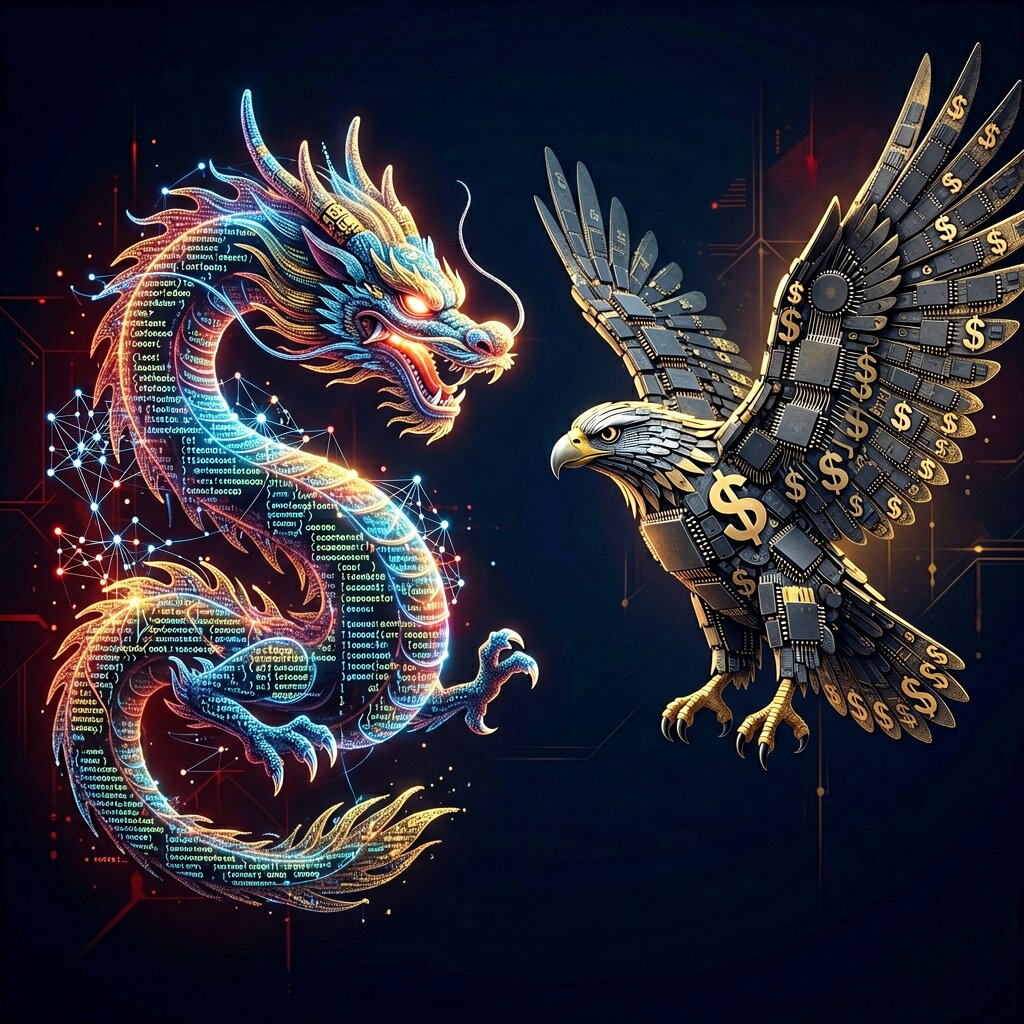
Chinese AI lab Moonshot AI just dropped Kimi K2.7 Code, and the pricing is going to make Silicon Valley executives spill their oat milk lattes. At $0.95 per million input tokens and $4.00 per million output tokens, this open-weights coding model costs up to 12 times less than Claude Fable 5 — and it's competitive enough on the benchmarks that matter.
Let that sink in. Twelve times cheaper. For a model that can actually code.
What Makes K2.7 Code Different
K2.7 Code is a 1-trillion parameter Mixture-of-Experts model, but only 32 billion parameters are active per token. It's multimodal — handling text, images, and video through a custom 400-million parameter vision encoder called MoonViT. Context window? A chunky 256,000 tokens.
The architecture is identical to Kimi K2.5 and K2.6, so existing deployment configs work out of the box. Moonshot claims K2.7 Code uses about 30% fewer "thinking tokens" than K2.6, meaning less computational waste and faster responses. There's also a "preserve_thinking" mode that maintains full reasoning chains across multi-turn conversations — critical for agent-based coding workflows.
The Benchmark Reality Check
On pure coding benchmarks, K2.7 Code trails the Western leaders. GPT-5.5 scores 69.1 on Program Bench versus Kimi's 53.6. On Kimi Code Bench v2, it's 69.0 versus 62.0. But here's where it gets interesting: on MCPMark Verified — a real-world agent benchmark testing AI across Notion, GitHub, file systems, Postgres databases, and browser automation — K2.7 Code scores 81.1, beating Claude Opus 4.8 (76.4) and coming within shouting distance of GPT-5.5 (92.9).
The message is clear: Kimi K2.7 Code isn't the absolute best coder, but it's arguably the best value coder. And in an era where AI costs are becoming a primary business constraint, that matters enormously.
The Price War Nobody Saw Coming
Here's the brutal price comparison:
Kimi K2.7 Code: $0.95 in / $4.00 out per million tokens
GPT-5.5: $5.00 in / $30.00 out
Claude Opus 4.8: $5.00 in / $25.00 out
Claude Fable 5: $10.00 in / $50.00 out
On output pricing alone, Fable 5 is more than 12x more expensive. GPT-5.5 is 7.5x more expensive. Even Claude Opus 4.8 — not even Anthropic's top model — costs 6.25x more for outputs.
Moonshot is also teasing a "6x High-Speed Mode" coming soon, which could make K2.7 Code even more attractive for production workloads.
Open Weights, Big-Catch License
The model ships under a modified MIT license that allows free use, modification, and redistribution. But there's a catch: any commercial product with more than 100 million monthly active users or $20 million in monthly revenue must prominently display "Kimi K2.7 Code" in the UI. It's a clever way to enforce attribution without blocking adoption.
Weights are available on Hugging Face, with native INT4 quantization for cheaper hardware deployment. The model works with vLLM, SGLang, and Moonshot's own Kimi Code CLI.
🔥 Hot Takes
🔥 The "good enough" era is here. K2.7 Code proves you don't need the absolute best model — you need the best model for the price. At 12x cheaper, you can run it twelve times, ensemble the results, and still save money. Western labs charging $50 per million output tokens are going to face serious pressure.
🔥 China's open-weights strategy is working. While American labs gatekeep their best models behind APIs and enterprise contracts, Chinese labs like Moonshot, DeepSeek, and Qwen are releasing competitive open models that developers can actually own and modify. The global developer mindshare is shifting east.
🔥 Cursor's bet on Kimi looks genius now. Remember when Cursor quietly built its Composer 2.5 on top of Kimi K2.5? That wasn't a cost-cutting move — it was a strategic hedge against exactly this pricing reality. Cursor is effectively reselling a model that's now 12x cheaper than the competition. Their margins must be obscene.
🔥 The token economy is real. When cost per token becomes the primary competitive factor, the entire AI business model shifts. We're moving from "who has the best model" to "who has the best model per dollar." That's a fundamentally different market — and one where Chinese labs have structural advantages in inference costs.
🔥 American export controls are backfiring. The US tried to slow Chinese AI by restricting chip exports. Instead, Chinese labs optimized for efficiency, built better MoE architectures, and released open models that undercut American prices by an order of magnitude. If this continues, American AI companies will be the ones needing protectionist policies, not Chinese ones.
The Bottom Line
Kimi K2.7 Code isn't going to dethrone GPT-5.5 on pure coding benchmarks. But it doesn't need to. At $4 per million output tokens versus $30-$50, it's "good enough" for the vast majority of coding tasks — and that makes it a genuine threat to Western AI business models.
The real story here isn't just a cheaper model. It's the emergence of a two-tier AI market: premium Western APIs for enterprises with deep pockets, and open-weights Chinese models for everyone else. And "everyone else" is a much bigger market.