
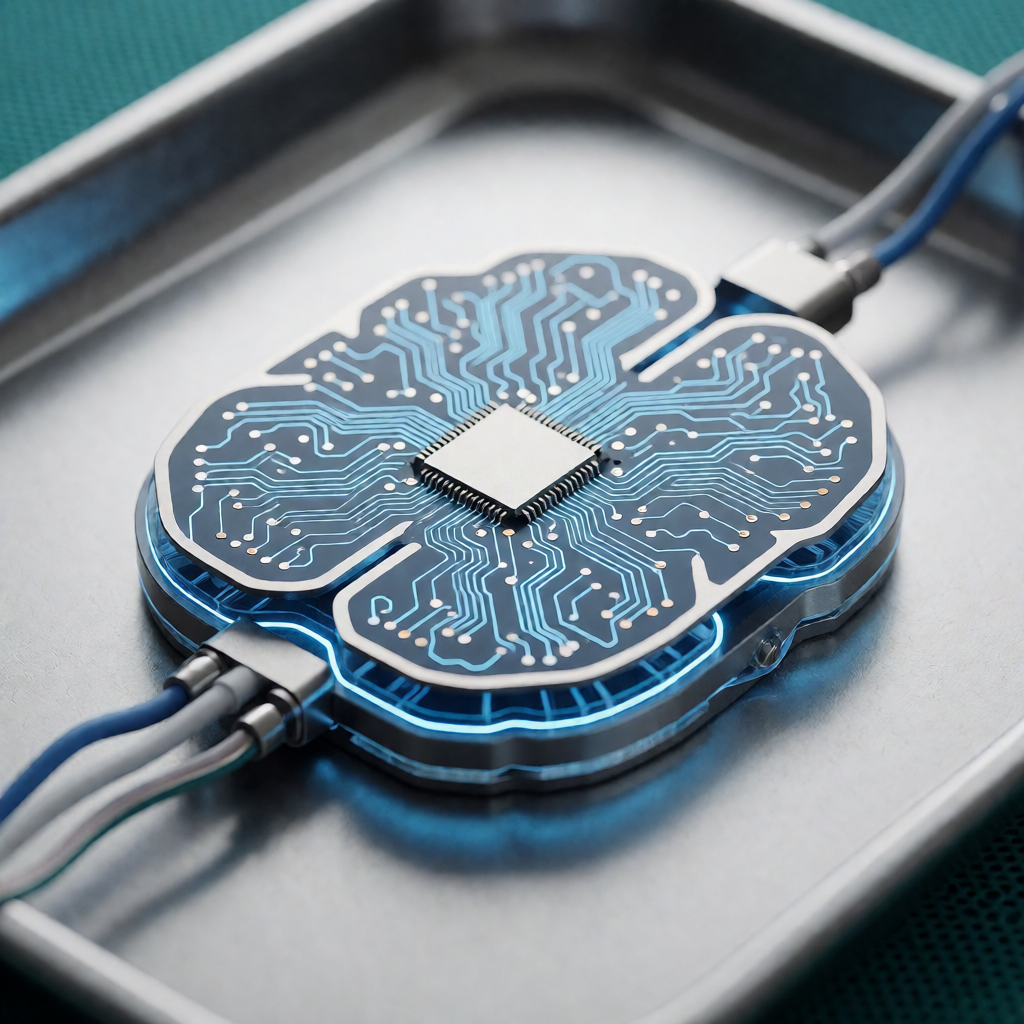
While Elon Musk's Neuralink has been racing through FDA trials in the United States, China has quietly slipped past its American rival—approving the world's first commercial brain implant while its domestic startups line up for some of the biggest tech IPOs of 2026.
A handful of Chinese brain-computer interface (BCI) companies are now moving toward initial public offerings on both onshore and offshore markets, riding a wave of state support, private capital euphoria, and a regulatory green light that came months ahead of Western counterparts.
The IPO Queue
Shanghai-based Arfysica Innovation became the latest BCI company to register for IPO coaching on the Shanghai Stock Exchange's Star Market—the Nasdaq-style exchange designed to host China's most innovative tech firms. According to a filing with the China Securities Regulatory Commission (CSRC), Arfysica hired Huatai United Securities as its sponsor in early 2026.
Arfysica, founded in 2015 with 100 million yuan ($15 million) in registered capital, develops products for central nervous system injuries and cognitive disorders. Its founder and majority owner Wang Wei holds a 51% stake and brings credentials from Tianjin University and a PhD in biomedical engineering from the University of Southampton.
Just weeks earlier, Neuracle Medical Technology—also Shanghai-based—signed an IPO coaching agreement with Citic Securities on February 4. Neuracle holds a distinction that makes it the most commercially advanced BCI company in China: it won the country's first-ever regulatory approval for an implantable brain-computer interface in March 2026.
The Neuracle device is designed to help patients with spinal cord injuries regain hand movement—a functionally significant achievement that Neuralink has yet to match in the US market. While Neuralink continues to conduct human trials under FDA oversight, Neuracle's device has already received marketing approval from China's National Medical Products Administration (NMPA).
The "Hangzhou Six" Emergence
BrainCo, a neurotech company developing noninvasive BCIs and bionic limbs, has also confidentially filed for a Hong Kong IPO, according to reports. The company, based in Hangzhou, raised $287 million ($2 billion yuan) earlier this year and is working with CICC and UBS on the listing.
If successful, BrainCo would become the first of China's so-called "Hangzhou Six"—a group of six neurotech startups from the city's Zhejiang Province that have attracted massive private investment—to reach public markets.
The broader BCI ecosystem is expanding rapidly. Gestala, a Beijing-based startup founded in January 2026, raised $21 million in its first funding round just two months after launch—the largest early-stage BCI raise in China. The company is developing noninvasive ultrasound-based brain interfaces and plans to scale from 15 to 35 employees by year-end while building a manufacturing facility.
State Strategy: 2027 Milestones, 2030 Supply Chain
China's BCI momentum isn't accidental. The government has embedded brain-computer interfaces into its national sci-tech strategy with explicit targets: major technical breakthroughs by 2027, common industry standards by 2028, and a complete domestic supply chain by 2030.
The plan calls for building globally competitive BCI companies while nurturing smaller specialized firms—a dual approach that mirrors China's strategy in electric vehicles, solar panels, and 5G infrastructure.
"China is treating BCI as strategic infrastructure," said one Beijing-based tech analyst. "The IPO pipeline shows the government is preparing these companies for mass capital markets while keeping them under domestic regulatory frameworks."
The Neuralink Gap
The timeline comparison is stark. Neuralink received FDA approval for its first human implant in May 2024, but commercial deployment remains limited to a handful of clinical trial participants. By contrast, Neuracle's device has already received NMPA approval for commercial sale to spinal cord injury patients.
"China beat Neuralink to commercial approval by roughly 12 months," noted a medical device regulatory expert. "That's not just a timing difference—it reflects fundamentally different regulatory cultures. China is willing to approve breakthrough devices faster if the clinical data supports it. The US is being more cautious."
The implications extend beyond medical applications. BCIs that can read and write neural signals have potential uses in military contexts, industrial automation, and consumer electronics—sectors where China sees strategic importance comparable to semiconductors or AI.
Capital Euphoria
Investor appetite for Chinese BCI startups has been extraordinary. BrainCo's $287 million raise valued the company at several billion dollars, while Arfysica's latest round included the state-owned National SME Development Fund—a clear signal of government confidence in the sector.
The Star Market has been particularly receptive. Since its launch in 2019, the exchange has hosted China's most promising tech unicorns, and BCI companies are now seen as the next wave of listings alongside electric vehicle makers and AI chip designers.
"BCI is the new AI—and China wants to win this race too," said a Shanghai venture capitalist. "The IPO pipeline shows we're serious about commercializing this technology, not just researching it in laboratories."
🔥 Hot Takes
1. China just proved what Neuralink couldn't: regulatory speed beats regulatory perfection in medical devices. Neuracle's approval came because China's NMPA moved faster than the FDA—a deliberate policy choice, not an accident. While American companies debate safety protocols, Chinese regulators approved a device that already helps paralyzed patients move their hands. That's the difference between a market that says "move fast and break things" and one that says "move fast and save lives."
2. The "Hangzhou Six" could become China's answer to Silicon Valley's Big Tech—and they're going public on Chinese exchanges. BrainCo, Arfysica, Neuracle, Gestala: these aren't fly-by-night startups. They're backed by state funds, have regulatory approvals, and are targeting mass markets in medical devices, consumer wearables, and industrial automation. If they list on the Star Market or Hong Kong instead of Nasdaq, they stay under Chinese jurisdiction—and that matters enormously in an era of tech decoupling.
3. China's BCI IPO wave is the first real test of whether "sovereign neurotechnology" can become a national industry. The government's 2027-2030 roadmap mirrors its semiconductor and EV strategies: set targets, fund startups, approve devices faster than the West, then list them publicly to raise capital for scaling. If it works, China doesn't just compete with Neuralink—it defines a parallel BCI ecosystem that operates outside American regulatory and market influence.
What's Next
The coming months will reveal whether these BCI IPOs execute smoothly. Arfysica and Neuracle face the Star Market's rigorous review process, while BrainCo navigates Hong Kong's listing requirements. Gestala's $21 million raise suggests it still needs more capital before any public offering.
But the trajectory is clear: China is building a commercial BCI industry at a pace that rivals—and in some areas, exceeds—the United States. As Neuralink continues to navigate FDA scrutiny, Chinese companies are already shipping devices to patients and lining up IPOs on Chinese exchanges.
In the race for brain-chip dominance, the finish line may not be who builds the best implant—it may be who gets it approved first. And right now, China is leading.