
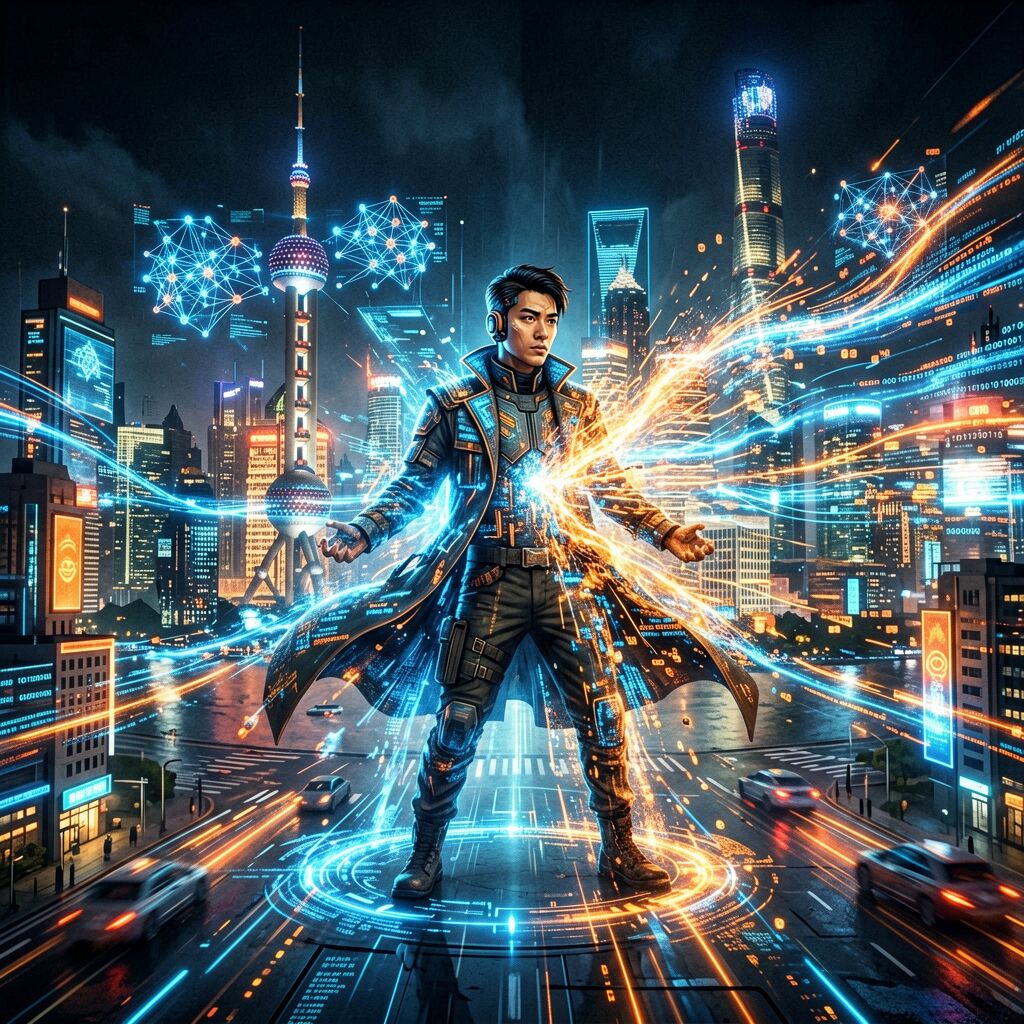
When Moonshot AI released Kimi K3 on July 16, 2026, the AI world didn't just notice — it panicked. The Beijing-based startup unleashed the world's first open 3T-class model: a 2.8 trillion-parameter behemoth with a 1 million-token context window, native vision capabilities, and a Mixture-of-Experts architecture that makes it run like a fraction of its size.
The reaction was immediate and extreme. Within 24 hours, Chinese AI stocks surged. Wall Street analysts scrambled to reassess the competitive landscape. And in a stunning display of Silicon Valley disunity, major tech companies split into opposing camps over what Kimi K3 means for American AI dominance.
Breaking Into the Party
Kimi K3 arrives after a difficult 18 months for Moonshot. Since DeepSeek's meteoric rise in early 2025, the company's market position had eroded significantly. But this wasn't just about scale — it was about architecture.
The model is built on two innovations: Kimi Delta Attention (KDA) and Attention Residuals (AttnRes). These are designed to help information flow through longer sequences and deeper models, solving one of the key bottlenecks in transformer architectures. Combined with a sparse Mixture-of-Experts design featuring 896 experts (only 16 activate per token), Kimi K3 behaves computationally more like a much smaller model despite its massive parameter count.
"K3 packs 2.8 trillion total parameters in a sparse MoE architecture — roughly 2.8× the size of K2.6, and larger than Chinese rivals like DeepSeek's V4 Pro (~1.6T) and Zhipu's GLM-5 series," noted AI architecture analysts. The practical requirement? An 8-node cluster with 8x 80GB GPUs each (5.12 TB total), running vLLM or TensorRT-LLM with MoE-aware scheduling.
The Open Weights Gambit
But the real bombshell came on July 27, when Moonshot released the full model weights. Under a flexible license, users can modify and run Kimi K3 for commercial needs — something no American frontier model allows.
The timing couldn't have been more provocative. Over 270 companies, including Amazon, Google, Meta, Microsoft, Nvidia, OpenAI, and SpaceX, had just signed an open letter titled "Open Weights and American AI Leadership," calling for policy measures to support open-weight models while keeping innovation in the U.S.
Anthropic, however, refused to sign. Instead, the Claude-maker issued a counter-warning about the "significant national security risks" of open-weight models and pushed for stricter chip restrictions against China. This split revealed a jagged fault line in Silicon Valley's approach to open AI.
Adding insult to injury for Anthropic: in February 2026, the company had alleged that Moonshot generated millions of exchanges with Claude through "fraudulent" accounts to illicitly target U.S. models' agentic reasoning and tool use capabilities. Rather than damaging Moonshot's reputation, the accusation worked as an unexpected advertisement — proof that Chinese AI could extract Claude-grade capabilities at a fraction of the cost.
Price Disruption
Kimi K3's pricing strategy sent shockwaves through the industry. The model costs approximately a third of what Anthropic charges for Claude Fable 5 in input and output token prices. While actual deployment costs vary based on business use cases and operational overhead, the headline pricing alone put makers of expensive models on edge.
Chinese AI usage had already hit 25 trillion tokens in a single week — 78% above U.S. volumes — with at least one startup moving all its traffic to DeepSeek, citing savings of millions of dollars. Kimi K3 extended this disruption to the open-weight space.
The optics War
The success of Kimi isn't exclusively technological — it's optical. The release of Kimi K3 and its model weights boosted Moonshot's standing and reinforced its claim to "empower everyone to be superhuman." As one analysis noted: "Kimi K3 has triggered Big Tech soul-searching in the U.S. as top companies co-sign letters of concern, express sudden support for accessible models, and brainstorm ways to race ahead of China."
The model also demonstrated competitive performance. Kimi K3 beat Claude Fable 5 in the Frontend Code Arena benchmark, proving that open-weight models could match or exceed closed alternatives in specific domains. Overall performance still "trails" Anthropic's Fable 5 and OpenAI's GPT 5.6 Sol according to Moonshot's own admissions, but the gap was narrowing fast.
🔥 Hot Takes
1. Anthropic's hypocrisy is showing. The company that built its reputation on responsible AI is now simultaneously calling for chip restrictions against China while accusing Chinese labs of "fraudulent" account usage. Meanwhile, their open-weight opponents (Google, Microsoft, OpenAI) are the ones pushing for policy support. The narrative has flipped.
2. China is winning the AI optics war by default. Every panic reaction from Silicon Valley — the open letters, the accusations of fraud, the calls for tighter controls — only validates Kimi K3's positioning as the people's model. Moonshot didn't have to say "we're the anti-Claude." The reactions said it for them.
3. The 2.8T parameter milestone changes everything. This isn't just another model release. It's the first time an open-weight model has reached 3T-class parameters, making it practically deployable by well-funded organizations worldwide. The barrier to entry for frontier AI capability just dropped significantly.
What Comes Next
As more open-weight Chinese AI models enter the arena — from Alibaba, DeepSeek, and others — companies and users will vote with their wallets. The question isn't whether Kimi K3 is the best model in the world (it's not, quite yet). The question is whether it represents a permanent shift in how AI development happens.
If Chinese firms can continue delivering competitive frontier models at lower prices with open weights, the American advantage in AI infrastructure and talent becomes less of a moat. The coming weeks and months will reveal whether Kimi K3 was a one-shot wonder or the new normal in open AI development.
One thing is certain: the party Anthropic and OpenAI threw for themselves is over. And Moonshot just brought the guest list.