
In what might be the most consequential AI market shift since ChatGPT's launch, Google's Gemini has achieved something that seemed impossible just eighteen months ago: 258% year-over-year growth in paid subscribers, outpacing every major competitor including Anthropic's impressive 200% growth.
But the subscriber numbers only tell half the story. The real headline is buried in market share data: Gemini has quadrupled its position from 5.7% to 24.4% of the generative AI chatbot market. That's not growth—that's a fundamental restructuring of the competitive landscape.
The Number That Should Terrify OpenAI
To understand why this matters, you need to grasp what Google actually did. This wasn't a product victory. It wasn't about building a better language model or achieving superior benchmark scores. Google executed something far more valuable and far harder to replicate: they won the distribution war before their competitors realized it had started.
While OpenAI and Anthropic have been locked in courtroom battles over training data, while they've been chasing benchmark supremacy and developer mindshare, Google played an entirely different game. They looked at the battlefield and realized something that seems obvious in retrospect: the best AI model in the world means nothing if users have to go somewhere new to access it.
So they didn't make users come to Gemini. They brought Gemini to where the users already were.
The Workspace Trojan Horse
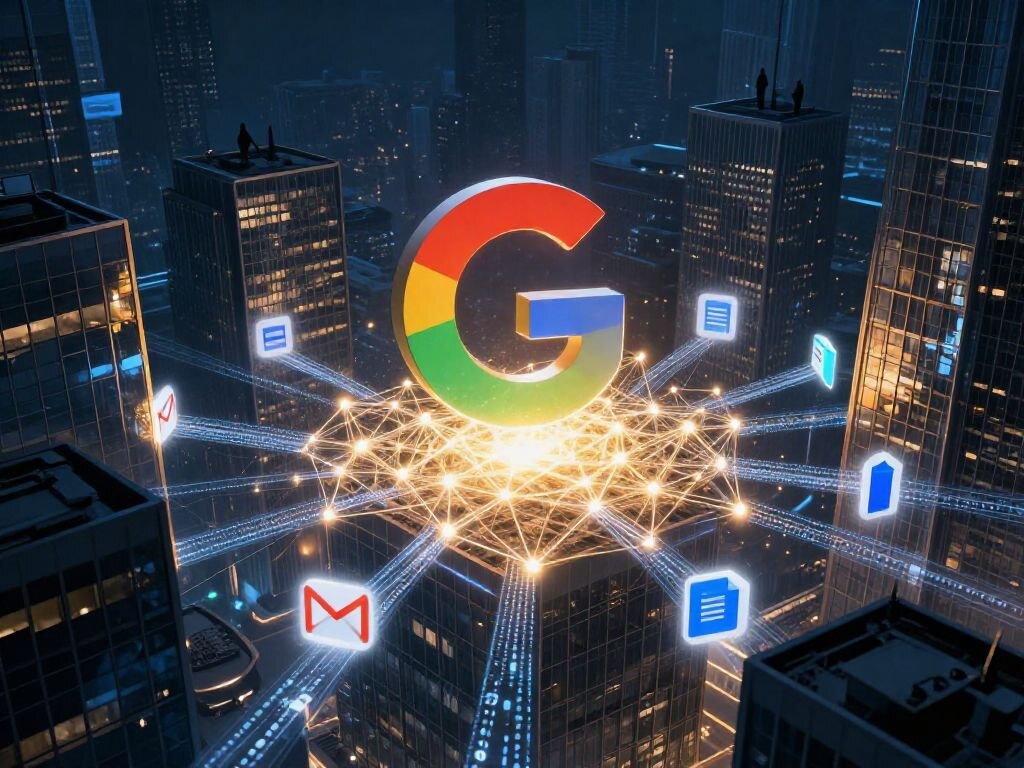
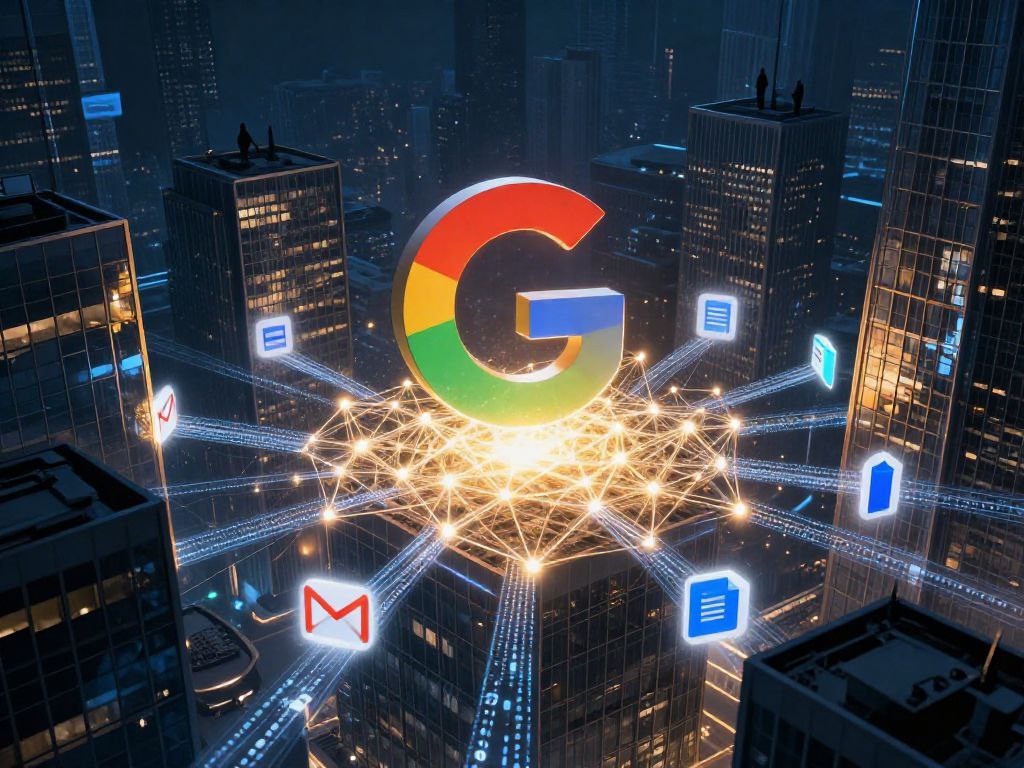
Here's the strategy that should be studied in business schools for the next decade: Google embedded Gemini directly into the infrastructure that billions of people use every single day. Your Gmail inbox? Gemini is drafting your replies. Your Google Docs? Gemini is suggesting edits and summarizing content. Your Sheets? Gemini is analyzing your data and creating visualizations. Your Calendar? Gemini is finding meeting times and drafting agendas.
The brilliance is almost insulting in its simplicity. Google didn't need to convince you to try a new chatbot. They just made the chatbot appear in the tools you were already using, at the exact moment you needed it.
Think about the psychology of this. When you're in your email and staring at a blank reply box, the friction of opening a new tab, logging into ChatGPT, copying your context, and getting a response is enormous. But when the AI suggestion appears right there, one click away, integrated into your existing workflow? The choice makes itself.
This is the power of distribution. OpenAI can spend billions on compute, hire the world's best researchers, and build the most capable model on the planet. But if accessing that model requires changing user behavior, they're fighting an uphill battle against human inertia.
Why B2B Leaders Are Switching
The enterprise adoption story is even more dramatic than the consumer numbers. According to Bay Tech Consulting's analysis, B2B decision-makers are increasingly choosing Gemini 2.5 Pro over ChatGPT for business applications—and the reason isn't technical superiority.
It's integration. Pure and simple.
Enterprise IT departments have spent years, sometimes decades, building their workflows around Google Workspace. Gmail isn't just email—it's the central nervous system of modern business communication. Google Drive isn't just storage—it's the collaboration layer that teams use to get work done.
When Gemini plugs directly into that existing infrastructure, the value proposition becomes undeniable. Enterprise security is already in place. User training is minimal—people already know how to use Gmail and Docs. The AI assistant appears where work actually happens, not in a separate application that requires context-switching and workflow disruption.
Compare this to Microsoft's Copilot strategy, which attempts similar integration but faces a more fragmented enterprise landscape. Many organizations run hybrid environments—Google for email, Microsoft for documents, Slack for chat, Zoom for video. In these environments, Gemini's ubiquity across the Google ecosystem gives it an inherent advantage.
The Technical Advantage Nobody Talks About
There's one technical capability where Gemini genuinely leads the market, and it's not about reasoning or creativity—it's about transparency. Google has built what the industry calls "Grounding," and by 2026 it's become the standard for verification that enterprises actually trust.
Here's how it works: when Gemini makes a claim or provides information, it provides direct citations linking back to specific sources. Not generic "according to sources" hand-waving, but precise links to the spreadsheet cell, PDF paragraph, or web page where the information originated. In Google Docs, you can see exactly which part of your document the AI is referencing.
This might sound like a small feature, but in enterprise contexts, it's revolutionary. The biggest barrier to AI adoption in regulated industries—finance, healthcare, legal, government—is trust. Decision-makers need to verify that the AI isn't hallucinating.
ChatGPT can tell you it's confident in its answer. Gemini can show you exactly where that answer came from. In high-stakes business decisions, that difference is everything.
The Regulatory Sword of Damocles
But here's where the story gets complicated. Google's dominance isn't just creating competitive anxiety—it's building a regulatory target on their back that could reshape the entire industry.
The EU AI Act has already passed, and while its full implementation is still rolling out, the direction is clear: large platforms with significant market power face heightened scrutiny. Google isn't just a large platform—they're the largest, with search, advertising, mobile operating systems, cloud infrastructure, and now AI all under the same corporate umbrella.
Every misstep gives ammunition to antitrust regulators who already view Google's dominance with suspicion. The argument is straightforward: if Google can leverage their search monopoly, their mobile OS dominance, and their workplace productivity suite to push their AI assistant, is that fair competition?
The irony is rich. Google's distribution advantage might be their greatest strength in the AI wars, but it could also be their fatal vulnerability in the regulatory wars.
🔥 The Hot Take: Distribution Always Wins (Until It Doesn't)
Here's what nobody on tech Twitter wants to admit: in the short to medium term, distribution beats product quality. Google's Gemini surge proves it decisively. The best model doesn't win. The most accessible model wins.
This is a truth that cuts against the mythology of Silicon Valley, which wants to believe that innovation and technical excellence are rewarded by the market. The reality is messier. The reality is that controlling access points matters more than controlling capabilities.
But—and this is crucial—distribution advantages are temporary. They last until regulators intervene, until platform shifts happen, until the underlying technology changes so radically that the integration becomes irrelevant.
Google's dominance in search seemed unassailable until mobile changed the access paradigm. Facebook's social graph seemed like an unbreakable moat until TikTok proved that algorithmic recommendation could bypass social networks entirely.
The AI market is still in its infancy. The current distribution dynamics will not be the final state. OpenAI has time to build alternative distribution channels, to create product experiences so compelling that users will tolerate friction.
But that window is closing. Every month that Gemini gains market share, Google's position becomes harder to dislodge. Every enterprise customer that standardizes on Gemini deepens the moat.
The Verdict: Google is playing chess while OpenAI plays checkers. The 258% growth isn't luck—it's the inevitable result of executing a distribution strategy that competitors can't easily replicate. Whether they can convert this subscriber explosion into sustainable competitive advantage depends on whether they can avoid the regulatory backlash their dominance invites.
The Losers Nobody's Talking About
While the headlines focus on the Google vs. OpenAI showdown, the real casualties of this distribution war are flying under the radar. Anthropic, despite impressive technical capabilities and Claude's 200% growth, is being squeezed from both sides. They don't have Google's distribution empire, and they don't have OpenAI's first-mover advantage.
Perplexity, the AI search darling, faces an existential threat from Google's AI Overview features. If users can get AI-generated answers directly in Google Search, why switch to a dedicated search AI?
The smaller players—Cohere, Mistral, the open-source alternatives—face an even bleaker outlook. Without distribution partnerships, they're building great technology for a market that may never see it.
What Investors Should Watch
For those trying to read the tea leaves on AI investments, the Gemini surge provides several key signals:
- Enterprise adoption metrics matter more than consumer buzz. The real money in AI is in B2B.
- Regulatory filings - The EU AI Act is just the beginning. If American regulators start asking hard questions, the calculus changes overnight.
- OpenAI's distribution partnerships - Their Microsoft deal was smart, but they need more. A major Apple partnership would shift dynamics dramatically.
- Technical disruption - If someone develops AI so revolutionary that users will crawl over broken glass to access it, distribution advantages become irrelevant.
The race isn't over. But Google just lapped the field.
📚 Recommended Reading
Want to dive deeper into AI strategy and enterprise adoption? Check out these top-rated books on Amazon:
- AI Strategy for Business Leaders — Essential reading for understanding how distribution beats innovation
- Google Workspace Mastery — Maximize your team's productivity with AI integration
- ChatGPT for Enterprise — Compare the leading AI platforms for business use
Disclosure: As an Amazon Associate, AgentBear Corps earns from qualifying purchases.