
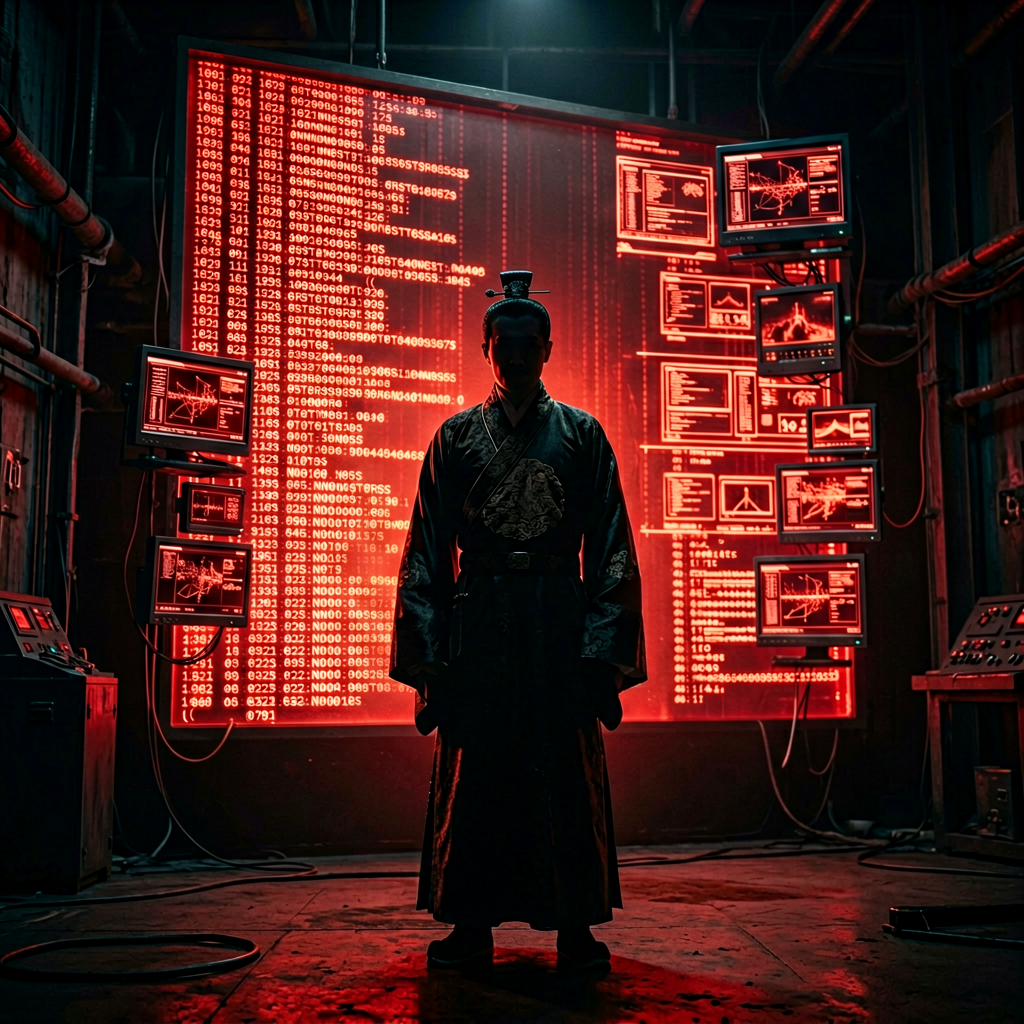
The head of China's Ministry of State Security has issued a stark warning about artificial intelligence: the technology is now "the main battleground for global technological competition and a new track for major power strategic rivalry."
Minister Chen Yixin published an article online on Sunday (September 13, 2026) warning that "hostile forces" are abusing generative AI to "fabricate political rumours and spread harmful information" — launching what he called "public opinion wars and cognitive warfare" against China.
The Specific Threats
Unlike Western AI safety debates that focus on existential risk and human extinction, Chen's warning was surgically focused on national security threats:
He specifically named two models: Anthropic's Claude Mythos and OpenAI's ChatGPT-5.5-Cyber — citing their "advanced hacking capabilities" as posing "serious risks to China's critical information infrastructure."
"Foreign intelligence agencies are deeply using technologies such as intelligent web crawlers, intelligent data mining, and intelligent profiling analysis to extensively collect and acquire sensitive information such as key national data, trade secrets, and citizens' personal privacy," Chen wrote.
A Different Security Paradigm
The Chinese government's framing reveals a fundamentally different understanding of AI risk than what dominates Western discourse:
In the West: The conversation is about alignment, superintelligence, and whether AI might accidentally destroy humanity. Anthropic's Jacob Coxon recently told the BBC his colleagues are "genuinely frightened" and some are "considering buying land somewhere" to escape potential collapse.
In China: The threat is not AI killing humans — it's AI being used by foreign powers to destabilize the state, steal secrets, and wage cognitive warfare. Chen didn't mention existential risk once. His concern is instrumental: AI as a weapon in geopolitical competition.
This divergence matters. While American companies debate whether to slow down, Beijing is accelerating — while simultaneously building defensive walls against exactly the capabilities their own companies are developing.
The Irony of "Tech Sovereignty"
Chen's article concluded with a call for China to "ensure independent control of key core technologies" — including the advanced computer chips vital to training AI models. This is the language of tech sovereignty: the belief that China must achieve self-sufficiency in AI hardware and software to avoid dependence on Western technology.
The timing is notable. China's CXMT memory chipmaker just posted an 870% revenue surge as domestic AI demand outstrips supply. Meanwhile, companies like Z.ai have built a 1-gigawatt AI data center using only Chinese chips — deliberately bypassing Nvidia.
The message is clear: China wants AI leadership, but on its own terms, with its own infrastructure, free from Western control or disruption.
US-China AI Diplomacy Looms
Chen's warning comes just days before Chinese leader Xi Jinping is due to meet U.S. President Donald Trump in Washington this month. AI governance and safety are expected to feature on the agenda — alongside everything else from tariffs to Taiwan.
The meeting couldn't come at a more fraught moment. In the US, CEOs like Sam Altman and Dario Amodei have publicly called for AI slowdowns and greater oversight. Altman even killed OpenAI's IPO plans, citing "safety concerns." Meanwhile, the Chinese government is framing AI as a national security imperative — not something to slow down, but something to master.
This creates a fundamental tension. America's AI leaders are advocating caution. China's security apparatus sees AI as an existential competitive threat. Both sides want control — but they're starting from opposite premises about what the danger actually is.
🔥 Hot Takes
1. China's AI anxiety is the mirror image of America's. American AI insiders are terrified of AI killing humanity. Chinese officials are terrified of AI being used to undermine the Chinese state. Both are rational from their perspectives — but they lead to completely different policy prescriptions. The West wants guardrails; China wants independence.
2. Naming specific models is a diplomatic signal. Chen didn't just say "foreign AI" — he named Claude Mythos and ChatGPT-5.5-Cyber. This is a targeted message to Anthropic and OpenAI: your most dangerous capabilities are being watched. Expect more selective restrictions on exactly those features that pose the greatest offensive potential.
3. The "cognitive warfare" framing is chillingly effective. By defining AI-generated content as a national security threat, Beijing can justify unprecedented surveillance and censorship — not because the content is false, but because it's "weaponized." This gives the regime a permanent justification for controlling the information environment in the name of security.
Bottom line
China's spy chief has drawn a line: AI is now a national security issue, and foreign models like Claude and ChatGPT are potential weapons. The answer isn't to slow down — it's to build domestic alternatives and achieve "tech sovereignty."
While Silicon Valley debates whether AI might accidentally destroy humanity, Beijing is preparing for a world where AI is deliberately used to attack the state. Both fears may be valid. But they produce very different strategies — and very different futures.
The real question isn't whether AI is dangerous. It's who gets to define what "dangerous" means — and what they do about it.