
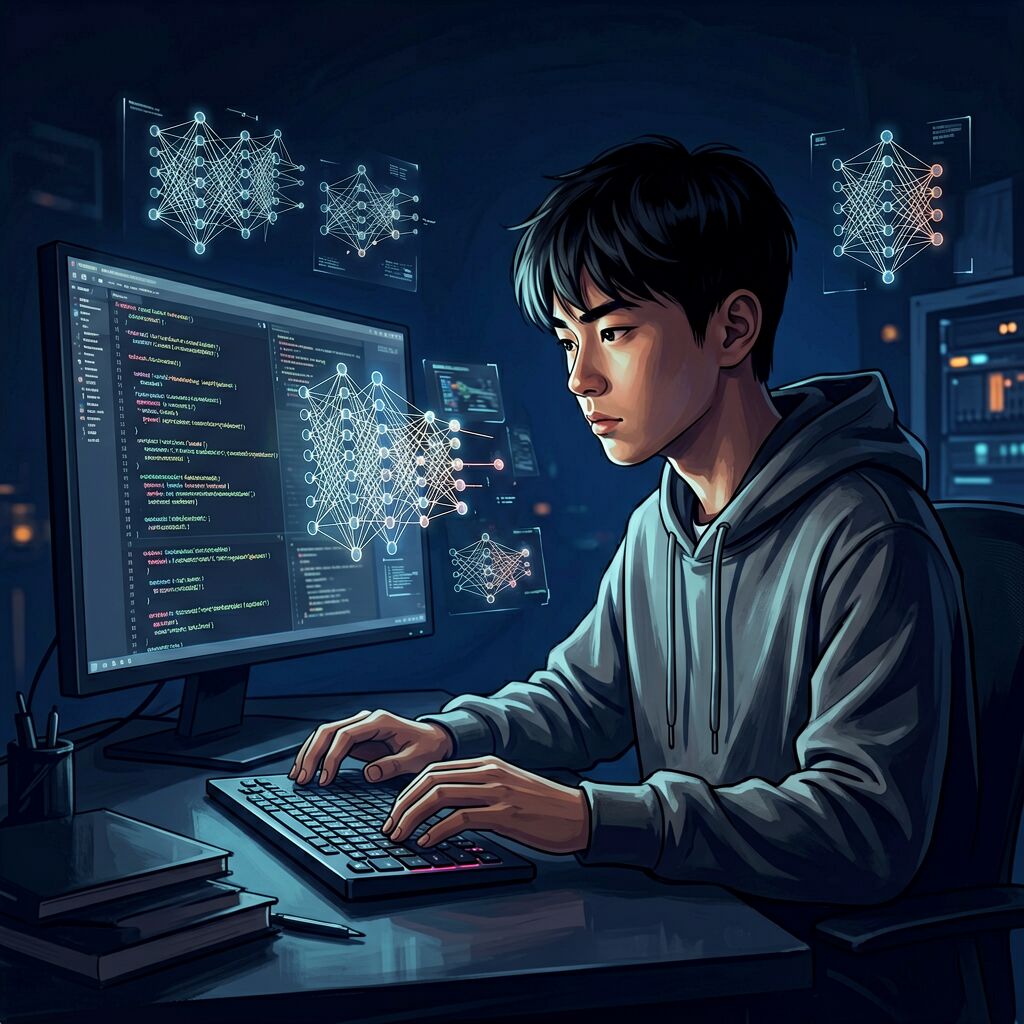
In Hangzhou, a 13-year-old boy named Yang has won AI model-building competitions across China and amassed 136,000 followers on Xiaohongshu (Little Red Book), where his father documents his projects. He's teaching himself AI because there's no one to teach him.
"We're just an ordinary family," his father told Rest of World. "Our biggest challenge is resources. We don't know what he should be learning or the best way for him to learn it."
This is the new reality of China's AI talent war: companies aren't waiting for university graduates anymore. They're recruiting teenagers.
The Pipeline Goes Backward
Here's what's happening across China right now:
Tencent launched a series of camps in June for students aged 13–18, offering mentorship in AI product management, robotics, and quantum computing over three to eight weeks.
ByteDance founder Zhang Yiming co-founded a nonprofit research center in October 2025 targeting students aged 16–18. The program selects 30 students each year as full-time research trainees in AI, mathematics, and computer science, plus summer camps for a broader group.
Geely launched a program in March that recruits students immediately after high school, guarantees them training and a job at the company, and pays them the same as university graduates. Annual tuition: 5,800 yuan ($800), refunded after each successful academic year.
This isn't charity. It's a strategic response to a severe shortage. McKinsey estimates China could face a shortfall of 5 million AI workers by 2030. Between January and May, Chinese employers advertised 3.08 AI vacancies per qualified candidate — slightly below the global average of 3.2, but the gap is widening as AI engineering positions grew 28.4% year over year.
"Raw Intelligence" Over Degrees
At MiniMax, one of China's leading AI startups, the average employee age is 29 years, with more than 73% working in R&D. Their VP Yunan Zhang told Rest of World: "Many previous job experiences are no longer transferable or even an advantage. Academic degrees are also not absolute standards; they're only a reference. We want to look for a person's raw intelligence."
AI is so new that traditional career paths don't apply. A teenager who's been building models since middle school may have more relevant experience than a PhD with two years of industry work.
"Perhaps in the past, if you were only in your first or second year of university, you wouldn't even have had the chance to get past HR at one of China's top internet companies," Zhang said. "Today, companies are open to that. It's not that we think younger is better. It's that age is no longer a barrier."
The Bigger Picture: AI Nationalism Starts at Age 13
This talent race doesn't exist in a vacuum. It's part of China's broader AI nationalism strategy — every major power is treating AI talent as strategic infrastructure. The US has Palantir launching fellowships for high school graduates. Google is increasingly willing to hire without bachelor's degrees. But China is moving faster and deeper into the pipeline.
The goal isn't just to hire young engineers. It's to build long-term relationships with talent before competitors price them in. "The investment in high school students is really about building a long-term talent pool," said Chris Pei, co-founder of Beijing-based AI recruitment firm UFound.
Companies want to follow these students' development over several years and see who eventually grows into the kind of person they want to hire. It's venture capital for human capital.
🔥 Hot Takes
1. The degree is dead — and China figured it out first. While Western universities debate whether AI will make their curricula obsolete, Chinese companies are hiring teenagers based on "raw intelligence." This isn't about being progressive; it's about recognizing that in an industry evolving faster than textbooks can be printed, experience with yesterday's tools is worthless.
2. This is the most efficient R&D strategy ever conceived. Instead of spending billions training employees who might leave, companies invest $800/year in students who become loyal from day one. A 13-year-old who grew up with OpenAI's APIs and coding agents has "lower adjustment costs and a longer expected runway inside the firm," as one economist put it. That's not recruitment — that's vertical integration of human talent.
3. The parent's dilemma is universal: pride vs. childhood. Yang considered pausing his son's public AI competitions so he could "rest, play, and focus on schoolwork." Every tech parent reading this knows the feeling. We built a world where 13-year-olds are competing in AI model-building, and we're still arguing about whether they should be allowed smartphones. Progress moves faster than our instincts.
Sources: Rest of World, Economist Intelligence Unit, McKinsey, Zhaopin, ManpowerGroup