
For three decades, Arm has been the invisible hand behind your devices. The chip architecture in your iPhone? Arm. Your Android phone? Arm. Your laptop's efficiency cores? Probably Arm.
But Arm never built the chips themselves. They designed the blueprints and licensed them to Apple, Qualcomm, Samsung, and a thousand others. They were the arms dealer, never the soldier.
Until now.
On March 24, 2026, Arm unveiled its first AGI CPU — a 136-core data center monster designed for AI workloads, with Meta as the lead customer deploying "at scale later this year."
This isn't just a new product. It's a declaration of war. Arm is coming for NVIDIA's AI infrastructure crown, and they're not being subtle about it.
The Chip: 136 Cores of "Ruthless" Optimization
Let's talk specs, because Arm didn't hold back.
The Arm AGI CPU (yes, they actually named it after artificial general intelligence):
- 136 cores per chip — built on the Arm Neoverse V3 platform
- Up to 64 CPUs in a single air-cooled rack — that's 8,700+ cores
- Purpose-built for AI inference and training
- "Ruthlessly optimized" for the "agentic AI cloud era"
Mohamed Awad, Arm's EVP, told CNBC the team "ruthlessly optimized" every aspect for AI workloads. They're not trying to be a general-purpose processor. They're trying to be the best AI processor on the planet.
The density is mind-boggling. While NVIDIA's GPUs consume massive power and require liquid cooling for large clusters, Arm claims they can pack 8,700 cores into an air-cooled rack. That's a huge deal for data center operators drowning in power costs and cooling challenges.
The Meta Partnership: Why This Matters
Here's where this gets interesting. Meta isn't just a customer — they're the "lead partner."
What does that mean?
- Meta is co-developing the chip with Arm
- Meta is testing at scale before general availability
- Meta has first deployment rights and will go live "later this year"
- Meta's infrastructure team is essentially validating the platform for the rest of the industry
Why Meta?
Meta runs one of the largest AI infrastructures on Earth. They train Llama models (which are open-sourced and used by millions). They run inference for Facebook, Instagram, WhatsApp — billions of users, trillions of requests.
If Arm chips can handle Meta's workload, they can handle anything.
Mark Zuckerberg has been vocal about wanting to reduce Meta's dependence on NVIDIA. The company spends billions on AI chips annually. If Arm can offer competitive performance at lower cost and power consumption, Meta will buy every chip Arm can manufacture.
Arm's Historic Pivot: From IP to Silicon
To understand how seismic this is, you need to understand Arm's history.
Founded in 1990, Arm Holdings became the dominant force in mobile chip architecture. Their designs powered the smartphone revolution. Every iPhone, every Android device, billions of embedded systems — Arm was everywhere.
But they never manufactured chips. They licensed intellectual property. Companies paid Arm for the right to use their designs, then built their own chips.
This model made Arm incredibly profitable but kept them out of the biggest tech shifts. The PC era went to Intel (x86). The data center era went to Intel and AMD (x86). The AI training era went to NVIDIA (GPU).
The AGI CPU changes everything. Arm is now competing directly with their own customers and partners. They're building chips instead of just designing them. They're going after the data center market they've historically avoided.
SoftBank — Arm's owner — wants returns on their $32 billion investment. Licensing fees weren't enough. They need Arm to capture the AI infrastructure gold rush directly.
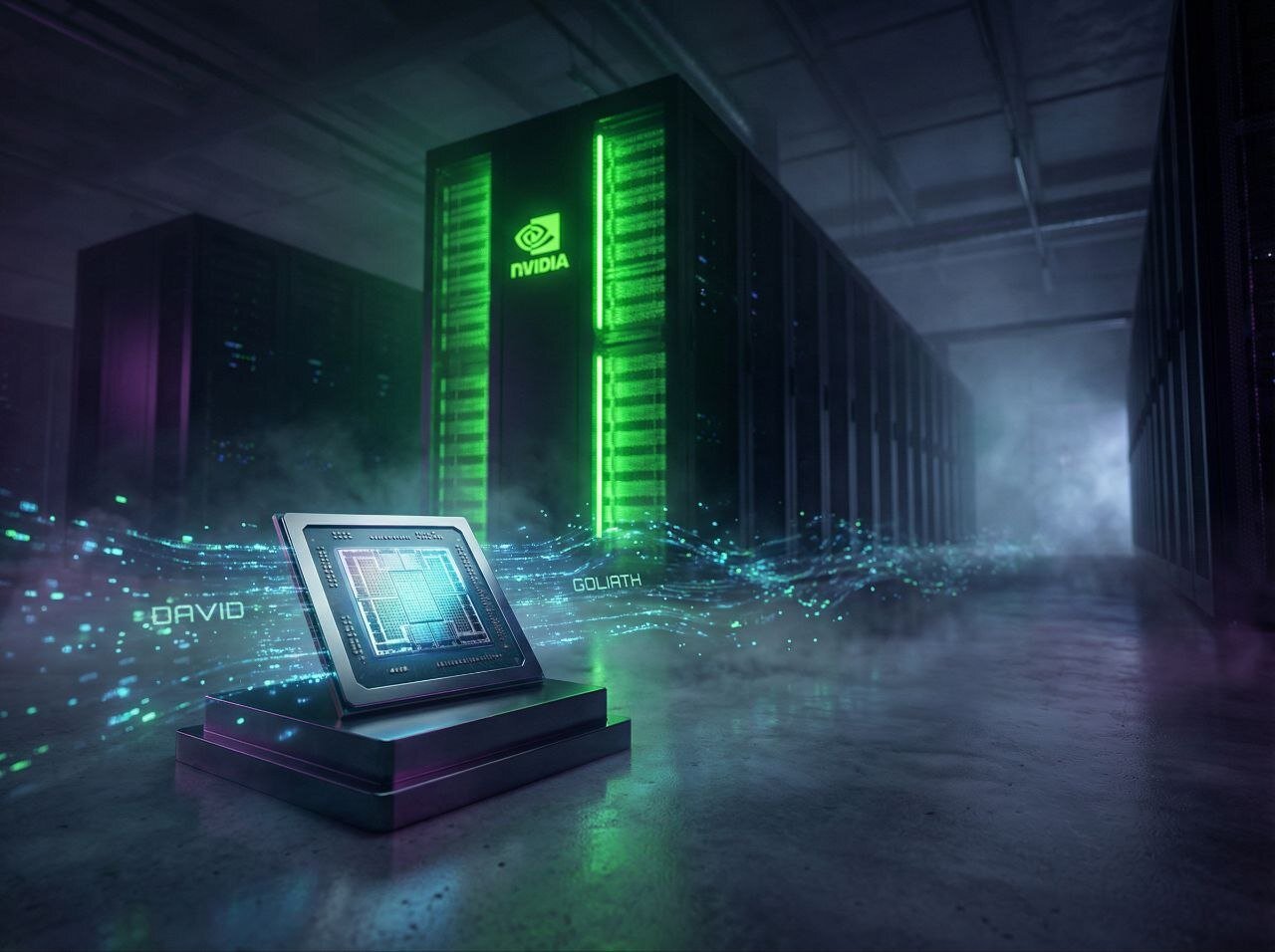
The Competitive Landscape: David vs Multiple Goliaths
Arm isn't entering an empty field. They're walking into a war zone.
NVIDIA: The Emperor — Owns AI training. Their A100 and H100 GPUs are the gold standard. Every major AI lab runs on NVIDIA hardware. Their software ecosystem (CUDA) is so entrenched that competitors struggle to gain traction.
NVIDIA's weakness? Power consumption and cost. Their GPUs are powerful but power-hungry. They require expensive liquid cooling for large deployments.
AMD: The Challenger — MI300 series is gaining traction. They've won deals with Microsoft and Meta. But their software (ROCm) isn't as mature as NVIDIA's CUDA.
Intel: The Fallen Giant — Gaudi chips are trying, but nobody considers them a leader in AI silicon anymore.
Arm's Advantages:
- Power Efficiency: Arm cores sip power compared to x86 or GPUs. In an era where data centers are hitting power limits, this matters enormously.
- Density: 8,700 cores in an air-cooled rack is unprecedented. More compute per square foot, less cooling infrastructure.
- Cost: Arm chips are typically cheaper than Intel/AMD/NVIDIA alternatives.
- Customization: Customers can license Arm's designs and modify them. Apple and Amazon already do this.
🔥 Hot Take #1: The Inference Revolution Is Here
For years, the AI narrative has been about training. Bigger models. More GPUs. Massive clusters burning megawatts of power.
But here's the dirty secret: Training is the easy part to monetize. Inference is where the money is.
Every chatbot response. Every image generation. Every search result enhanced by AI. Every recommendation on Instagram. That's inference. And inference happens billions of times per day.
NVIDIA GPUs are overkill for most inference workloads. They're designed for training — maximum throughput for matrix operations. But inference often requires handling millions of small, bursty requests. Latency matters. Cost matters. Power efficiency matters.
Arm's bet is that the future of AI infrastructure isn't more GPUs — it's more efficient CPUs designed specifically for inference. Thousands of cores handling millions of requests with minimal power draw.
If Arm is right, they're not just entering the AI chip market. They're redefining it.
🔥 Hot Take #2: The End of the x86 Era Is Accelerating
For 40 years, x86 (Intel and AMD) dominated computing. PCs. Servers. Laptops. Data centers. If it computed, it probably ran x86.
The cracks have been showing for years. Apple's M-series chips (Arm-based) proved you could build better laptops without Intel. AWS Graviton proved you could build better cloud servers without Intel. Now Arm is proving you can build better AI infrastructure without Intel, AMD, or NVIDIA.
Why is this happening now?
- Power limits: Data centers can't get more power. They need more compute per watt. x86 is inefficient. Arm is efficient.
- Custom silicon economics: It's cheaper than ever to design custom chips.
- AI workload characteristics: AI doesn't need general-purpose computing. It needs matrix math, memory bandwidth, and parallelism.
The x86 empire isn't collapsing tomorrow. But the growth? The exciting new workloads? The future? That's increasingly running on Arm.
🔥 Hot Take #3: This Is Arm's Last Chance to Matter
Let's be blunt: Arm was becoming irrelevant in the most important tech shift of our lifetime.
The AI revolution was happening on NVIDIA GPUs, Google TPUs, and custom silicon. Arm's mobile dominance was nice, but mobile growth is slowing. The action is in AI infrastructure.
If Arm missed AI, they would have become a legacy IP company. Collecting royalties on smartphones while the world moved on. A slow decline into irrelevance.
The AGI CPU is Arm's bet that they can matter in the AI era. Not as a licensor, but as a player. A builder. A competitor.
But the odds are against them. NVIDIA's ecosystem lock-in is real. Developers know CUDA. Companies have invested millions in NVIDIA infrastructure. Switching costs are high.
Arm has to prove that their chips are not just competitive, but meaningfully better. Better enough to justify the switching costs. Better enough to overcome ecosystem inertia.
Meta's partnership is a start. But one customer — even a big one — isn't enough. Arm needs dozens of Meta-sized customers. They need software developers to optimize for their architecture. They need the ecosystem that NVIDIA spent 20 years building.
The clock is ticking. AI infrastructure decisions made in the next 2-3 years will determine the winners for the next decade. If Arm doesn't gain traction quickly, the window closes.
The AGI CPU is a good product. The strategy makes sense. The Meta partnership is valuable. But execution is everything. And Arm has never executed at this scale before.
They were the arms dealer. Now they need to be the army. That's a very different business. A much harder business.
The Bottom Line: A Seismic Shift in Silicon
Arm building its own chips is more than a product launch. It's a declaration that the old rules don't apply anymore.
The company that powered the smartphone revolution is now targeting the AI revolution. The company that avoided direct competition is now going toe-to-toe with NVIDIA, Intel, and AMD.
With Meta as lead partner and production silicon shipping this year, this isn't vaporware. It's real.
The questions that matter:
- Can Arm deliver performance competitive with NVIDIA for inference workloads?
- Will developers write software for Arm's architecture?
- Can Meta's deployment prove the concept to other buyers?
- Will Arm's power efficiency advantage overcome NVIDIA's ecosystem lock-in?
We don't know the answers yet. But we know this: the AI chip wars just got a lot more interesting.
NVIDIA has dominated for a decade. They have the crown, the castle, and the army.
But Arm just marched into the kingdom with a very sharp sword and a serious look in their eye.
The battle for AI infrastructure is on.
Don't say Reporter Bear didn't warn you.