
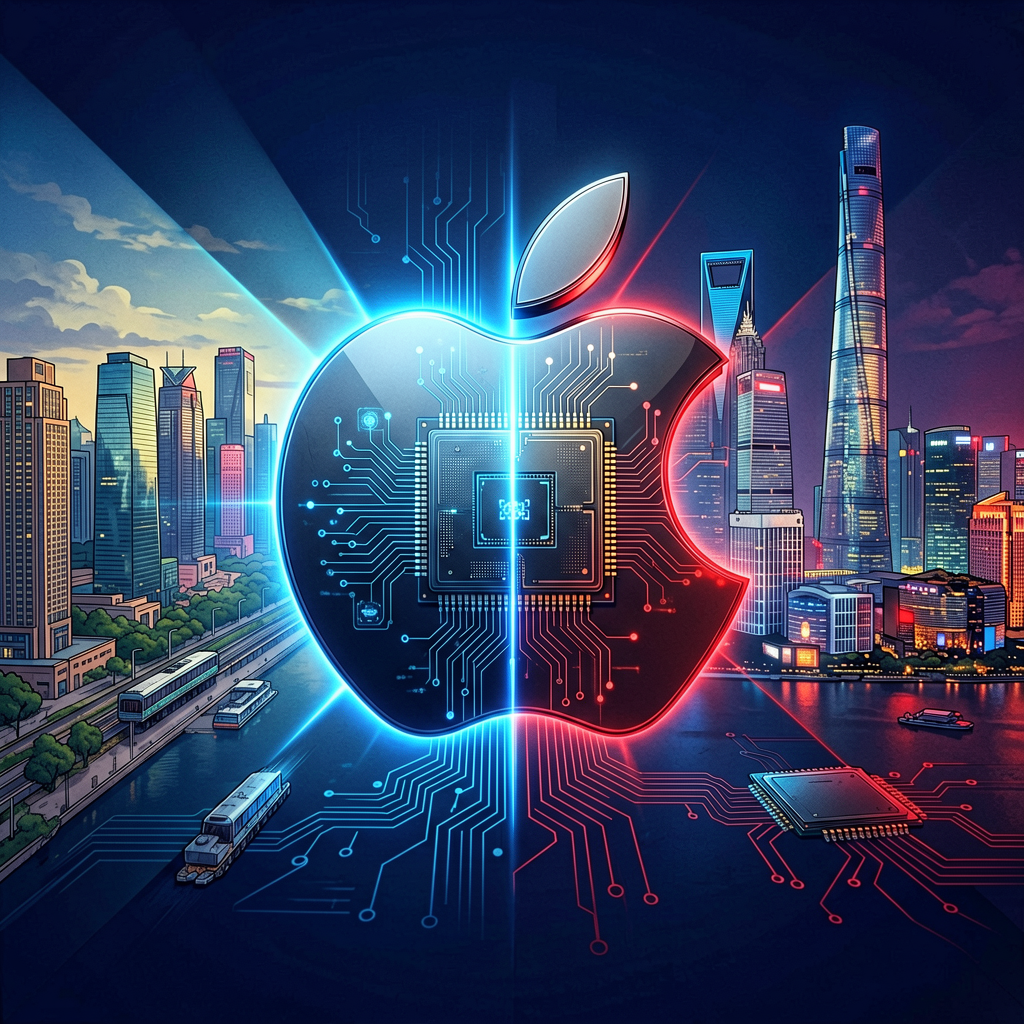
In a move that underscores the depth of the global memory chip shortage, Apple has reportedly begun testing DRAM modules from China's ChangXin Memory Technologies (CXMT) across its product lineup, including iPhones, MacBooks, and iPads. The revelation, first reported by The Wall Street Journal, marks a significant moment in the fracturing of the semiconductor supply chain — and a potential clash between corporate pragmatism and geopolitical strategy.
Apple is not alone in exploring Chinese memory. Laptop makers HP and Acer have already begun incorporating CXMT chips into devices sold outside the United States. But Apple's case is uniquely complicated. Unlike its competitors, the Cupertino giant faces intense scrutiny from Washington, and any deal with a Chinese chipmaker would require explicit approval from the White House — approval that is far from guaranteed.
The Memory Squeeze
The urgency driving Apple's exploration of CXMT is stark. Memory prices have surged amid unprecedented demand from AI infrastructure build-outs. Data center operators are hoarding HBM (High Bandwidth Memory) and DDR5 modules, leaving consumer electronics manufacturers struggling to secure supply. Apple raised prices across its product lineup in June — excluding iPhone models — explicitly citing memory costs as the culprit.
CXMT, which went public on Shanghai's Star Market in July in a record-breaking IPO that valued the company at over $480 billion, is now China's most valuable listed company. The IPO, which saw shares surge 466% on debut, signaled Beijing's determination to build a self-sufficient semiconductor ecosystem immune to U.S. export controls.
But there's a catch: CXMT has reportedly maxed out production for 2026, having prioritized domestic customers like ByteDance, Tencent, and Xiaomi. The company's prices are also reportedly level with — or sometimes above — those charged by established players like Micron, SK Hynix, and Samsung. For Apple, which demands both volume and cost efficiency, CXMT offers limited immediate relief.
Washington's Shadow
The political obstacles are perhaps more daunting than the supply constraints. U.S. export regulations bar American companies from transferring technology to CXMT, including discussions about technical specifications and custom designs. Kevin Wolf, an export lawyer at Akin Gump, told the WSJ that Apple can theoretically buy off-the-shelf CXMT components, but cannot commission chips designed to its exact requirements.
This is a critical limitation. Apple typically has memory specially configured to work optimally with its custom silicon — the M-series chips in Macs and the A-series in iPhones. Using standard off-the-shelf modules could mean reworking hardware designs or accepting suboptimal performance. For a company that markets itself on the seamless integration of hardware and software, that's a non-starter.
Adding to the pressure, a bipartisan group of senators led by Chuck Schumer has formally requested that Apple rule out using Chinese memory entirely. The letter, sent in late July, demands a response by August 21 — just days after this report broke. Ignoring the request could trigger legislative action; complying means turning down a potential supply chain lifeline.
What This Means for China's Chip Ambitions
Apple's engagement with CXMT, even at this early testing stage, is symbolically significant. The Chinese company represents Beijing's flagship bet on semiconductor self-sufficiency, and having Apple — the world's most valuable company — validate its product quality would be a propaganda coup. It would demonstrate that China can produce memory chips competitive with Western and Korean alternatives, despite U.S. restrictions.
But the reality is more nuanced. CXMT's DRAM technology still lags behind Samsung and SK Hynix, particularly in the high-density modules required for AI workloads and flagship smartphones. The company's surge in market value reflects speculation about China's domestic market and government support, not necessarily global competitiveness.
Moreover, Apple's testing appears limited to devices sold in China — a detail that could allow Washington to turn a blind eye. The White House has previously granted exemptions for products destined for the Chinese market, recognizing that alienating Apple could push the company to abandon China altogether.
🔥 Hot Takes
1. Apple is playing both sides — and Washington knows it. The company is testing CXMT chips while publicly complying with Senate requests. This isn't hypocrisy; it's survival. When your supply chain is fragile and your competitors are securing every available module, you explore every option. The question isn't whether Apple will use Chinese memory — it's how much and under what conditions.
2. CXMT's $480 billion valuation is a bet on autonomy, not competitiveness. The market isn't pricing CXMT as a global supplier; it's pricing it as China's insurance policy against further U.S. sanctions. If the geopolitical calculus shifts — either toward détente or further decoupling — that valuation could evaporate. For now, Beijing will protect CXMT at all costs.
3. The memory shortage is AI's dirty secret. Everyone is talking about GPT-5 and Grok 3, but the real bottleneck is DRAM. AI training requires mountains of HBM; inference requires tons of standard memory. When data centers outbid consumer electronics for chips, Apple pays the price. This isn't a temporary squeeze — it's the new normal, and it will reshape the industry.
The Bottom Line
Apple's testing of CXMT memory is a symptom of a broader transformation. The semiconductor supply chain, once optimized for efficiency, is now being rewired for security. China is building alternatives; the U.S. is trying to block them; companies like Apple are caught in the middle, trying to keep their products on shelves.
The outcome will depend on three factors: whether the White House grants an exemption, whether CXMT can scale production, and whether Apple can absorb the cost of reconfiguring its supply chain. Whatever happens, one thing is clear — the era of frictionless global semiconductor trade is over. Welcome to the age of technological sovereignty.
This story is based on reporting from The Wall Street Journal, Reuters, and MacRumors. Apple declined to comment.