
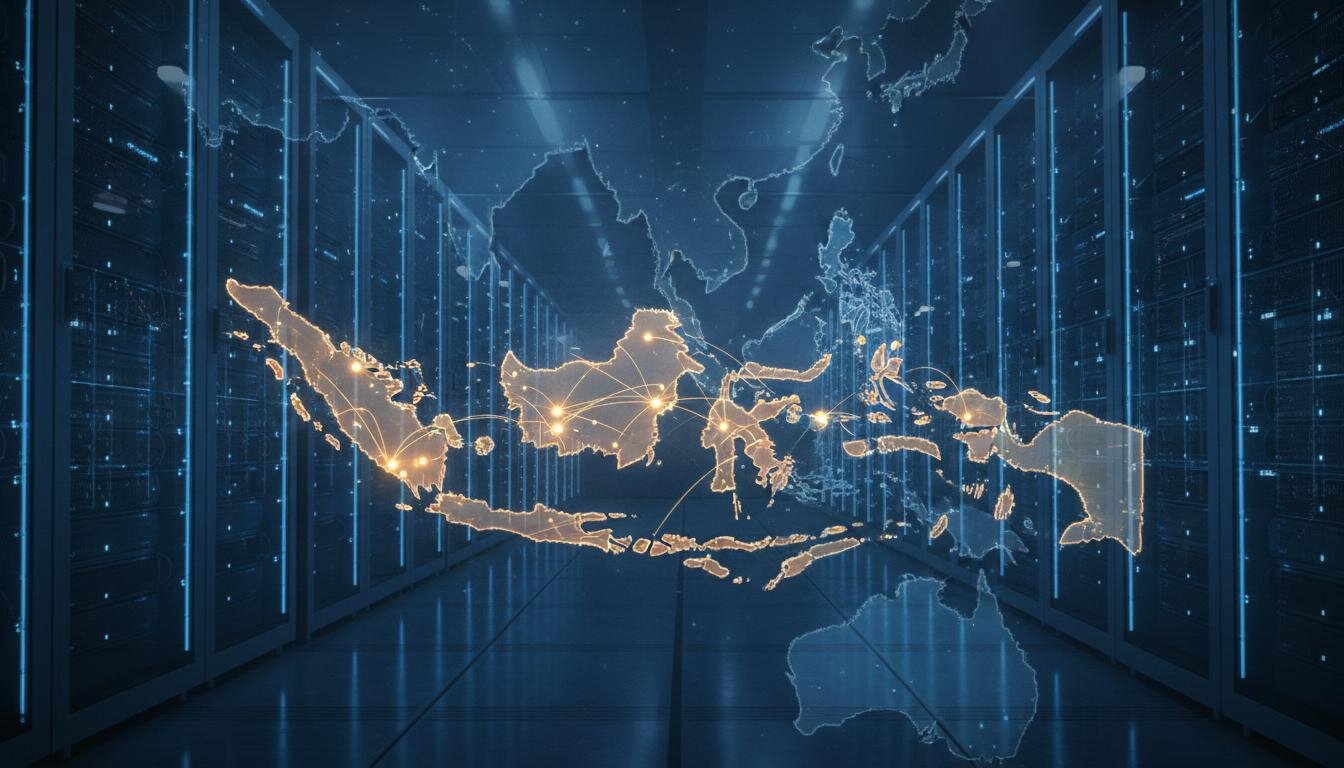
On May 25, 2026, Amazon dropped a headline that should have every Southeast Asian tech investor and policymaker paying close attention: the company plans to invest more than $33 billion in cloud and artificial intelligence infrastructure across Indonesia, Malaysia, Singapore, and Thailand by 2039. The commitment, announced by David Zapolsky, Amazon's chief global affairs and legal officer, represents one of the largest foreign tech investments in the region's history — and it comes with a conspicuous omission that has already sparked political debate.
The Philippines, despite being one of Southeast Asia's most significant digital economies and a longtime AWS customer, was notably absent from the investment list. The exclusion has raised eyebrows in Manila, where Union Bank and other major enterprises have built their AI infrastructure on AWS. Amazon's statement tried to soften the blow by citing the Philippines as an active AWS market, but the message was clear: four countries are getting Amazon's long-term cloud billions, and one isn't.
The $33 Billion Breakdown
Amazon's investment isn't just a press release number — it comes with concrete economic projections. The company estimates the spending will contribute over $64 billion to the combined GDP of Indonesia, Malaysia, Singapore, and Thailand. It also projects support for more than 56,300 full-time equivalent jobs annually across the local data center supply chain once the infrastructure build-out is complete.
These figures matter because they represent a structural shift in how global tech giants view Southeast Asia. For years, the region was seen as a consumer market — a place to sell smartphones, streaming subscriptions, and e-commerce services. Amazon's $33 billion commitment signals a fundamental reclassification: Southeast Asia is now being treated as a production and compute hub, not just a consumption market.
The timing is strategic. Amazon projects Southeast Asia's digital economy will reach $560 billion by 2030, and the company clearly wants to own the infrastructure layer that powers that growth. In cloud computing, being first to establish regional capacity creates durable competitive advantages — data sovereignty requirements, latency demands, and enterprise procurement cycles all favor incumbent providers. By committing now, Amazon is effectively trying to lock in market position before competitors can match its footprint.
Where the Money Is Going
Amazon already operates AWS regions in all four investment targets. Singapore was first, launching its AWS region back in 2010 — ancient history by cloud infrastructure standards. Indonesia followed in 2021, Malaysia in 2024, and Thailand just last year in 2025. The $33 billion plan represents a massive expansion of existing capacity, not greenfield development.
What Amazon didn't detail — and what industry observers are watching closely — is the distribution of that $33 billion across the four markets. Singapore, as the region's most mature cloud hub, likely commands a disproportionate share, but Indonesia's massive population and rapidly growing digital economy make it the highest-potential long-term market. Malaysia and Thailand sit somewhere in between — established but still developing their cloud-native enterprise bases.
The investment also covers more than just data centers. Amazon's statement explicitly mentions training local workforces as part of the plan. The company claims it has already trained more than 2.7 million individuals across Southeast Asia on cloud-related skills since 2017. This workforce development angle is smart positioning — it frames the investment as human capital development, not just foreign infrastructure deployment, which plays well with governments worried about digital colonialism.
The Philippines Problem
The Philippines' exclusion is the elephant in the room. Amazon was careful to mention Union Bank of the Philippines as an existing AWS customer using generative AI analytics across 200+ business users, but the gesture felt hollow next to the $33 billion headline for its neighbors.
Several factors may explain the omission. The Philippines has faced infrastructure challenges that make large-scale data center development more complex than in Singapore or Malaysia. Power reliability, regulatory uncertainty, and bureaucratic processes have historically made the country a harder sell for hyperscale infrastructure investment. Whether those issues are surmountable — and whether Amazon's exclusion will force Manila to address them — remains to be seen.
Politically, the exclusion is already becoming a talking point. Opposition figures in the Philippines have begun framing it as a sign that the country is falling behind its ASEAN peers in the digital economy race. Whether that pressure translates into policy changes — tax incentives, regulatory streamlining, infrastructure investment — could determine whether Amazon eventually adds the Philippines to its roadmap or whether competitors like Microsoft Azure or Google Cloud step in to fill the gap.
Amazon's Broader Southeast Asia Play
The $33 billion cloud commitment is only part of Amazon's regional footprint. The company disclosed that it invested more than $3 billion in Southeast Asia in 2025 alone, spread across AWS, Amazon Stores, Devices, and Entertainment. That means the cloud infrastructure investment is part of a larger commercial ecosystem that includes e-commerce logistics, consumer electronics distribution, and content streaming.
This integrated approach is classic Amazon. The company doesn't just sell cloud services — it sells a full stack of digital infrastructure that reinforces itself. AWS powers the backends of e-commerce platforms that sell Amazon devices, which stream Amazon content, which is hosted on AWS. The more pieces of the stack Amazon owns in a region, the harder it becomes for competitors to dislodge any individual piece.
Amazon's Southeast Asia push also comes as Chinese tech giants are increasingly aggressive in the region. Alibaba Cloud has expanded its Singapore and Jakarta presence. Tencent has invested in local gaming and social platforms. Huawei, despite sanctions, remains active in telecommunications infrastructure across multiple ASEAN countries. Amazon's $33 billion commitment can be read, in part, as a defensive move to maintain Western cloud dominance in a region where Chinese influence is growing.
What This Means for the AI Landscape
The most important dimension of Amazon's announcement may be the AI infrastructure component. The company explicitly framed the investment as covering both cloud and AI infrastructure, recognizing that the two are increasingly inseparable. Modern AI workloads — training large models, running inference at scale, serving real-time generative AI applications — require specialized hardware (GPUs, TPUs, custom AI accelerators) that goes far beyond traditional cloud compute.
By building out AI-specific capacity in Southeast Asia, Amazon is positioning AWS as the default platform for regional AI development. Startups building on AWS get access to the same GPU clusters and model serving infrastructure that powers Amazon's own AI services. Enterprises running inference workloads get low-latency access from local data centers rather than routing requests to Singapore or Tokyo.
The competitive implications are significant. Startups and enterprises evaluating cloud providers often make decisions based on which platform has the AI infrastructure they need at the moment they need it. Amazon's investment is designed to make that answer "AWS" for virtually every Southeast Asian AI use case.
The Geopolitical Dimension
Behind the commercial numbers sits a geopolitical calculation that extends far beyond quarterly earnings. Southeast Asia has become the primary battleground in the US-China tech competition, and cloud infrastructure is one of the most strategically important fronts.
Chinese companies have been increasingly successful in selling telecommunications equipment, surveillance systems, and even cloud services to ASEAN governments. The Philippines' military has raised alarms about Chinese equipment in telecom networks. Indonesia has wrestled with data sovereignty questions around Chinese cloud providers. Vietnam has pursued a more explicitly anti-China tech policy, favoring Western vendors.
Amazon's $33 billion investment represents a massive American counterweight to Chinese digital influence. It gives ASEAN governments an alternative to Chinese cloud infrastructure without the geopolitical baggage. For countries wary of Chinese technology but eager for digital development, AWS offers a politically palatable option backed by real capital commitment.
Amazon's Zapolsky was explicit about this framing, praising Southeast Asian governments for "bold leadership in shaping policies and economic conditions that are accelerating growth and attracting global investment in AI." The subtext: choose Western investment, get infrastructure and jobs. The alternative doesn't need to be named — everyone in the region knows who the other option is.
For Investors: The Signal in the Noise
For investors trying to read the tea leaves, Amazon's announcement sends several clear signals:
First, Southeast Asia is graduating from emerging market status to core infrastructure market. $33 billion isn't speculative venture capital — it's the kind of long-duration capital commitment that signals conviction, not experimentation.
Second, the AI infrastructure build-out is happening faster than many expected. 2039 sounds distant, but the first phase of this investment is already underway. Companies building on AWS in Jakarta, Kuala Lumpur, or Bangkok will see rapidly improving AI infrastructure over the next 3-5 years.
Third, the competitive dynamics between AWS, Microsoft Azure, and Google Cloud in Southeast Asia are about to intensify. Amazon's move effectively forces its competitors to match the commitment or accept permanent second-tier status in the region's most important digital infrastructure layer.
Fourth, the Philippines' exclusion creates an opportunity for other providers. If Amazon won't build there, someone else will — and that someone might be a Chinese cloud provider with fewer political constraints and a government in Beijing eager to expand digital influence.
What Comes Next
Amazon's announcement is a opening move, not a checkmate. The $33 billion commitment spans 13 years, and much can change in that timeframe — governments, regulations, technology paradigms, and geopolitical alignments all shift on timescales far shorter than 2039.
But the directional signal is unambiguous. Southeast Asia has moved from periphery to center in global tech strategy. The region's $560 billion projected digital economy by 2030 isn't just a revenue opportunity — it's a strategic prize that will determine which tech ecosystems dominate the next decade of global innovation.
For now, four countries are firmly in Amazon's camp. One is left waiting at the door. And the rest of the tech world is watching to see who blinks first.